 English


Tooth Sensitivity: Why Cold Hurts Your Teeth and How to Find Relief
That sharp jolt of pain from ice cream or a sip of cold water has an explanation. What causes tooth sensitivity, which habits make it worse and which treatments have support.
Tooth sensitivity, technically known as dentin hypersensitivity, is a brief, sharp pain that occurs when dentin, the layer beneath the enamel, becomes exposed and comes into contact with stimuli such as cold, air, sweets or the touch of a toothbrush. It is very common and usually treatable, and above all it should be distinguished from other problems that can cause similar pain.
Picture this hypothetical scene: Sofía is 28 and for a few weeks has been avoiding ice cream. Every time she has something cold she feels a jolt in her lower teeth, near the gumline. She recently switched to a whitening toothpaste, brushes with a hard-bristled brush “to get them cleaner” and starts every morning with warm water and lemon. None of these habits seem like a problem to her. Without knowing it, they are all pushing in the same direction.
What exactly is tooth sensitivity?
Guidelines for studying this condition define it as a short, sharp pain arising from exposed dentin in response to thermal, tactile, osmotic, chemical or air stimuli, which cannot be attributed to any other dental defect or disease (Holland et al., 1997). That last part is key: before calling it sensitivity, decay, fractures, leaking restorations or pulp problems must be ruled out.
Why does it hurt?
Dentin is crossed by thousands of microscopic fluid-filled tubules that connect to the pulp, where the nerves are. When dentin is exposed and those tubules are open, a stimulus such as cold moves the fluid inside them, and that movement activates the nerve endings. This is the so-called hydrodynamic theory, the most widely accepted explanation (Addy, 2002).
For sensitivity to occur, two things must happen: the dentin must be uncovered and its tubules must be open (West, Lussi, et al., 2013). Dentin is usually exposed in two ways: through gum recession, which leaves the root surface uncovered, or through loss of enamel due to wear and acid erosion.
How common is it?
Figures vary widely depending on how it is measured. A review of its epidemiology found very different numbers across studies, partly because some rely on what people report and others on clinical tests (Splieth & Tachou, 2013). A meta-analysis pooling studies from different countries estimated an overall prevalence of about 11.5% (Favaro Zeola et al., 2019). By contrast, a European study that provoked sensitivity with a blast of air in young adults found that more than 40% had it (West, Sanz, et al., 2013). In clinical studies, sensitivity often coincides with gum recession (Rees & Addy, 2002).
Habits that encourage it
The European study mentioned above identified several factors associated with sensitivity, including frequent consumption of acidic foods and drinks, heartburn or reflux, gum recession and certain brushing habits (West, Sanz, et al., 2013). In Sofía’s case, several of these factors overlap:
- Frequent acidic drinks. Lemon, soft drinks, sports drinks and some juices dissolve the tooth’s surface layer and open the tubules.
- Aggressive brushing. Hard bristles and excessive force can contribute to wear near the gumline, especially when brushing right after something acidic.
- Highly abrasive toothpastes. Some whitening toothpastes contain particles that polish the surface more intensely.
- Gum recession. Caused by gum disease, traumatic brushing or each person’s anatomy.
- Frequent reflux or vomiting. Stomach acid is highly erosive to teeth.
What can be done?
Management starts with a correct diagnosis and identifying the causes that can be changed. Only then does it make sense to choose a treatment to block the tubules or reduce the nerve’s response (Orchardson & Gillam, 2006).
Desensitizing toothpastes
They are the first line of treatment at home. A meta-analysis found that desensitizing toothpastes significantly reduce sensitivity compared with a placebo (Bae et al., 2015). Another, more recent systematic review confirmed their effectiveness and noted that different ingredients, such as potassium nitrate, stannous fluoride or arginine, work through different mechanisms, either calming the nerve or sealing the tubules (Hu et al., 2018). Their effect is not immediate: it is usually noticeable after several weeks of consistent use. A practical tip is to dab a little toothpaste on the sensitive area and avoid rinsing too much after brushing.
In-office treatments
When sensitivity persists, there are options applied by a professional, such as fluoride varnishes, tubule-sealing agents, adhesives and some types of laser. A network meta-analysis comparing several of these treatments found that many of them are effective at reducing sensitivity, although products differ and so does the duration of the effect (Lin et al., 2013). In cases of significant gum recession, a procedure to cover the root may also be considered.
Changing habits
- Use a soft-bristled brush and a gentle technique, without scrubbing hard.
- If you have something acidic, wait a while before brushing and rinse with water.
- Reduce how often you have acidic drinks and have them in one go, not sipped over hours.
- If you have frequent reflux or heartburn, mention it to your physician.
When it is not just sensitivity
It is worth getting an assessment if the pain lasts more than a few seconds after the stimulus, appears spontaneously, wakes you at night, is focused on a single tooth or hurts when you bite. These signs may indicate decay, a crack or pulp inflammation, which require a different kind of treatment.
Frequently asked questions
Does whitening cause sensitivity? It can cause temporary sensitivity during treatment and for a few days afterward. It usually goes away, but it is best done under professional supervision.
Does sensitivity mean my teeth are weak? Not necessarily. It means there is exposed dentin with open tubules. Identifying why it became exposed is what matters most.
Can I use desensitizing toothpaste forever? Yes, it can be used continuously. If you stop, sensitivity may return if the cause persists.
The end of the story
In our hypothetical case, Sofía went for an assessment. She was told she had some gum recession on her lower teeth and wear near the gumline, encouraged by hard brushing and the daily lemon water. She switched to a soft brush, dropped the whitening toothpaste, started using a desensitizing toothpaste and drank her lemon water in one go, rinsing with plain water afterward. Six weeks later, she enjoyed ice cream again without flinching. Her story shows that sensitivity has concrete causes and that, once they are addressed, relief usually follows.
If you want a professional to take a look
Learn more about cleaning and prevention at The Special Teeth. If you are coming from the United States, our guide to planning your visit to Tijuana helps with the border crossing and transfers. Whenever you are ready, you can request an evaluation.
References
Addy, M. (2002). Dentine hypersensitivity: New perspectives on an old problem. International Dental Journal, 52(5), 367–375. https://doi.org/10.1002/j.1875-595x.2002.tb00936.x
Bae, J.-H., Kim, Y.-K., & Myung, S.-K. (2015). Desensitizing toothpaste versus placebo for dentin hypersensitivity: A systematic review and meta-analysis. Journal of Clinical Periodontology, 42(2), 131–141. https://doi.org/10.1111/jcpe.12347
Favaro Zeola, L., Soares, P. V., & Cunha-Cruz, J. (2019). Prevalence of dentin hypersensitivity: Systematic review and meta-analysis. Journal of Dentistry, 81, 1–6. https://doi.org/10.1016/j.jdent.2018.12.015
Holland, G. R., Narhi, M. N., Addy, M., Gangarosa, L., & Orchardson, R. (1997). Guidelines for the design and conduct of clinical trials on dentine hypersensitivity. Journal of Clinical Periodontology, 24(11), 808–813. https://doi.org/10.1111/j.1600-051x.1997.tb01194.x
Hu, M.-L., Zheng, G., Zhang, Y.-D., Yan, X., Li, X.-C., & Lin, H. (2018). Effect of desensitizing toothpastes on dentine hypersensitivity: A systematic review and meta-analysis. Journal of Dentistry, 75, 12–21. https://doi.org/10.1016/j.jdent.2018.05.012
Lin, P.-Y., Cheng, Y.-W., Chu, C.-Y., Chien, K.-L., Lin, C.-P., & Tu, Y.-K. (2013). In-office treatment for dentin hypersensitivity: A systematic review and network meta-analysis. Journal of Clinical Periodontology, 40(1), 53–64. https://doi.org/10.1111/jcpe.12011
Orchardson, R., & Gillam, D. G. (2006). Managing dentin hypersensitivity. The Journal of the American Dental Association, 137(7), 990–998. https://doi.org/10.14219/jada.archive.2006.0321
Rees, J. S., & Addy, M. (2002). A cross-sectional study of dentine hypersensitivity. Journal of Clinical Periodontology, 29(11), 997–1003. https://doi.org/10.1034/j.1600-051x.2002.291104.x
Splieth, C. H., & Tachou, A. (2013). Epidemiology of dentin hypersensitivity. Clinical Oral Investigations, 17(S1), 3–8. https://doi.org/10.1007/s00784-012-0889-8
West, N. X., Lussi, A., Seong, J., & Hellwig, E. (2013). Dentin hypersensitivity: Pain mechanisms and aetiology of exposed cervical dentin. Clinical Oral Investigations, 17(S1), 9–19. https://doi.org/10.1007/s00784-012-0887-x
West, N. X., Sanz, M., Lussi, A., Bartlett, D., Bouchard, P., & Bourgeois, D. (2013). Prevalence of dentine hypersensitivity and study of associated factors: A European population-based cross-sectional study. Journal of Dentistry, 41(10), 841–851. https://doi.org/10.1016/j.jdent.2013.07.017
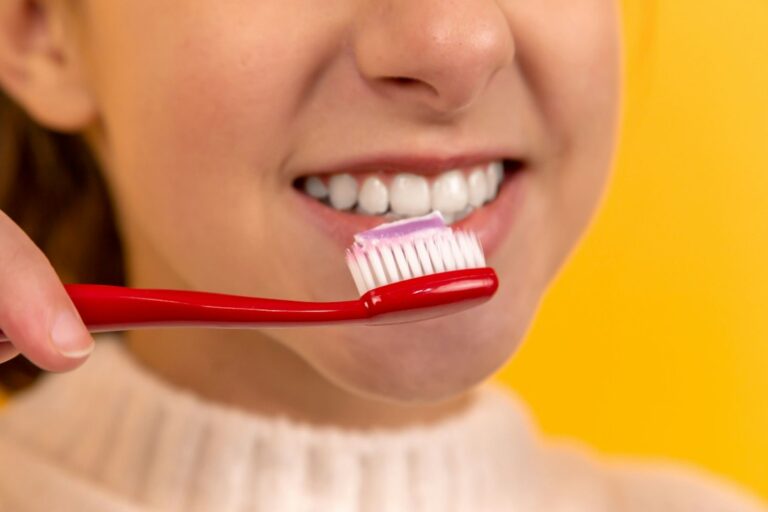
Main image: Giorgio Trovato / Unsplash. Photos are illustrative stock images: they do not show patients, cases or results from The Special Teeth.
Educational information. A professional assessment determines the diagnosis and the appropriate options for each person.