 English

Chipped Front Tooth: Bonding, Veneer, or Crown?
A chipped front tooth can be fixed with bonding, a veneer, or a crown. Learn what each repair involves, how long it lasts, what it costs, and how to choose.

What the broken edge tells you, what it hides, and how to choose a repair
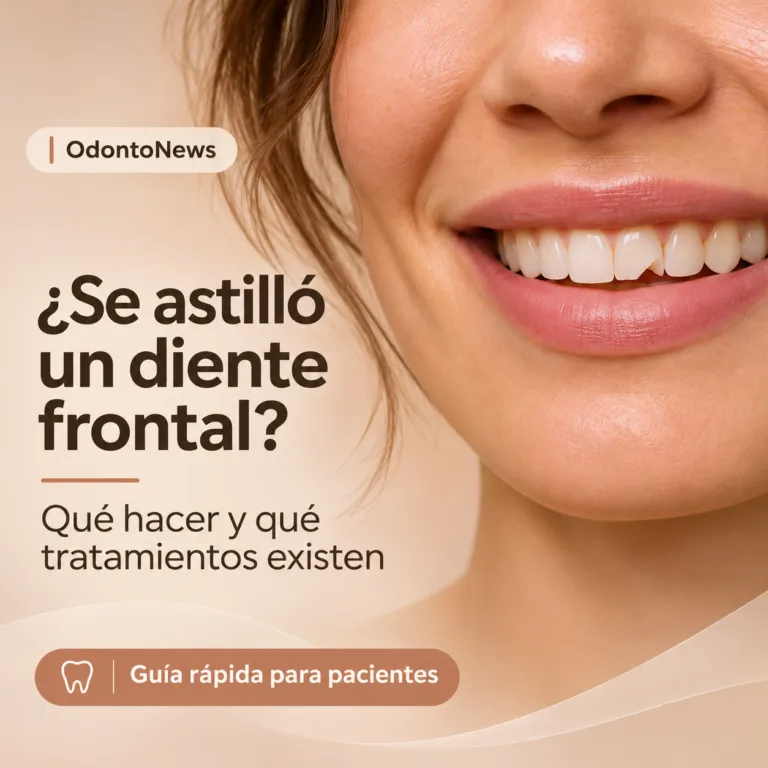
The sound is smaller than you expect. A coffee mug knocks against your front tooth, there is a click, and suddenly your tongue cannot leave one corner alone. In the mirror the gap is obvious. What the mirror cannot tell you is whether the tooth lost only enamel, exposed the layer beneath it, or moved in its socket. Each possibility leads to a different appointment.
For a small chip on an otherwise healthy tooth, dental bonding is often a reasonable repair. A veneer may suit a larger change to the visible surface. A crown protects a tooth that has lost substantial structure. The right choice depends on what broke, what remains, and where the opposing tooth lands when you bite.
What to Do Right After a Chipped Front Tooth
- Save the fragment. In some cases the original piece can be reattached, which is usually a better outcome than a new filling. Bring it to the appointment in a clean container with a little milk or saline if you can.
- Rinse gently with warm water if the chip has left a rough edge, and protect the lip with dental wax or a piece of sugar-free gum until you are seen.
- Call the dentist the same day if the tooth is painful, loose, moved, or sensitive to biting. The international dental trauma guidelines treat fractures and injuries that displace or loosen a tooth as separate concerns, and both need assessment (Bourguignon et al., 2020).

Why the Mirror Is Not Enough
Picture two people walking into the same office with front teeth that look almost identical. The first caught a mug. The second fell off a bicycle and felt the tooth shift. If the dentist starts by matching a shade of white, an important difference can be missed.
Tell the office when and how the chip happened, whether the tooth moved, and whether your teeth still meet as they did before.
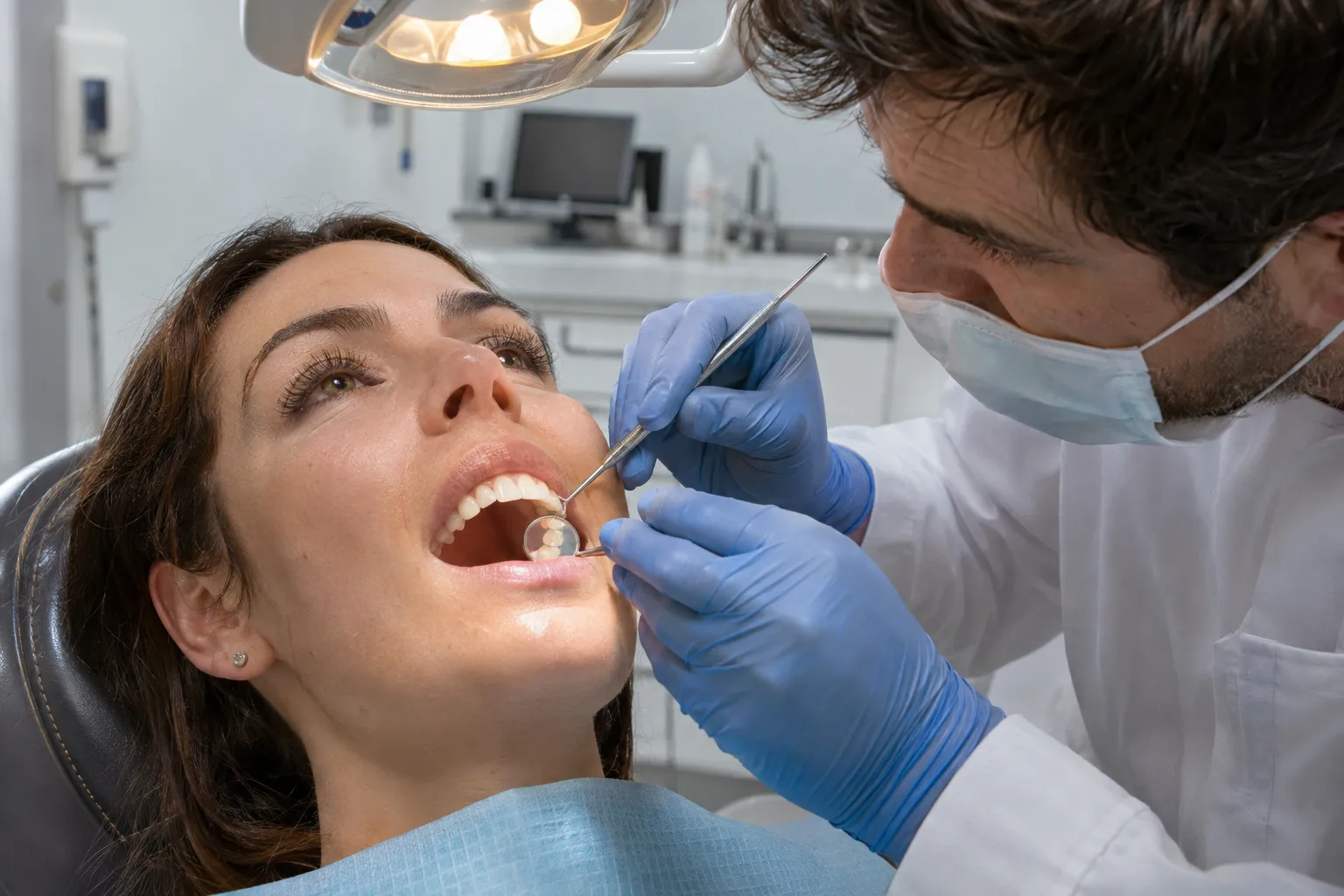
Pain helps the dentist decide what to examine, but it is a poor measure of damage. A sharp edge can irritate your lip even when little tooth is missing. A photograph may also show very little of a crack that extends beyond the visible edge. Reviews of cracked teeth describe how the history, bite testing, and several examination methods each contribute part of the diagnosis (Lubisich et al., 2010).
How Dental Bonding Works and How Long It Lasts
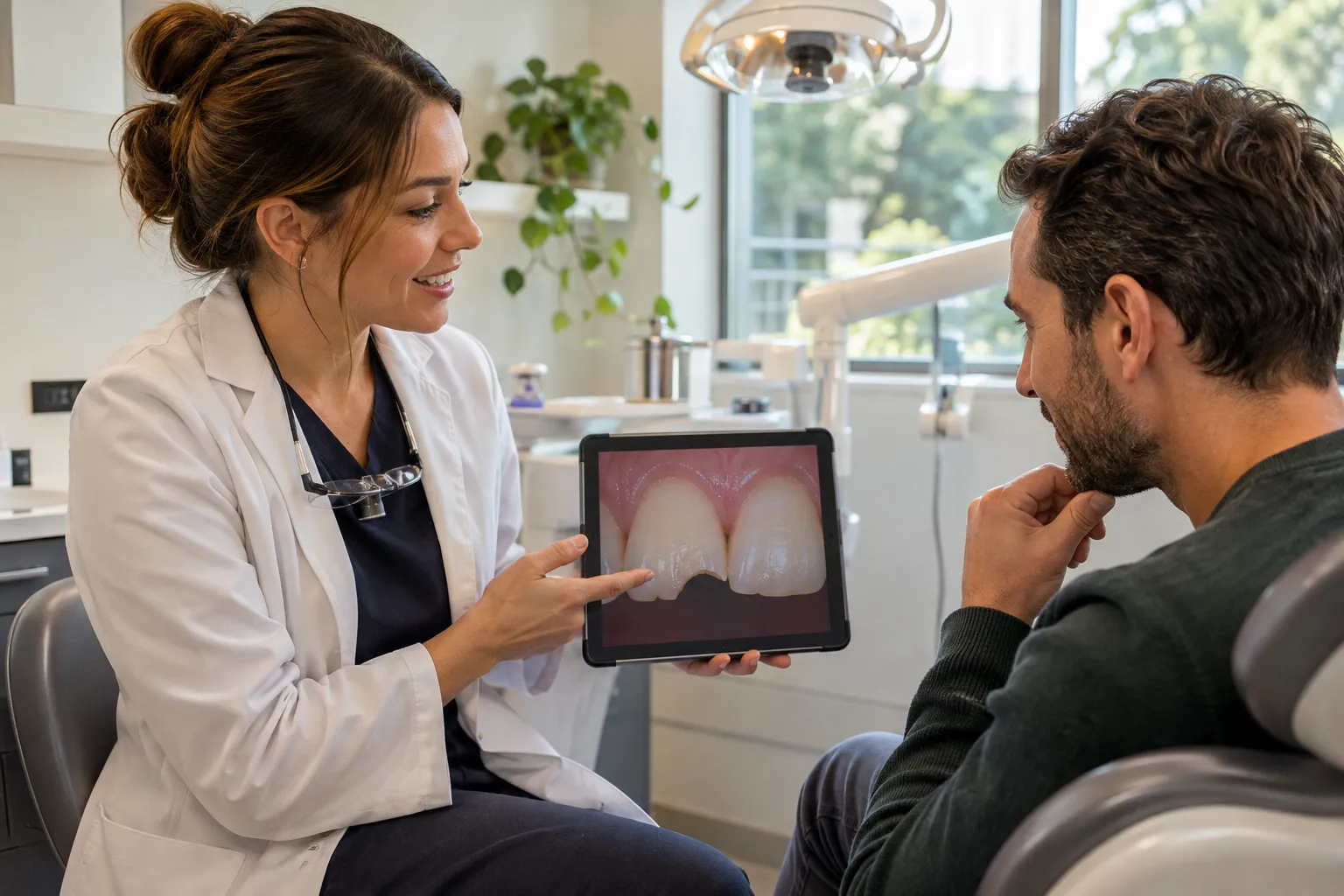
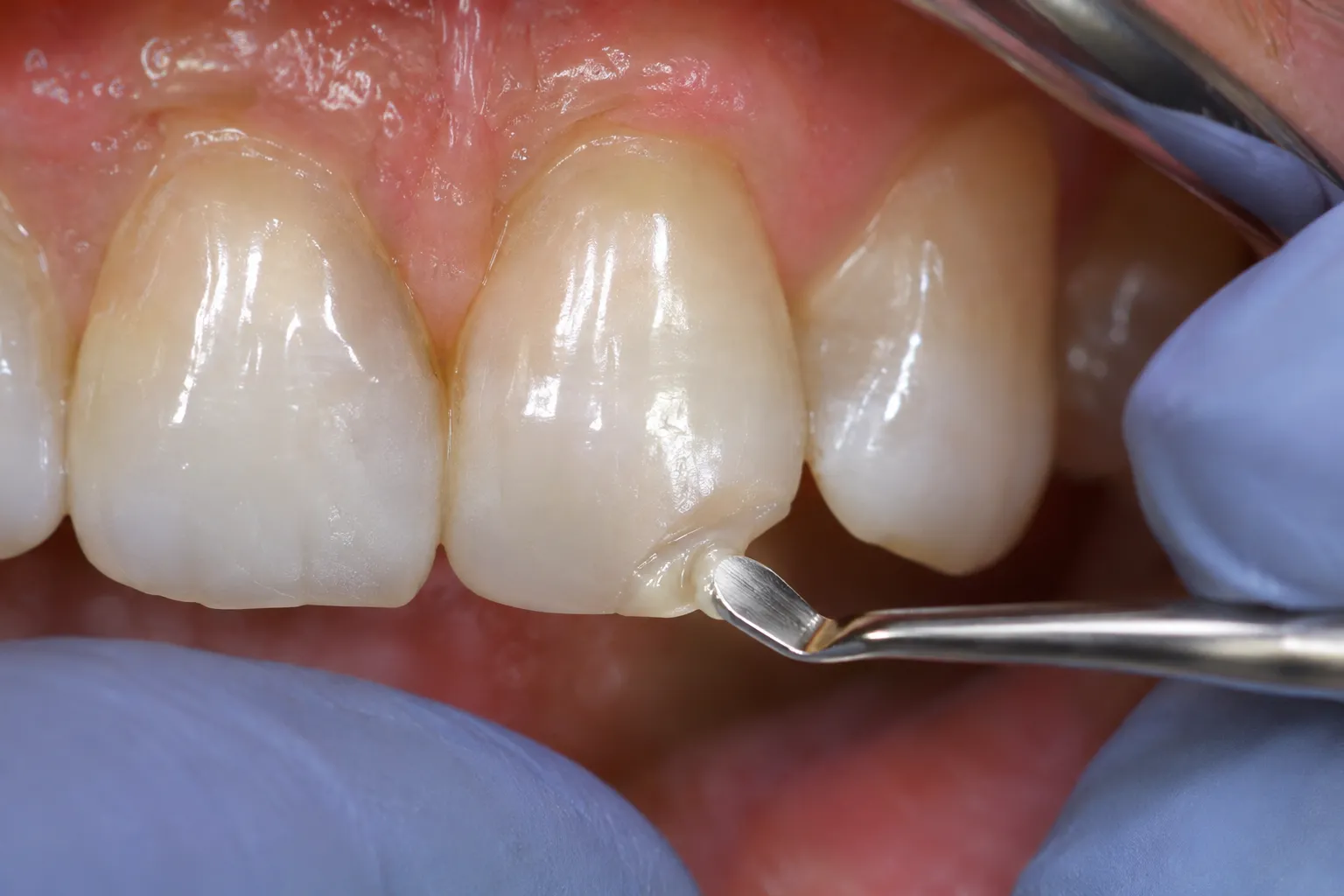
With composite bonding, the dentist adds tooth-colored resin to rebuild the corner, shapes it, and polishes the edge. For a tooth that was healthy before the accident, much of the original tooth remains. Ask the dentist to outline the proposed addition on a photo of your tooth so you can see the change before it is made.
Bonding is usually completed in a single visit. Because the edge touches your lip, catches light when you speak, and helps you bite into food, check two things before you leave:
- Whether the new corner contacts a lower tooth when you move your jaw forward.
- How the repair feels when you bite into something firm.
How long does bonding last? Composite restorations on front teeth can last for years, but they are not permanent. A systematic review of anterior composite restorations found that fracture and concerns about appearance were common reasons they needed attention over time (Demarco et al., 2015). Ask the dentist what they would do if the corner chipped again, and what they would do if it stayed intact but the color or surface changed. A future repair and a future replacement are different commitments.
When a Veneer Makes Sense
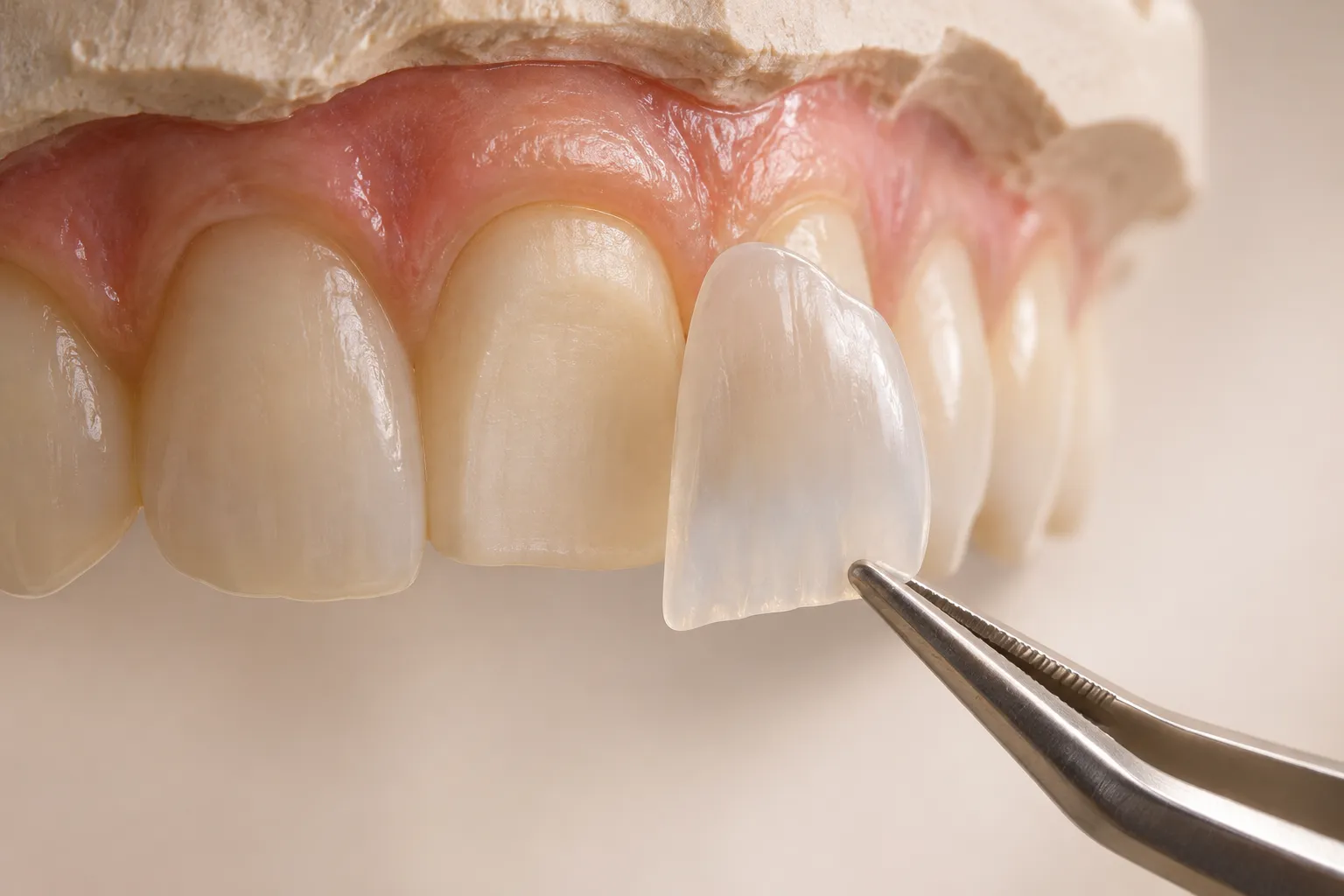
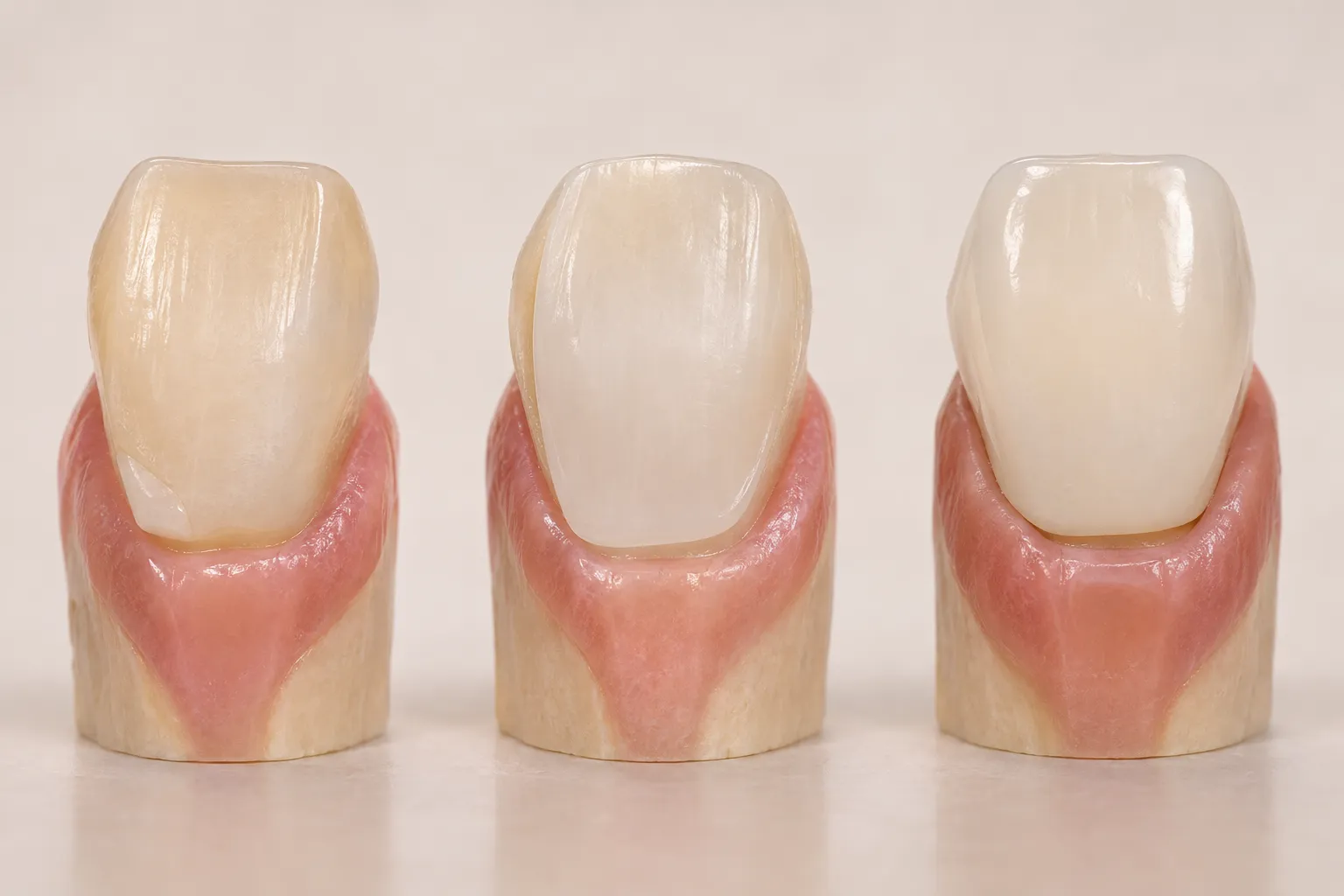
A veneer covers the front surface of the tooth, so it is a better fit when the concern extends beyond one corner. Maybe an old restoration already covers much of that face, or the shape or shade has bothered you for years. Say so. It helps the dentist compare bonding and a porcelain veneer if they know whether your goal is to repair this chip or change your smile more broadly.
Ask how much natural tooth each plan would involve. Enamel removal is worth discussing while all options are still open. If the proposed change extends to healthy neighboring teeth, ask whether a version limited to the injured tooth is possible.
A review of porcelain laminate veneers found favorable long-term survival in the studies it examined, along with complications such as fracture and loss of adhesion (Alenezi et al., 2021). Those results come from selected patients, so ask what about your tooth or bite makes the research relevant to your recommendation.
When a Crown Is the Better Option
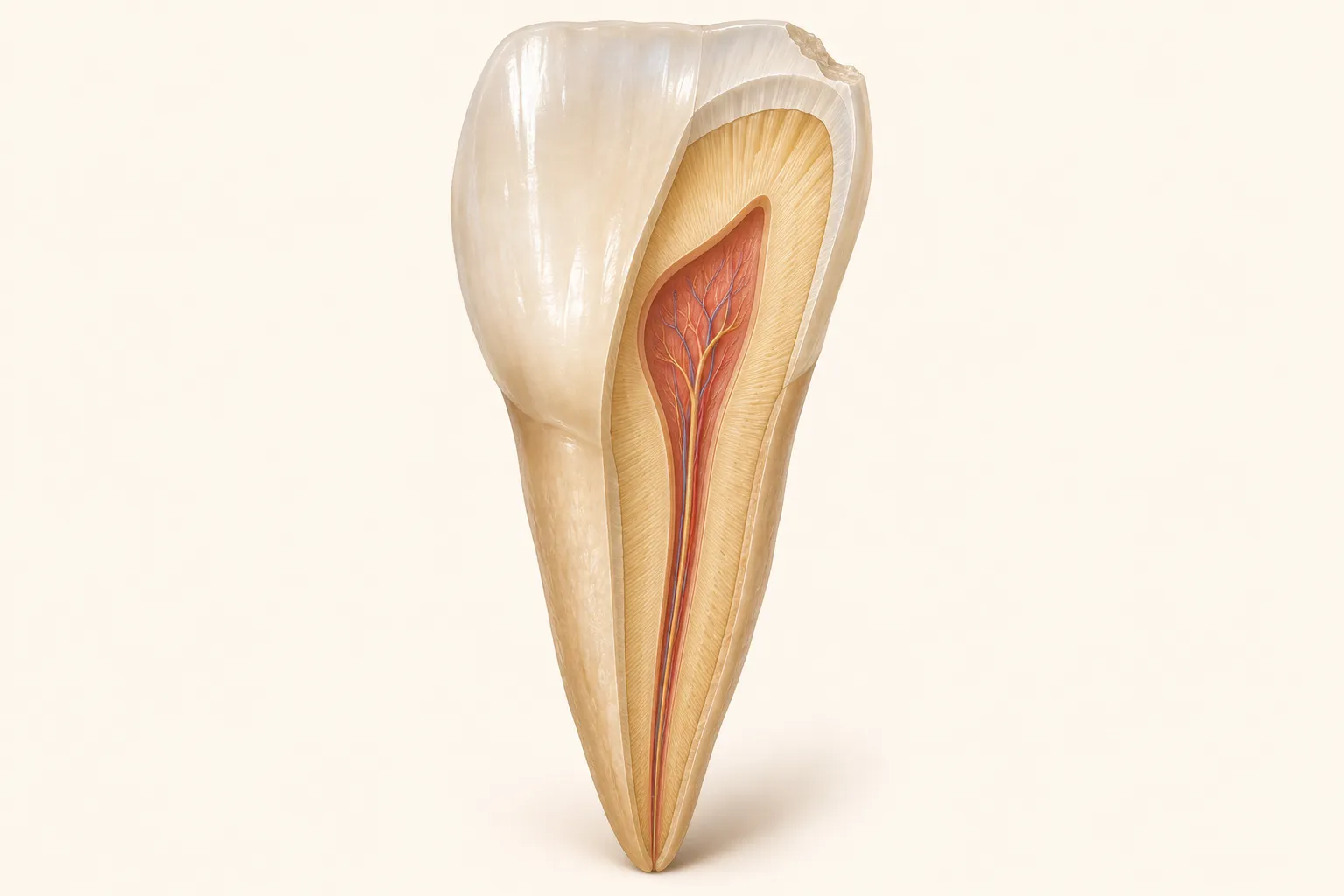
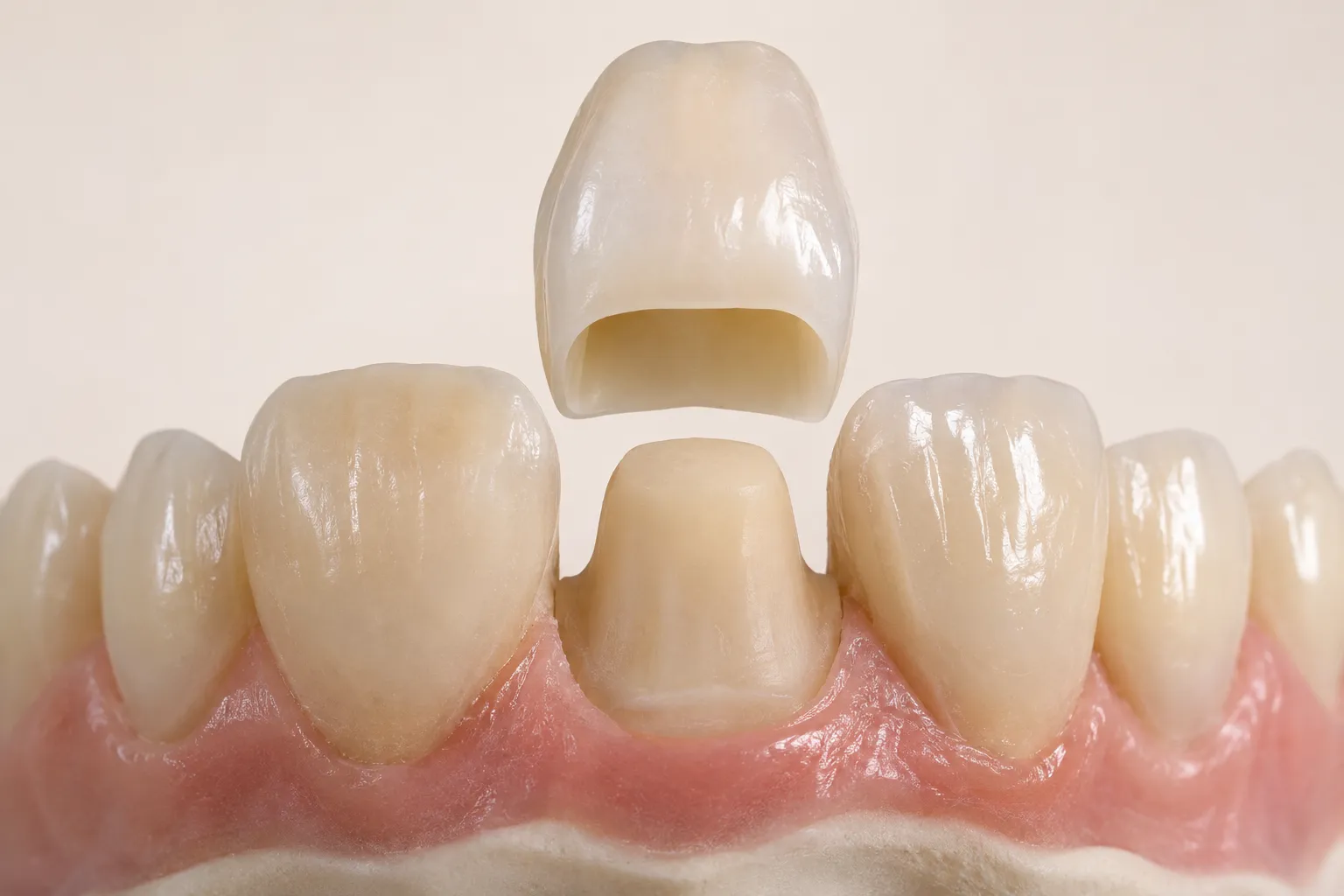
A crown wraps around the tooth. That extra coverage is useful when a break involves more than the visible edge, or when older restorations leave less sound structure to work with. It also means more of the tooth must be prepared.
If a crown is proposed, ask: Which part of this tooth needs support that bonding or a veneer would leave exposed?
Material choice comes second. A systematic review of tooth-supported single crowns found that outcomes and complications varied by material and clinical situation (Sailer et al., 2015). A dentist recommending a ceramic crown should explain why full coverage is needed before you choose a material. Settle the design of the repair first, then the material.
Bonding vs. Veneer vs. Crown at a Glance
| Dental bonding | Porcelain veneer | Crown | |
|---|---|---|---|
| Best for | Small chips, minor shape or edge problems | Larger surface changes, cosmetic goals | Large fractures, tooth with heavy old fillings |
| Tooth removed | Little to none | Thin layer of enamel | Most of the tooth shaped |
| Visits | Usually one | Usually two or more (lab work) | Usually two or more (lab work) |
| Typical cost | Lowest of the three | Higher | Higher |
| Reversible | Easily repaired | Not reversible | Not reversible |
Costs vary by region, practice, and case complexity. See our treatments and pricing page for reference prices, or get a written estimate for your situation.
What Does Each Option Cost?
Prices depend on the size of the repair and the complexity of the case. For current reference prices at Special Teeth, see our treatments and pricing page.
Comparing estimates is harder than it looks. Ask each office the same questions:
- Does the estimate include the full procedure, or only the first appointment?
- For a veneer or crown, does it include laboratory work, temporary restorations, and the fitting?
- If a crown needs a buildup, is that included?
- If the repair breaks, who evaluates it, and is there an extra charge?
- Does the plan include follow-up visits?
Written answers let you compare complete episodes of care, especially if the accident happened while you were away from home.

Frequently Asked Questions
Can a chipped front tooth be fixed in one visit?
Often, yes. Small chips are commonly repaired with bonding in a single appointment. Veneers and crowns usually need a lab step and at least two visits.
Does bonding hurt?
Bonding is generally comfortable, and anesthesia is often unnecessary for a small chip. If the chip is near the nerve or a crack extends deep, the dentist may need to numb the area.
Is a veneer stronger than bonding?
Not necessarily. Veneers are often more resistant to staining and can look more natural over large areas, but they require more tooth removal and have their own failure risks.
What should I do if my bonded tooth chips again?
Call the dentist. Small re-chips are usually repairable. Ask at your first visit what they would recommend in that case.
Should I see a dentist if the chip does not hurt?
Yes. A chip can expose the layer beneath the enamel or hide a crack, even when there is no pain.
The Question to Take Home
Before you leave the office, separate what needs attention today from what can wait. Ask:
- What should be protected now?
- Does the tooth need a follow-up after the injury?
- When should I call the office, for example if the tooth changes color, becomes sensitive, or feels loose?
If the outlook is uncertain, a follow-up visit can answer questions the first visit could not. Ask that the plan be included in your written instructions (Bourguignon et al., 2020).
Finally, ask the dentist one precise question: Can you show me the smallest repair that will do the job here, and what finding would make you choose something larger? The answer connects the mark you see in the mirror with the parts of the tooth that only an examination can reveal.
Reviewed by: Equipo clínico The Special Teeth
References
- Alenezi, A., Alsweed, M., Alsidrani, S., & Chrcanovic, B. R. (2021). Long-term survival and complication rates of porcelain laminate veneers in clinical studies: A systematic review. Journal of Clinical Medicine, 10(5), 1074. https://doi.org/10.3390/jcm10051074
- Bourguignon, C., Cohenca, N., Lauridsen, E., Flores, M. T., O’Connell, A. C., Day, P. F., Tsilingaridis, G., Abbott, P. V., Fouad, A. F., Hicks, L., Andreasen, J. O., Cehreli, Z. C., Harlamb, S., Kahler, B., Oginni, A., Semper, M., & Levin, L. (2020). International Association of Dental Traumatology guidelines for the management of traumatic dental injuries: 1. Fractures and luxations. Dental Traumatology, 36(4), 314–330. https://doi.org/10.1111/edt.12578
- Demarco, F. F., Collares, K., Coelho-de-Souza, F. H., Correa, M. B., Cenci, M. S., Moraes, R. R., & Opdam, N. J. M. (2015). Anterior composite restorations: A systematic review on long-term survival and reasons for failure. Dental Materials, 31(10), 1214–1224. https://doi.org/10.1016/j.dental.2015.07.005
- Lubisich, E. B., Hilton, T. J., & Ferracane, J. (2010). Cracked teeth: A review of the literature. Journal of Esthetic and Restorative Dentistry, 22(3), 158–167. https://doi.org/10.1111/j.1708-8240.2010.00330.x
- Sailer, I., Makarov, N. A., Thoma, D. S., Zwahlen, M., & Pjetursson, B. E. (2015). All-ceramic or metal-ceramic tooth-supported fixed dental prostheses (FDPs)? A systematic review of the survival and complication rates. Part I: Single crowns (SCs). Dental Materials, 31(6), 603–623. https://doi.org/10.1016/j.dental.2015.02.011