 English

Dental Abscess: What It Is, Why Antibiotics Aren't Enough and When It's an Emergency
A swollen, pus-filled gum or a swollen face is not something to wait out. What a dental abscess is, how it is really treated and which signs need immediate care.
A dental abscess is a collection of pus caused by a bacterial infection, usually at the tip of the root of a tooth whose pulp has died or in the surrounding gum. It can cause severe pain, swelling and a bad taste, but it can also go almost unnoticed for weeks. The key point is that it does not resolve on its own and that, in some cases, it can become a medical emergency.
Picture this hypothetical scene: Javier is 40 and months ago he noticed a “pimple” on his gum, above a back tooth that had broken. Sometimes a bad-tasting fluid came out and the bump disappeared. One Friday night he woke up with a swollen cheek. He found some leftover antibiotic capsules in a drawer from a previous illness and took several over the weekend. The swelling went down. Two weeks later, it came back stronger.
How does an abscess form?
It all begins when bacteria reach the inside of the tooth, almost always through a deep cavity, a fracture or a restoration that no longer seals. A classic experiment showed that when the pulp is exposed, it is bacteria that cause it to die and lead to lesions in the bone around the root (Kakehashi et al., 1965). Once the pulp becomes necrotic, the inside of the tooth turns into a refuge for microorganisms that the immune system cannot easily reach.
Bacteria and their toxins exit through the root tip into the bone. The body responds with inflammation and, when the infection overwhelms local defenses, pus forms. An acute apical abscess is an infection involving many bacterial species at once, mostly bacteria that live without oxygen (Siqueira & Rôças, 2013). Sometimes the pus finds a way out through the gum, forming a sinus tract, that “pimple” that comes and goes. This relieves pressure but does not eliminate the infection.
Common symptoms
- Intense, throbbing pain that may worsen when biting or lying down.
- Swelling of the gum or face.
- A bump on the gum that drains or leaves a bad taste.
- Tenderness when touching the tooth or a feeling that it is “high.”
- Swollen lymph nodes under the jaw.
Why antibiotics alone are not enough
This is the part that causes the most confusion. In Javier’s case, the antibiotic reduced the swelling, but the source of the infection remained inside the tooth. Antibiotics travel through the blood, and dead pulp no longer has circulation, so the drug does not reach the place where the bacteria live very well. That is why the main treatment for an abscess is to remove the source of infection and drain the pus, through root canal treatment, drainage of the area or, if the tooth cannot be saved, extraction (Siqueira & Rôças, 2013).
Current guidelines are clear on this. The American Dental Association’s clinical practice guideline recommends that, for healthy adults with localized dental pain or abscesses, antibiotics should not be prescribed routinely and definitive dental treatment should be performed instead (Lockhart et al., 2019). The European Society of Endodontology agrees: antibiotics should be reserved for situations with systemic involvement, such as fever, malaise, swollen lymph nodes or difficulty opening the mouth, for rapidly spreading infections and for people with compromised immune defenses (Segura-Egea et al., 2018).
A Cochrane review examined whether adding antibiotics to dental treatment improves pain or swelling in adults with abscesses or painful lesions at the root tip, and found very low-certainty evidence with no clear benefit (Cope et al., 2018). In addition, unnecessary antibiotic use contributes to bacterial resistance, a growing public health problem. Taking leftovers from other treatments, as Javier did, can mask the problem and delay proper care.
When an abscess becomes an emergency
Most abscesses remain localized, but some dental infections spread into the spaces of the neck and face along the planes between muscles (Ogle, 2017). These complications are uncommon but can be serious. They include infections of the floor of the mouth, facial cellulitis, infections that reach the eye socket and, in extreme cases, infections that descend toward the chest or enter the bloodstream (Bali et al., 2015).
One of the best known is Ludwig’s angina, an infection that swells the floor of the mouth and the neck and can compromise the airway, which is why it is considered an emergency (Candamourty et al., 2012). A hospital study in Germany described severe dental infections progressing to sepsis as a constant and even increasing challenge (Weise et al., 2019).
Specialists recommend seeking urgent care, at an emergency department if necessary, when signs such as these appear (Robertson et al., 2015):
- Fever, chills or feeling generally unwell.
- Swelling that spreads quickly toward the eye, the neck or under the jaw.
- Difficulty swallowing, speaking or breathing.
- Difficulty opening the mouth.
- A raised tongue or swollen floor of the mouth.
How is it treated?
Treatment depends on the source and extent. For a pulp-related abscess, root canal treatment is usually performed to clean and disinfect the canals, or the tooth is extracted if it cannot be saved. If pus has collected, the professional may drain it. Antibiotics are added only when there are signs of spreading infection or systemic involvement. In severe cases, management may require hospital care, surgical drainage and intravenous antibiotics.
How to prevent it
- Treat cavities early, before they reach the pulp.
- Don’t ignore a broken tooth, even if it doesn’t hurt.
- If a draining “pimple” appears on your gum, get an assessment.
- Don’t self-medicate with leftover antibiotics.
- Keep up with regular checkups: many infections start without symptoms.
Frequently asked questions
If the pain went away, is it healed? Not necessarily. Pain can ease when the pus finds a way out or when the nerve dies completely, but the infection may still be active.
Can I pop the abscess at home? It is not advisable. It can introduce more bacteria and does not remove the cause.
Can an abscess affect other parts of the body? In uncommon cases, yes. That is why warning signs deserve immediate attention.
The end of the story
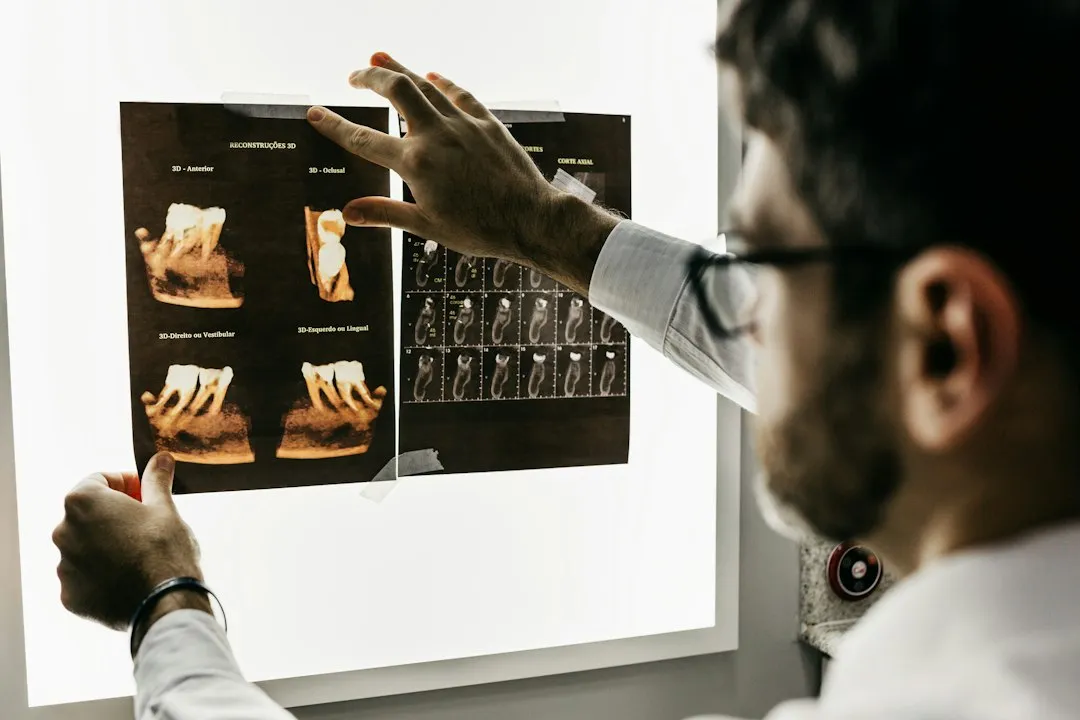
In our hypothetical case, when the swelling returned, Javier finally sought an assessment. The X-ray showed a lesion at the tip of the root of the broken molar. He was told that the antibiotic had calmed the infection for a few days, but that the source was still inside the tooth. After the area was drained and root canal treatment was performed, the infection resolved. His story leaves a clear lesson: an abscess is not cured with pills kept in a drawer, but by treating its source.
If you want a professional to take a look
Learn more about root canal treatment at The Special Teeth. If you are coming from the United States, our guide to planning your visit to Tijuana helps with the border crossing and transfers. Whenever you are ready, you can request an evaluation.
References
Bali, R. K., Sharma, P., Gaba, S., Kaur, A., & Ghanghas, P. (2015). A review of complications of odontogenic infections. National Journal of Maxillofacial Surgery, 6(2), 136–143. DOI: https://doi.org/10.4103/0975-5950.183867
Candamourty, R., Venkatachalam, S., Babu, M. R. R., & Kumar, G. S. (2012). Ludwig’s angina – an emergency: A case report with literature review. Journal of Natural Science, Biology and Medicine, 3(2), 206–208. DOI: https://doi.org/10.4103/0976-9668.101932
Cope, A. L., Francis, N., Wood, F., & Chestnutt, I. G. (2018). Systemic antibiotics for symptomatic apical periodontitis and acute apical abscess in adults. Cochrane Database of Systematic Reviews, 2018(9), Article CD010136. DOI: https://doi.org/10.1002/14651858.cd010136.pub3
Kakehashi, S., Stanley, H. R., & Fitzgerald, R. J. (1965). The effects of surgical exposures of dental pulps in germ-free and conventional laboratory rats. Oral Surgery, Oral Medicine, Oral Pathology, 20(3), 340–349. DOI: https://doi.org/10.1016/0030-4220(65)90166-0
Lockhart, P. B., Tampi, M. P., Abt, E., Aminoshariae, A., Durkin, M. J., Fouad, A. F., Gopal, P., Hatten, B. W., Kennedy, E., Lang, M. S., Patton, L. L., Paumier, T., Suda, K. J., Pilcher, L., Urquhart, O., O’Brien, K. K., & Carrasco-Labra, A. (2019). Evidence-based clinical practice guideline on antibiotic use for the urgent management of pulpal- and periapical-related dental pain and intraoral swelling: A report from the American Dental Association. The Journal of the American Dental Association, 150(11), 906–921.e12. DOI: https://doi.org/10.1016/j.adaj.2019.08.020
Ogle, O. E. (2017). Odontogenic infections. Dental Clinics of North America, 61(2), 235–252. DOI: https://doi.org/10.1016/j.cden.2016.11.004
Robertson, D. P., Keys, W., Rautemaa-Richardson, R., Burns, R., & Smith, A. J. (2015). Management of severe acute dental infections. BMJ, 350, Article h1300. DOI: https://doi.org/10.1136/bmj.h1300
Segura-Egea, J. J., Gould, K., Şen, B. H., Jonasson, P., Cotti, E., Mazzoni, A., Sunay, H., Tjäderhane, L., & Dummer, P. M. H. (2018). European Society of Endodontology position statement: The use of antibiotics in endodontics. International Endodontic Journal, 51(1), 20–25. DOI: https://doi.org/10.1111/iej.12781
Siqueira, J. F., & Rôças, I. N. (2013). Microbiology and treatment of acute apical abscesses. Clinical Microbiology Reviews, 26(2), 255–273. DOI: https://doi.org/10.1128/cmr.00082-12
Weise, H., Naros, A., Weise, C., Reinert, S., & Hoefert, S. (2019). Severe odontogenic infections with septic progress – a constant and increasing challenge: A retrospective analysis. BMC Oral Health, 19, Article 173. DOI: https://doi.org/10.1186/s12903-019-0866-6
Main image: Jonathan Borba / Unsplash. Photos are illustrative stock images: they do not show patients, cases or results from The Special Teeth.
Educational information. A professional assessment determines the diagnosis and the appropriate options for each person.