 English

Composite or Amalgam: Should You Replace Your Silver Fillings? What the Evidence Says
Your silver fillings have been there for years and social media says mercury is dangerous. What studies say about durability, safety and when replacing them makes sense.
Amalgams, the silver fillings, have been used for more than a century to repair cavities in back teeth. Composite resins, which match the color of the tooth, have become the most common option in many countries. Both can work well, but they differ in durability, technique and appearance. And a frequent question is whether existing amalgams should be replaced.
Picture this hypothetical scene: Gabriela is 42 and has three silver fillings placed when she was a teenager. They have never caused problems, but she has watched several videos about mercury and now wants to replace them all with composites “to detox.” At her appointment, her dentist examines each filling and asks her a question: “Do you want to replace them for cosmetic reasons, because they have a problem, or out of fear?” The answer changes the recommendation.
What are they and how do they differ?
Amalgam is a mixture of mercury with an alloy of silver, tin and copper. When it hardens, it forms a strong material placed in a cavity shaped to hold it. Composite resins, by contrast, consist of a plastic matrix with filler particles; they bond to the tooth with an adhesive system and harden with light. Over the years, composites have improved greatly in wear resistance and handling, although they remain more technique-sensitive, for example to moisture during placement (Ferracane, 2011).
Which lasts longer?
This is the most studied question. A Cochrane review comparing composite and amalgam restorations in back teeth found that composites had a higher risk of failure and of decay around the filling, although with low-certainty evidence (Rasines Alcaraz et al., 2014). Its most recent update reached a similar conclusion: composites may fail more often than amalgams, mainly because of secondary decay (Worthington et al., 2021).
A clinical trial in children that followed fillings for several years found that amalgams had higher survival than composites, and that the main cause of failure in composites was decay around the restoration (Bernardo et al., 2007).
However, that does not mean composites are a poor choice. A meta-analysis of long-term studies found that composites in back teeth have low annual failure rates and good longevity, although these rates increase in people at high risk of decay (Opdam et al., 2014). A systematic review in adults also found acceptable longevity for posterior composites (Ástvaldsdóttir et al., 2015), and an updated meta-analysis confirmed their good overall clinical performance (Heintze et al., 2022).
Durability depends on more than the material
Specialists stress that how long a filling lasts depends not only on the material but also on the patient and the clinician: decay risk, bruxism, the size of the restoration and technique matter as much as the material chosen (Demarco et al., 2012). In fact, a study on the reasons for replacing restorations found that secondary decay is the most common cause for both amalgams and composites (Mjör et al., 2000). That is why controlling decay is as important as choosing the material. Regular checkups make it possible to detect small problems early and repair a filling instead of replacing it completely.
What about mercury? Are amalgams dangerous?
This is Gabriela’s concern and that of many people. Two clinical trials published in the same issue of a leading medical journal evaluated children who received amalgam or composite fillings and followed them for several years. Neither found adverse effects of amalgam on neurological development, memory, attention or kidney function (DeRouen et al., 2006; Bellinger et al., 2006).
So why is its use being reduced? Mainly for environmental reasons. The Minamata Convention, an international agreement to reduce mercury in the environment, includes phasing down the use of dental amalgam, together with decay prevention measures and proper waste management (Fisher et al., 2018). In other words, the phase-down is related mainly to mercury’s impact on the environment, not to evidence of harm in people who already have amalgams in good condition.
Should I replace my amalgams?
If an amalgam is in good condition, with no fractures, no decay around it and no discomfort, there is usually no health reason to remove it. In fact, removing a sound restoration means cutting away more tooth structure and, during the procedure, more mercury vapor may be released than if it were left in place.
It is worth considering replacement when:
- There is new decay around the filling.
- The filling or the tooth is fractured.
- There is sensitivity or pain related to the restoration.
- There is a confirmed allergy to one of its components, which is uncommon.
- The person wants it for cosmetic reasons, understanding the pros and cons.
When is each option better?
- Composites: preserve more tooth structure, bond to the tooth, look natural and are the most widely used option today. They require careful technique and good moisture control.
- Amalgams: are strong and less technique-sensitive, so they can be useful in large, hard-to-reach cavities or in people at high risk of decay, depending on professional judgment and each country’s regulations.
- Other options: for very large restorations, inlays, onlays or crowns may be recommended.
Frequently asked questions
Do composites stain? They can discolor slightly over the years, especially at the edges, and are sometimes polished or repaired.
Is it true that amalgams “poison” you? Studies in children found no adverse neurological or kidney effects. Removing sound amalgams “to detox” has no scientific support.
How long does a filling last? It depends on its size, the material, the technique and, above all, each person’s decay risk and habits. Many last more than a decade.
The end of the story
In our hypothetical case, the dentist examined Gabriela’s three fillings. Two were in good condition and one had a small area of decay at the edge. He explained what studies say about mercury and the longevity of materials. Gabriela decided to replace only the decayed filling with a composite and to keep the other two under observation. She left reassured, with a decision based on information rather than fear. Her story shows that the best restoration is not always the newest one, but the one chosen for the right reasons.
If you want a professional to take a look
Learn more about crowns and veneers at The Special Teeth. If you are coming from the United States, our guide to planning your visit to Tijuana helps with the border crossing and transfers. Whenever you are ready, you can request an evaluation.
References
Ástvaldsdóttir, Á., Dagerhamn, J., van Dijken, J. W. V., Naimi-Akbar, A., Sandborgh-Englund, G., Tranæus, S., & Nilsson, M. (2015). Longevity of posterior resin composite restorations in adults – A systematic review. Journal of Dentistry, 43(8), 934–954. https://doi.org/10.1016/j.jdent.2015.05.001
Bellinger, D. C., Trachtenberg, F., Barregard, L., Tavares, M., Cernichiari, E., Daniel, D., & McKinlay, S. (2006). Neuropsychological and renal effects of dental amalgam in children: A randomized clinical trial. JAMA, 295(15), 1775–1783. https://doi.org/10.1001/jama.295.15.1775
Bernardo, M., Luis, H., Martin, M. D., Leroux, B. G., Rue, T., Leitão, J., & DeRouen, T. A. (2007). Survival and reasons for failure of amalgam versus composite posterior restorations placed in a randomized clinical trial. The Journal of the American Dental Association, 138(6), 775–783. https://doi.org/10.14219/jada.archive.2007.0265
Demarco, F. F., Corrêa, M. B., Cenci, M. S., Moraes, R. R., & Opdam, N. J. M. (2012). Longevity of posterior composite restorations: Not only a matter of materials. Dental Materials, 28(1), 87–101. https://doi.org/10.1016/j.dental.2011.09.003
DeRouen, T. A., Martin, M. D., Leroux, B. G., Townes, B. D., Woods, J. S., Leitão, J., Castro-Caldas, A., Luis, H., Bernardo, M., Rosenbaum, G., & Martins, I. P. (2006). Neurobehavioral effects of dental amalgam in children: A randomized clinical trial. JAMA, 295(15), 1784–1792. https://doi.org/10.1001/jama.295.15.1784
Ferracane, J. L. (2011). Resin composite—State of the art. Dental Materials, 27(1), 29–38. https://doi.org/10.1016/j.dental.2010.10.020
Fisher, J., Varenne, B., Narvaez, D., & Vickers, C. (2018). The Minamata Convention and the phase down of dental amalgam. Bulletin of the World Health Organization, 96(6), 436–438. https://doi.org/10.2471/blt.17.203141
Heintze, S. D., Loguercio, A. D., Hanzen, T. A., Reis, A., & Rousson, V. (2022). Clinical efficacy of resin-based direct posterior restorations and glass-ionomer restorations – An updated meta-analysis of clinical outcome parameters. Dental Materials, 38(5), e109–e135. https://doi.org/10.1016/j.dental.2021.10.018
Mjör, I. A., Moorhead, J. E., & Dahl, J. E. (2000). Reasons for replacement of restorations in permanent teeth in general dental practice. International Dental Journal, 50(6), 361–366. https://doi.org/10.1111/j.1875-595x.2000.tb00569.x
Opdam, N. J. M., van de Sande, F. H., Bronkhorst, E., Cenci, M. S., Bottenberg, P., Pallesen, U., Gaengler, P., Lindberg, A., Huysmans, M. C. D. N. J. M., & van Dijken, J. W. (2014). Longevity of posterior composite restorations: A systematic review and meta-analysis. Journal of Dental Research, 93(10), 943–949. https://doi.org/10.1177/0022034514544217
Rasines Alcaraz, M. G., Veitz-Keenan, A., Sahrmann, P., Schmidlin, P. R., Davis, D., & Iheozor-Ejiofor, Z. (2014). Direct composite resin fillings versus amalgam fillings for permanent or adult posterior teeth. Cochrane Database of Systematic Reviews, 2014(3), Article CD005620. https://doi.org/10.1002/14651858.cd005620.pub2
Worthington, H. V., Khangura, S., Seal, K., Mierzwinski-Urban, M., Veitz-Keenan, A., Sahrmann, P., Schmidlin, P. R., Davis, D., Iheozor-Ejiofor, Z., & Rasines Alcaraz, M. G. (2021). Direct composite resin fillings versus amalgam fillings for permanent posterior teeth. Cochrane Database of Systematic Reviews, 2021(8), Article CD005620. https://doi.org/10.1002/14651858.cd005620.pub3
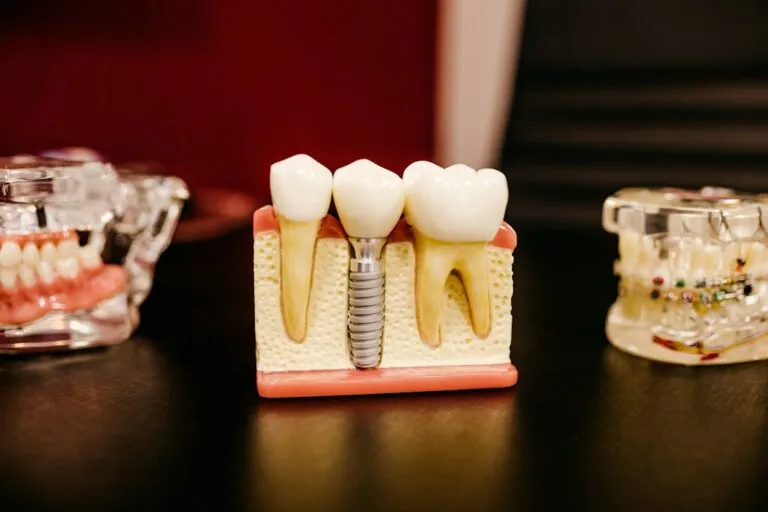
Main image: Ozkan Guner / Unsplash. Photos are illustrative stock images: they do not show patients, cases or results from The Special Teeth.
Educational information. A professional assessment determines the diagnosis and the appropriate options for each person.