 English

Early Childhood Caries: What a Bedtime Bottle Can Do to Baby Teeth
White spots on a baby's teeth can be the first warning sign of decay. Why it appears so early, what encourages it and how to prevent it from the first tooth.
Early childhood caries is tooth decay that appears in the baby teeth of children under six. It is one of the most common chronic diseases of childhood and can progress very quickly, causing pain, infections and problems with eating and sleeping. The good news is that it can be prevented with simple habits from the moment the first tooth comes in.
Picture this hypothetical scene: Valeria is the mother of Leo, who is 3. Since he was a baby, Leo has fallen asleep with a bottle of chocolate milk or juice, and sometimes wakes up at midnight asking for another. Valeria notices some white spots near the gums on his front teeth but thinks they are not important: “After all, they’re going to fall out.” A few months later, Leo cries when he bites into an apple, and one of those spots has become a brown hole.
What exactly is it?
The Bangkok Declaration of the International Association of Paediatric Dentistry defines early childhood caries as the presence of one or more surfaces with decay, with or without a cavity, missing because of decay or filled in any baby tooth of a child under six. The same declaration notes that it affects hundreds of millions of children worldwide and that it is largely preventable (Pitts et al., 2019).
A global analysis estimated that more than 600 million children had untreated decay in their baby teeth in 2010 (Kassebaum et al., 2015). Reviews of its epidemiology agree that it is more common in socially disadvantaged settings and that its consequences go far beyond the mouth: pain, infections, difficulty eating, disrupted sleep and poorer quality of life (Tinanoff et al., 2019).
Why does it appear so early?
The enamel of baby teeth is thinner than that of permanent teeth, so decay progresses faster. In addition, babies and young children depend entirely on adults for their hygiene and their diet. The factors that appear most often in studies are (Seow, 2018; Anil & Anand, 2017):
- Frequent sugars, especially in drinks: juices, flavored milks, soft drinks, sweetened cereal drinks or sweetened tea.
- Sleeping with a bottle containing anything other than water, or sipping for many hours.
- Lack of brushing with fluoride toothpaste from the first tooth.
- Bacteria from adults’ mouths, passed on when sharing utensils or tasting food, in a high-sugar environment.
- Enamel with developmental defects, which makes it more vulnerable.
In Leo’s case, the bedtime bottle is key: during sleep saliva flow drops, so sugar stays on the teeth for hours, exactly when defenses are lowest.
What about breastfeeding?
It is a common and sensitive question. Breastfeeding has enormous benefits for the health of both baby and mother. A systematic review found that breastfed children had less decay than bottle-fed children (Avila et al., 2015). Another review observed that breastfeeding up to 12 months was associated with a lower risk of decay, while longer breastfeeding, especially frequent and nighttime feeding, was associated with a higher risk (Tham et al., 2015). A cohort study in Brazil found something similar with breastfeeding continued beyond age two (Peres et al., 2017).
These findings do not mean breastfeeding should stop. They mean that, once teeth have come in, daily hygiene with fluoride toothpaste and control of dietary sugars become especially important. The World Health Organization’s global consultation on this topic recommends protecting breastfeeding while limiting free sugars and brushing with fluoride from the first tooth (Phantumvanit et al., 2018).
How to recognize the first signs
- Opaque white spots near the gum, especially on the upper front teeth.
- Yellow or brown spots that do not brush off.
- Small cavities or teeth that look “crumbly.”
- Pain when eating, refusing certain foods or irritability.
- Swollen gums or a pus-filled “pimple” near a tooth.
White spots are the stage at which decay can still be stopped with fluoride and habit changes. That is why it is worth lifting your child’s lip from time to time to check their teeth.
Prevention from the first tooth
The Bangkok Declaration and the WHO consultation agree on a set of practical measures (Pitts et al., 2019; Phantumvanit et al., 2018):
- Brush twice a day with fluoride toothpaste from the first tooth. Under age three, use an amount the size of a grain of rice, and later a pea-sized amount. A systematic review confirmed that fluoride toothpaste reduces decay in young children and that a minimal amount lowers the risk of fluorosis (Wright et al., 2014).
- Avoid added sugars for children under two and limit them afterward.
- Don’t put a child to bed with a bottle containing anything other than water.
- Offer water as the drink between meals.
- Introduce a cup around the first birthday.
- Schedule the first dental visit around the first year.
Fluoride varnish
For children at risk of decay, professional application of fluoride varnish is a quick and effective measure. A Cochrane review found that it is associated with a substantial reduction in decay in baby teeth (Marinho et al., 2013).
“They’ll fall out anyway”: the most costly mistake
Baby teeth serve essential functions: they allow children to chew, speak and smile with confidence, and they hold space for the permanent teeth. Untreated decay can reach the nerve, cause abscesses and force a tooth to be pulled too early. In addition, a child with decay in the baby teeth is at greater risk of developing it later in the permanent teeth (Tinanoff et al., 2019).
Frequently asked questions
When should my child first see a dentist? Around the first birthday or when the first tooth appears is recommended.
Are natural juices better than soft drinks? They still contain free sugars and acids. It is better to offer whole fruit and water to drink.
Can I clean the gums before teeth come in? Yes, with a damp gauze, which also gets the baby used to oral hygiene.
The end of the story
In our hypothetical case, Valeria took Leo to a pediatric dentist. She was told that the white spots were early decay and that the hole already needed treatment. Leo had the affected tooth treated and received a fluoride varnish application. At home, the bedtime bottle was replaced with a cup of water, and Valeria began brushing his teeth twice a day with a small amount of fluoride toothpaste. At the next checkup, the remaining spots had stopped progressing. Their story is a reminder of something essential: baby teeth matter, and protecting them starts much earlier than we think.
If you want a professional to take a look
Meet our team of specialists, which includes a pediatric dentist. If you are coming from the United States, our guide to planning your visit to Tijuana helps with the border crossing and transfers. Whenever you are ready, you can request an evaluation.
References
Anil, S., & Anand, P. S. (2017). Early childhood caries: Prevalence, risk factors, and prevention. Frontiers in Pediatrics, 5, Article 157. DOI: https://doi.org/10.3389/fped.2017.00157
Avila, W. M., Pordeus, I. A., Paiva, S. M., & Martins, C. C. (2015). Breast and bottle feeding as risk factors for dental caries: A systematic review and meta-analysis. PLOS ONE, 10(11), Article e0142922. DOI: https://doi.org/10.1371/journal.pone.0142922
Kassebaum, N. J., Bernabé, E., Dahiya, M., Bhandari, B., Murray, C. J. L., & Marcenes, W. (2015). Global burden of untreated caries: A systematic review and metaregression. Journal of Dental Research, 94(5), 650–658. DOI: https://doi.org/10.1177/0022034515573272
Marinho, V. C. C., Worthington, H. V., Walsh, T., & Clarkson, J. E. (2013). Fluoride varnishes for preventing dental caries in children and adolescents. Cochrane Database of Systematic Reviews, 2013(7), Article CD002279. DOI: https://doi.org/10.1002/14651858.cd002279.pub2
Peres, K. G., Nascimento, G. G., Peres, M. A., Mittinty, M. N., Demarco, F. F., Santos, I. S., Matijasevich, A., & Barros, A. J. D. (2017). Impact of prolonged breastfeeding on dental caries: A population-based birth cohort study. Pediatrics, 140(1), Article e20162943. DOI: https://doi.org/10.1542/peds.2016-2943
Phantumvanit, P., Makino, Y., Ogawa, H., Rugg-Gunn, A., Moynihan, P., Petersen, P. E., Evans, W., Feldens, C. A., Lo, E., Khoshnevisan, M. H., Baez, R., Varenne, B., Vichayanrat, T., Songpaisan, Y., Woodward, M., Nakornchai, S., & Ungchusak, C. (2018). WHO global consultation on public health intervention against early childhood caries. Community Dentistry and Oral Epidemiology, 46(3), 280–287. DOI: https://doi.org/10.1111/cdoe.12362
Pitts, N. B., Baez, R. J., Diaz-Guillory, C., Donly, K. J., Feldens, C. A., McGrath, C., Phantumvanit, P., Seow, W. K., Sharkov, N., Songpaisan, Y., Tinanoff, N., & Twetman, S. (2019). Early childhood caries: IAPD Bangkok Declaration. International Journal of Paediatric Dentistry, 29(3), 384–386. DOI: https://doi.org/10.1111/ipd.12490
Seow, W. K. (2018). Early childhood caries. Pediatric Clinics of North America, 65(5), 941–954. DOI: https://doi.org/10.1016/j.pcl.2018.05.004
Tham, R., Bowatte, G., Dharmage, S. C., Tan, D. J., Lau, M. X. Z., Dai, X., Allen, K. J., & Lodge, C. J. (2015). Breastfeeding and the risk of dental caries: A systematic review and meta-analysis. Acta Paediatrica, 104(S467), 62–84. DOI: https://doi.org/10.1111/apa.13118
Tinanoff, N., Baez, R. J., Diaz Guillory, C., Donly, K. J., Feldens, C. A., McGrath, C., Phantumvanit, P., Pitts, N. B., Seow, W. K., Sharkov, N., Songpaisan, Y., & Twetman, S. (2019). Early childhood caries epidemiology, aetiology, risk assessment, societal burden, management, education, and policy: Global perspective. International Journal of Paediatric Dentistry, 29(3), 238–248. DOI: https://doi.org/10.1111/ipd.12484
Wright, J. T., Hanson, N., Ristic, H., Whall, C. W., Estrich, C. G., & Zentz, R. R. (2014). Fluoride toothpaste efficacy and safety in children younger than 6 years. The Journal of the American Dental Association, 145(2), 182–189. DOI: https://doi.org/10.14219/jada.2013.37
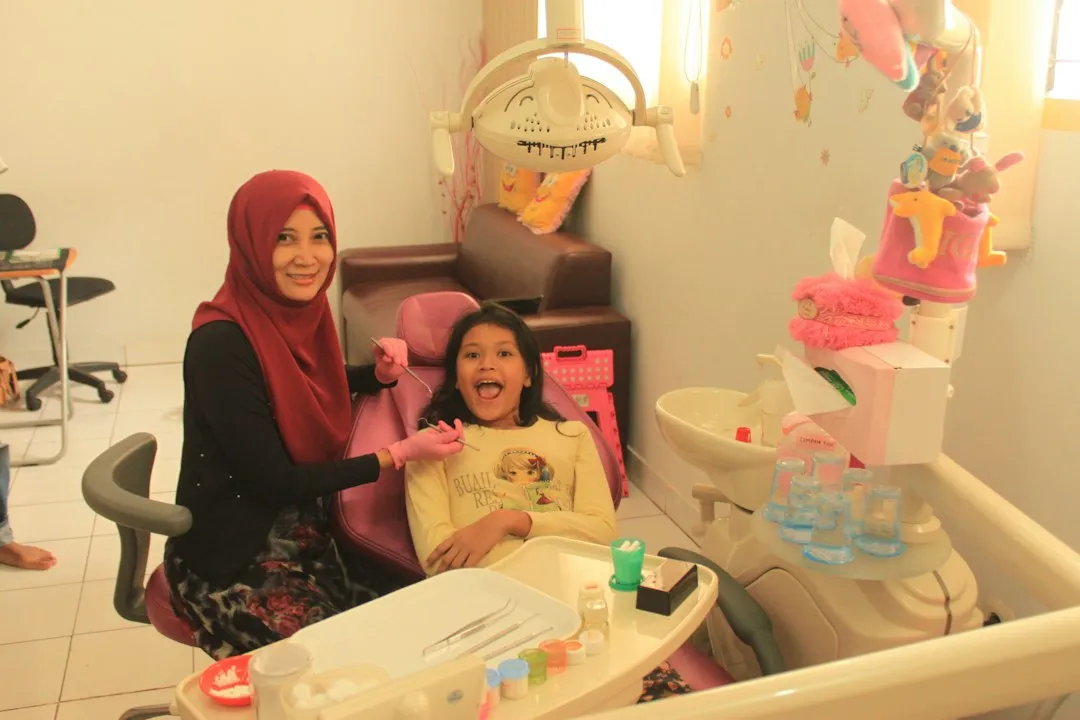
Main image: Mufid Majnun / Unsplash. Photos are illustrative stock images: they do not show patients, cases or results from The Special Teeth.
Educational information. A professional assessment determines the diagnosis and the appropriate options for each person.