 English

Does Your Jaw Click? What You Should Know About TMJ Pain
Clicking, pain when chewing and tension in the temples: how temporomandibular disorders are understood today and why most improve with simple, reversible measures.
Your jaw clicks when you yawn, you wake up with a tired face, and sometimes the pain climbs up to your temples like a headache. Many people spend months like this before discovering that the source is the temporomandibular joint and the muscles that move the jaw. The good news is that, in most cases, the problem improves with simple, reversible measures.
Picture this hypothetical scene: Laura is 32 and works at a computer for many hours a day. For a few months now, when she opens wide to bite into a burger, she hears a “click” in front of her ear. Lately she also feels pain when chewing gum, and at the end of the hardest workdays her temples ache. She read online that she might need surgery or that she “has a crooked bite” and needs her teeth ground down. She is scared.
Before making any decision, it is worth understanding what is going on.
What are temporomandibular disorders?
The temporomandibular joint, or TMJ, is the hinge that connects the jaw to the skull, just in front of each ear. The term temporomandibular disorders covers several problems: pain in the chewing muscles, pain in the joint itself, displacement of the disc inside it, and degenerative changes. To diagnose them rigorously there is an international set of criteria that combines a standardized physical examination with an assessment of the emotional and functional impact of pain (Schiffman et al., 2014).
That dual view is no minor detail. Specialists now understand these disorders through a biopsychosocial model, in which physical factors, stress, sleep, and the way the nervous system processes pain all play a role (List & Jensen, 2017).
More common than you might think
A meta-analysis estimated that about three in ten adults and one in ten children and adolescents have some TMJ disorder, and that disc displacements are among the most frequent findings (Valesan et al., 2021). Among people who seek care for pain, the most common diagnosis is usually muscle pain (Manfredini et al., 2011).
A large prospective study in the United States followed thousands of adults who did not have the disorder at the start. It found that each year about 4% developed a painful temporomandibular disorder, and that the risk was higher in people with other chronic pain conditions, more stress symptoms, or greater pain sensitivity (Slade et al., 2016).
The most frequent signs
- Pain in front of the ear, in the cheek, or in the temples that gets worse with chewing, talking a lot, or yawning.
- Noises when opening or closing the mouth, such as a click or a gritty sensation.
- Difficulty opening the mouth fully, or a feeling that the jaw “locks.”
- Facial tiredness or stiffness on waking.
- Headaches that come with jaw tension.
It is important to know that an isolated click, with no pain or limitation, is very common and often needs no treatment. What matters most is whether there is pain, whether the way the mouth opens changes, and how much it affects daily life (Durham et al., 2015).
The myth of the crooked bite
For decades the main cause was thought to be malocclusion, that is, teeth that did not fit together well. That is why grinding down teeth or making major changes to the bite was recommended. A systematic review of association studies concluded that the evidence does not support an important relationship between occlusion and temporomandibular disorders, and that treating them with irreversible occlusal adjustments is no longer justified (Manfredini et al., 2017).
This changes the conversation a lot. If someone proposes grinding down or permanently changing your teeth as a first step for jaw pain, it is worth getting a second opinion.
What the evidence does recommend
Guidelines and reviews agree on a central idea: start with conservative, reversible treatments, because most cases improve with them and many symptoms ease over time (Greene, 2010). A clinical review in a general medical journal sums up the first step as education, self-care, and pain management, reserving invasive procedures for very selected cases (Durham et al., 2015).
The main tools are these:
- Education and self-care: understanding the problem, resting the jaw with a softer diet for a while, avoiding gum and very wide yawns, and applying local heat.
- Physical therapy: a meta-analysis found that therapeutic exercise and manual therapy reduce pain and improve mouth opening, especially for muscle pain (Paço et al., 2016).
- Managing stress and chronic pain: psychological interventions such as cognitive behavioral therapy have shown some benefit in chronic orofacial pain, although the quality of the evidence is still limited (Aggarwal et al., 2011).
- Attention to habits: noticing whether you clench during the day, keeping the jaw relaxed with lips together and teeth apart, and watching your posture at the screen.
What about night guards or splints?
Occlusal splints are one of the most widely used options. However, a systematic review found that the evidence on their ability to reduce pain is of low quality and does not allow a confident claim that they are better than other conservative measures (Riley et al., 2020). That does not mean they never help: they can benefit some people, for example by protecting teeth from wear caused by grinding. The sensible approach is to see them as one tool within a plan, not as the only solution.
When to seek care without waiting
- If your jaw locks and you cannot open or close your mouth.
- If the pain is intense, constant, or wakes you at night.
- If there is swelling, fever, loss of feeling in the face, or bite changes that appear overnight.
- If the pain does not improve after several weeks of self-care.
Pain around the jaw can also come from a tooth, the ears, or other structures, so a professional assessment helps rule out other causes (List & Jensen, 2017).
Frequently asked questions
Does my jaw clicking mean something is being damaged? Not necessarily. Many clicks come from a disc displacement that causes no pain and does not progress. It is monitored, but not always treated.
Will I need surgery? It is very uncommon. The vast majority of people improve with conservative measures.
Is it related to stress? Yes. Stress, anxiety, and poor sleep are associated with more pain and a higher risk of developing the disorder (Slade et al., 2016).
The end of the story
In our hypothetical case, Laura went for an assessment. She was told that her click came from a disc displacement without locking and that the pain came mainly from her muscles. Nobody mentioned grinding down her teeth. Her plan included giving up gum, applying heat in the evenings, exercises guided by a physical therapist, and breaks to relax her jaw during work. Within a few weeks, her temples stopped hurting. The click still shows up now and then, but it no longer worries her: she now knows that not every noise is an alarm.
If you want a professional to take a look
See the treatments at The Special Teeth. If you are coming from the United States, our guide to planning your visit to Tijuana helps with the border crossing and transfers. Whenever you are ready, you can request an evaluation.
References
Aggarwal, V. R., Lovell, K., Peters, S., Javidi, H., Joughin, A., & Goldthorpe, J. (2011). Psychosocial interventions for the management of chronic orofacial pain. Cochrane Database of Systematic Reviews, 2011(11), Article CD008456. https://doi.org/10.1002/14651858.cd008456.pub2
Durham, J., Newton-John, T. R. O., & Zakrzewska, J. M. (2015). Temporomandibular disorders. BMJ, 350, Article h1154. https://doi.org/10.1136/bmj.h1154
Greene, C. S. (2010). Managing the care of patients with temporomandibular disorders: A new guideline for care. The Journal of the American Dental Association, 141(9), 1086–1088. https://doi.org/10.14219/jada.archive.2010.0337
List, T., & Jensen, R. H. (2017). Temporomandibular disorders: Old ideas and new concepts. Cephalalgia, 37(7), 692–704. https://doi.org/10.1177/0333102416686302
Manfredini, D., Guarda-Nardini, L., Winocur, E., Piccotti, F., Ahlberg, J., & Lobbezoo, F. (2011). Research diagnostic criteria for temporomandibular disorders: A systematic review of axis I epidemiologic findings. Oral Surgery, Oral Medicine, Oral Pathology, Oral Radiology, and Endodontology, 112(4), 453–462. https://doi.org/10.1016/j.tripleo.2011.04.021
Manfredini, D., Lombardo, L., & Siciliani, G. (2017). Temporomandibular disorders and dental occlusion. A systematic review of association studies: End of an era? Journal of Oral Rehabilitation, 44(11), 908–923. https://doi.org/10.1111/joor.12531
Paço, M., Peleteiro, B., Duarte, J., & Pinho, T. (2016). The effectiveness of physiotherapy in the management of temporomandibular disorders: A systematic review and meta-analysis. Journal of Oral & Facial Pain and Headache, 30(3), 210–220. https://doi.org/10.11607/ofph.1661
Riley, P., Glenny, A.-M., Worthington, H. V., Jacobsen, E., Robertson, C., Durham, J., Davies, S., Petersen, H., & Boyers, D. (2020). Oral splints for temporomandibular disorder or bruxism: A systematic review. British Dental Journal, 228(3), 191–197. https://doi.org/10.1038/s41415-020-1250-2
Schiffman, E., Ohrbach, R., Truelove, E., Look, J., Anderson, G., Goulet, J.-P., List, T., Svensson, P., Gonzalez, Y., Lobbezoo, F., Michelotti, A., Brooks, S. L., Ceusters, W., Drangsholt, M., Ettlin, D., Gaul, C., Goldberg, L. J., Haythornthwaite, J. A., Hollender, L., . . . Dworkin, S. F. (2014). Diagnostic criteria for temporomandibular disorders (DC/TMD) for clinical and research applications: Recommendations of the International RDC/TMD Consortium Network and Orofacial Pain Special Interest Group. Journal of Oral & Facial Pain and Headache, 28(1), 6–27. https://doi.org/10.11607/jop.1151
Slade, G. D., Ohrbach, R., Greenspan, J. D., Fillingim, R. B., Bair, E., Sanders, A. E., Dubner, R., Diatchenko, L., Meloto, C. B., Smith, S., & Maixner, W. (2016). Painful temporomandibular disorder: Decade of discovery from OPPERA studies. Journal of Dental Research, 95(10), 1084–1092. https://doi.org/10.1177/0022034516653743
Valesan, L. F., Da-Cas, C. D., Réus, J. C., Denardin, A. C. S., Garanhani, R. R., Bonotto, D., Januzzi, E., & de Souza, B. D. M. (2021). Prevalence of temporomandibular joint disorders: A systematic review and meta-analysis. Clinical Oral Investigations, 25(2), 441–453. https://doi.org/10.1007/s00784-020-03710-w
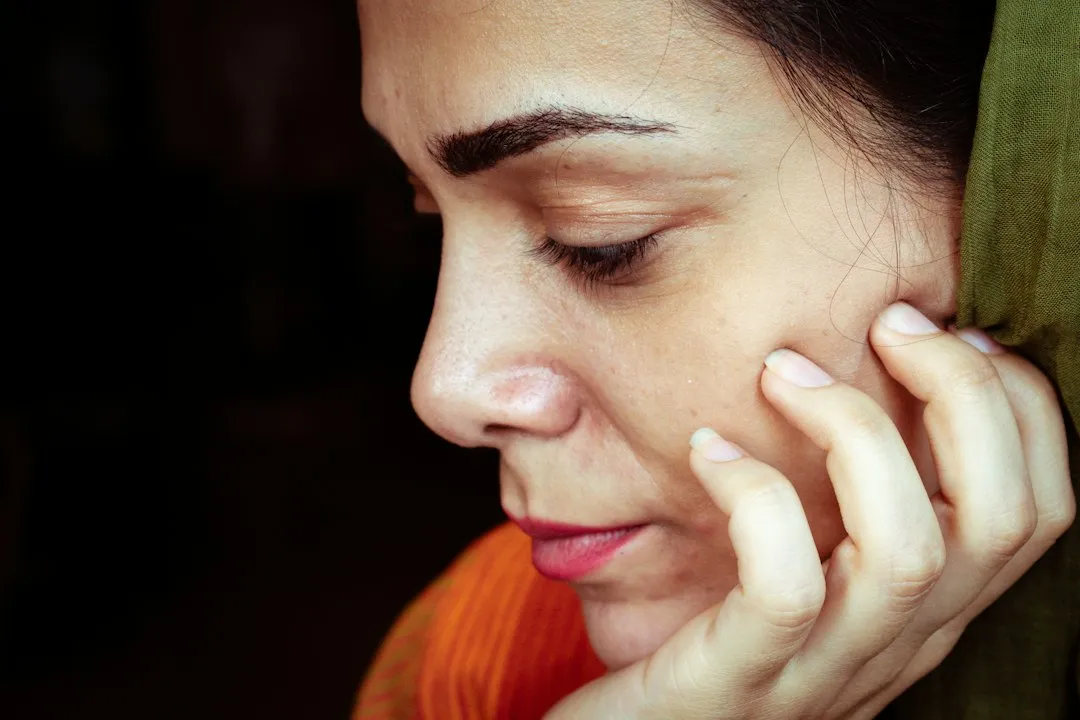
Main image: Mehrpouya H / Unsplash. Photos are illustrative stock images: they do not show patients, cases or results from The Special Teeth.
Educational information. A professional assessment determines the diagnosis and the appropriate options for each person.