 English


Halloween candy: can one night cause a cavity?
Cavity risk does not magically appear after one bite. Explore how amount, frequency, saliva, and candy type matter—and enjoy Halloween thoughtfully.
Picture the end of a Halloween party: the cape lands on a chair, the vampire fangs go back in their box, and the candy bag stays on the table. “Just one more,” you tell yourself. That last chocolate gets a sequel, then another, and the celebration continues the next day between messages, coffee, and work.
Can that night leave you with a cavity? There is a twist to the question: a hole in a tooth does not magically appear at midnight. Risk builds over time. Halloween is the perfect scene for understanding what happens after each bite and choosing how to enjoy it.
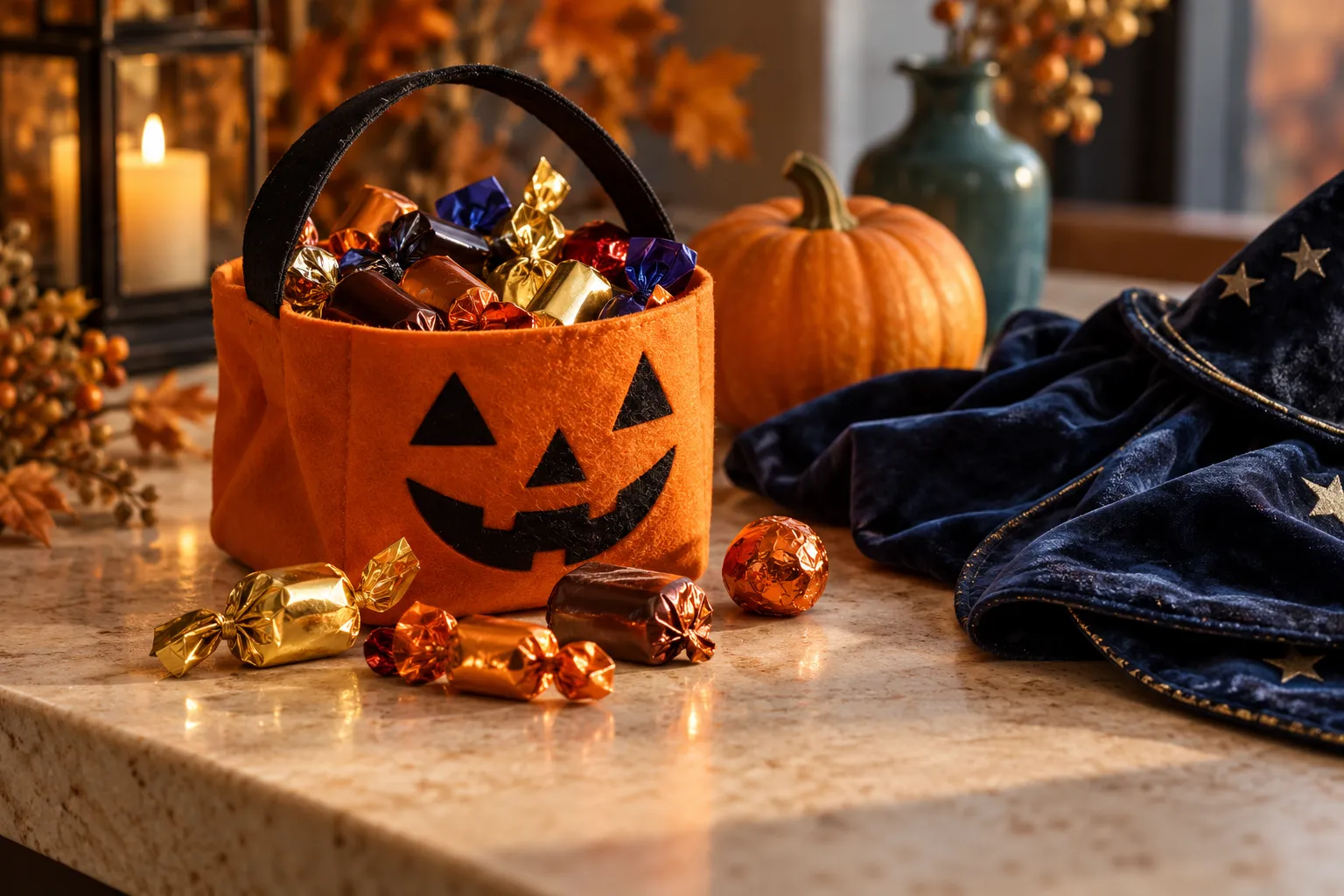
The scene feels familiar because candy carries some of the celebration itself: trading little bags, the surprise of a costume, a flavor you remember from childhood. Looking after your mouth does not require erasing those memories. The interesting decision comes when the party ends: will the bag stay open all week, or will you choose the treats you actually want to enjoy? That is where a more useful story begins than feeling guilty after every bite.
The candy is only part of the story
Some bacteria in dental plaque use sugars to make acids, which encourage mineral loss from enamel. Saliva and fluoride help restore minerals; a repeated imbalance can lead to a cavity. Early decay without a hole can sometimes be stopped, while an established cavity needs dental care. This is how the NIDCR explains the process.
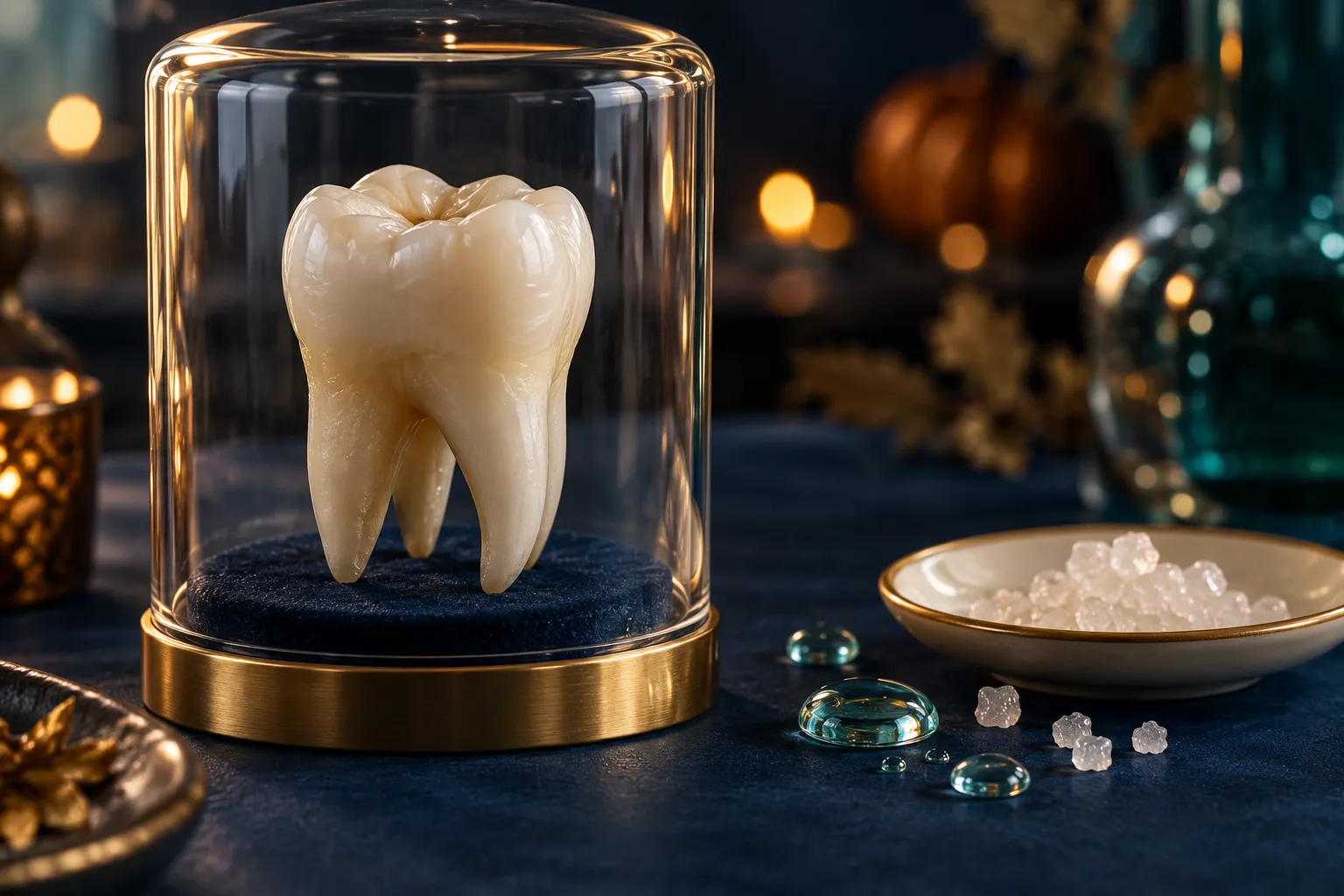
The bag that never closes
Think of a sweet as a guest you keep inviting back. The amount matters, but so does how often the visit repeats. The American Dental Association (ADA) suggests small amounts with meals or right afterward, when saliva increases, and cutting back on constant sugary snacking.
That is not an invitation to finish the entire bag in one sitting. Quantity still matters. Picking a few favorites for a planned moment is a practical way to keep one celebration from turning into days of distracted eating.

Picture two versions of the same afternoon. In one, you enjoy the chocolate you picked after lunch and put the bag away. In the other, you take little pieces each time you pass the kitchen. This is not an experiment that can calculate how many cavities either person will develop. It is a way to notice the habit the ADA describes. Breaks between sugary snacks matter, alongside daily care and a professional assessment of your individual risk.
Some sugar does not look like candy
The World Health Organization recommends keeping free sugars below 10% of daily energy, and conditionally suggests below 5% for additional benefits. On a 2,000-calorie diet, those percentages mean less than 50 and 25 grams, respectively. This is a calculation example, not a child’s serving or a quota to fill. Free sugars include added sugar, honey, syrups, and juice, but not sugars contained within whole fruit.
Research backs up the connection. A review by Moynihan and Kelly in the Journal of Dental Research included 55 studies and found moderate-quality evidence of less tooth decay when free sugars supplied less than 10% of energy. The studies varied: that finding guides prevention, but it does not predict one person’s future or turn the cutoff into a guarantee.
Not all treats behave the same way
According to the ADA’s Halloween guide, chocolate tends to cling less than gummies and sticky candy. Sour sweets add another acid exposure for enamel. They can contribute to erosion, direct wear from acids, which is different from tooth decay. These differences can inform a choice, but they are not free passes: no kind of chocolate replaces a dental care routine.

The last trick happens at the sink
The night can finish with something much less dramatic than a horror movie: brushing with fluoride toothpaste twice a day and cleaning between teeth daily, as the ADA recommends. Water and varied, nutritious meals belong in that routine too. Sensitivity or pain deserves a dental assessment.
Saliva also decreases during sleep, the NIDCR notes. That makes closing the candy bag before nighttime brushing a better ending than bringing it back to bed.
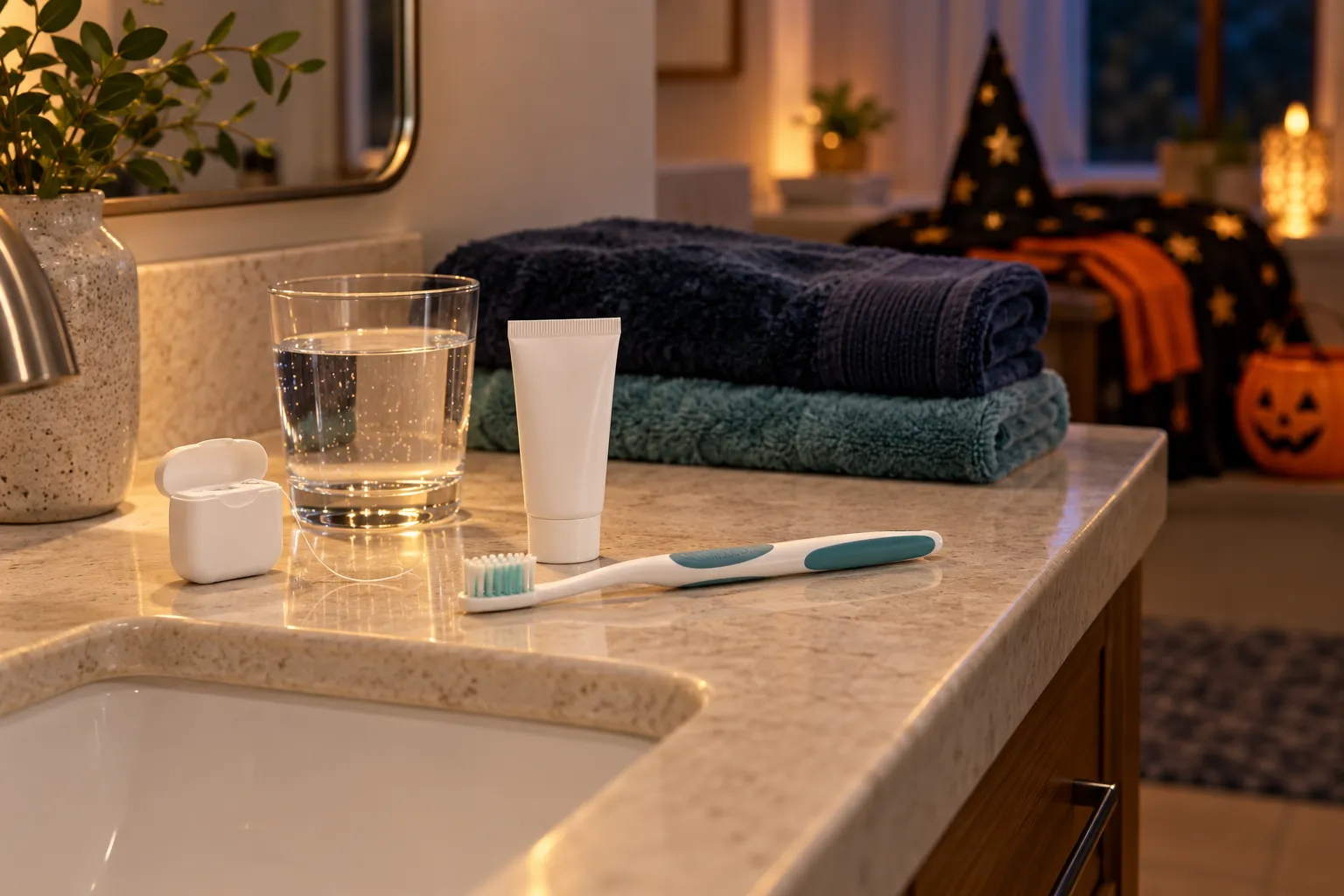
If children are joining the celebration, the plan can become part of the fun: choose favorites together, put the rest away, and finish the night with the bathroom routine. The lesson is simpler than a ban: enjoying something special and looking after yourself can belong in the same story.
Let the scare stay in the movie
Enjoy the party and your favorite candy thoughtfully: a reasonable portion, a time to enjoy it, and a care routine that continues after the costume comes off. Science does not have to cancel Halloween. It can help you make the celebration work better for your smile.
Odonto News, from The Special Teeth in Tijuana, turns everyday questions into conversations about dental culture and oral health. Keep exploring our stories. Subscribe to Odonto News! Receive relevant topics, new discoveries, and conversations about dental culture and oral health.
Sources to explore
These AI-generated images are conceptual illustrations, not photographs of actual patients or original historical documents.