 English

Halloween Fangs: Keep the Scare in the Costume
Can you eat with fake fangs? Learn what manufacturers say about wear time, braces and precautions for enjoying Halloween.
The costume comes off at midnight. What about your fangs?
A vampire smile can be part of the fun. The secret is knowing what you are wearing.
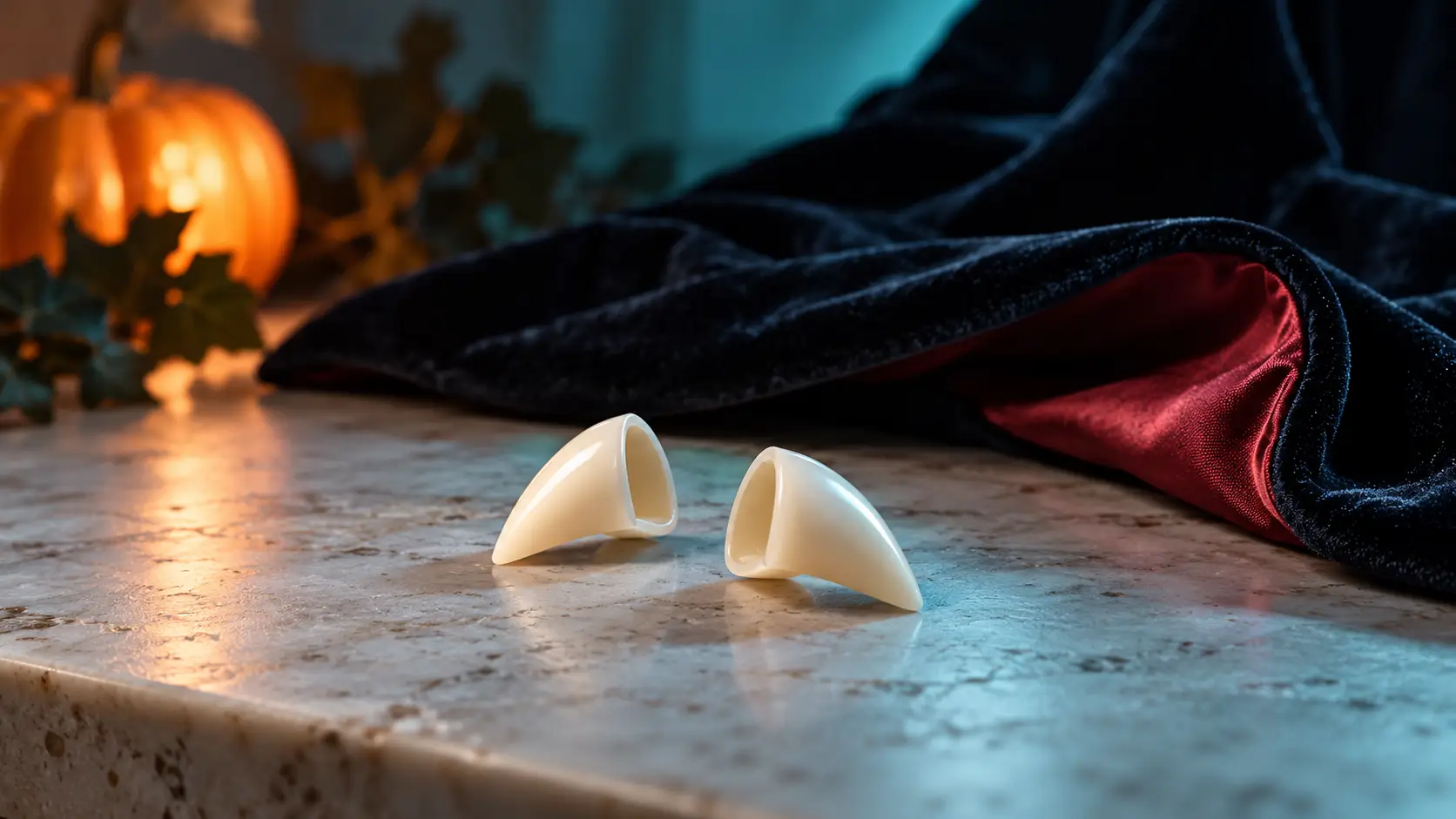
The cape is ready. So is the fake blood. In the mirror, two new Halloween vampire fangs complete the transformation. You smile: now you look like someone who has been waiting centuries for this party.
Then comes the first drink—and a very human question: can you eat, drink and spend the whole evening wearing them?
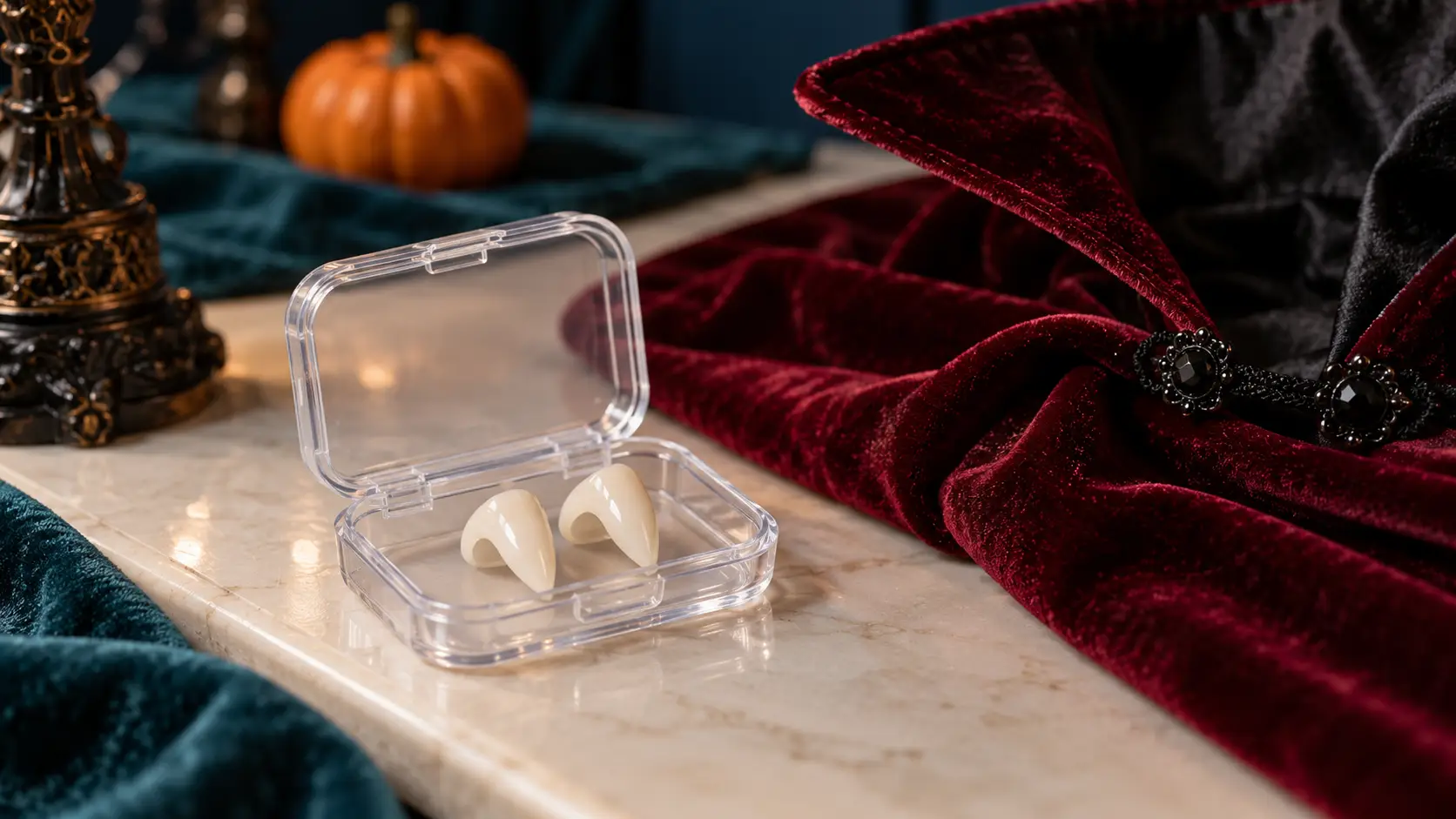
For some models, the answer is on the package. Removable-fang manufacturer Scarecrow instructs users to remove its fangs before eating, drinking or sleeping to prevent swallowing them. You can stay in character; at dinner, return to your usual teeth. Manufacturer instructions.
What the mirror does not show
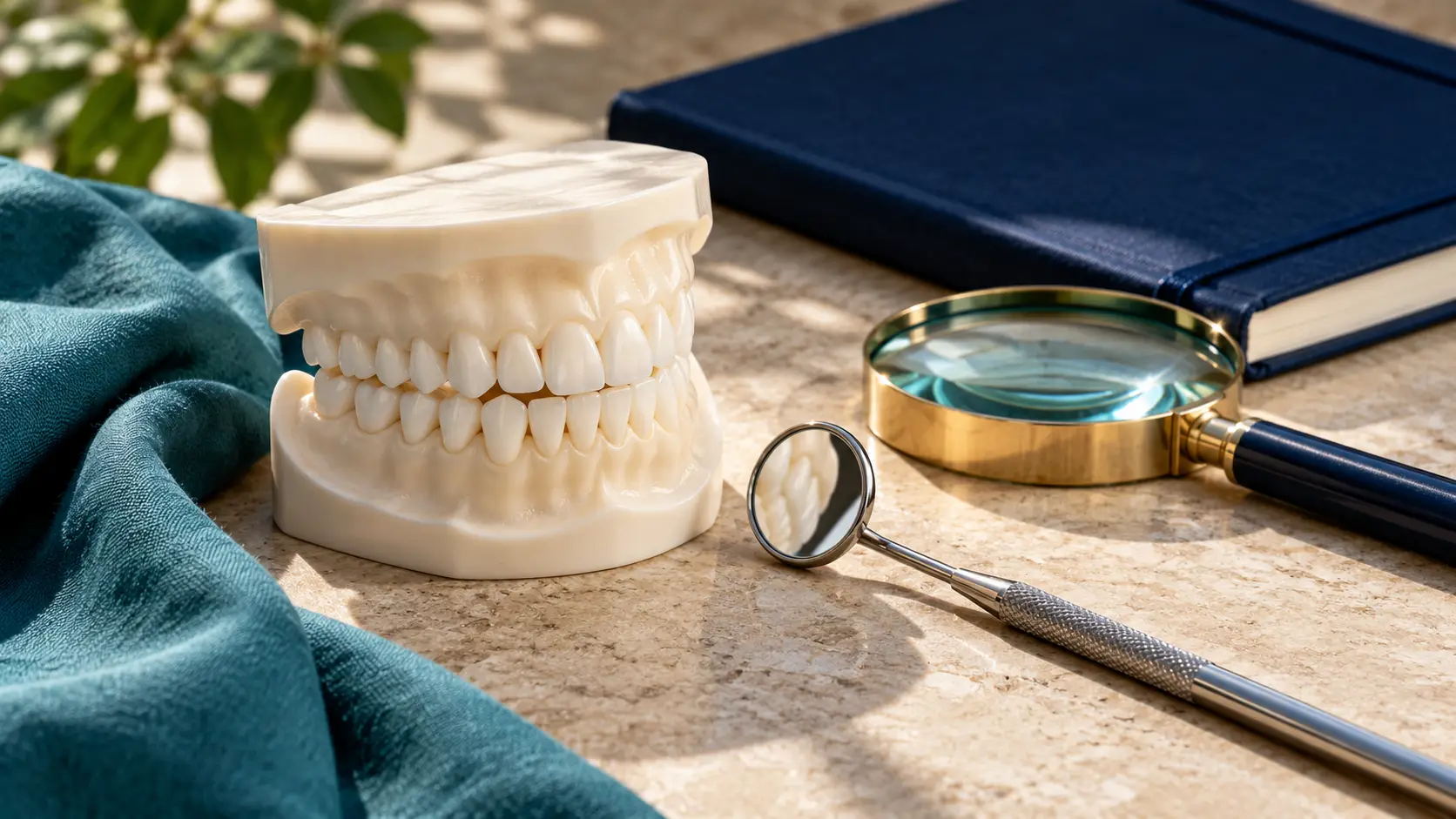
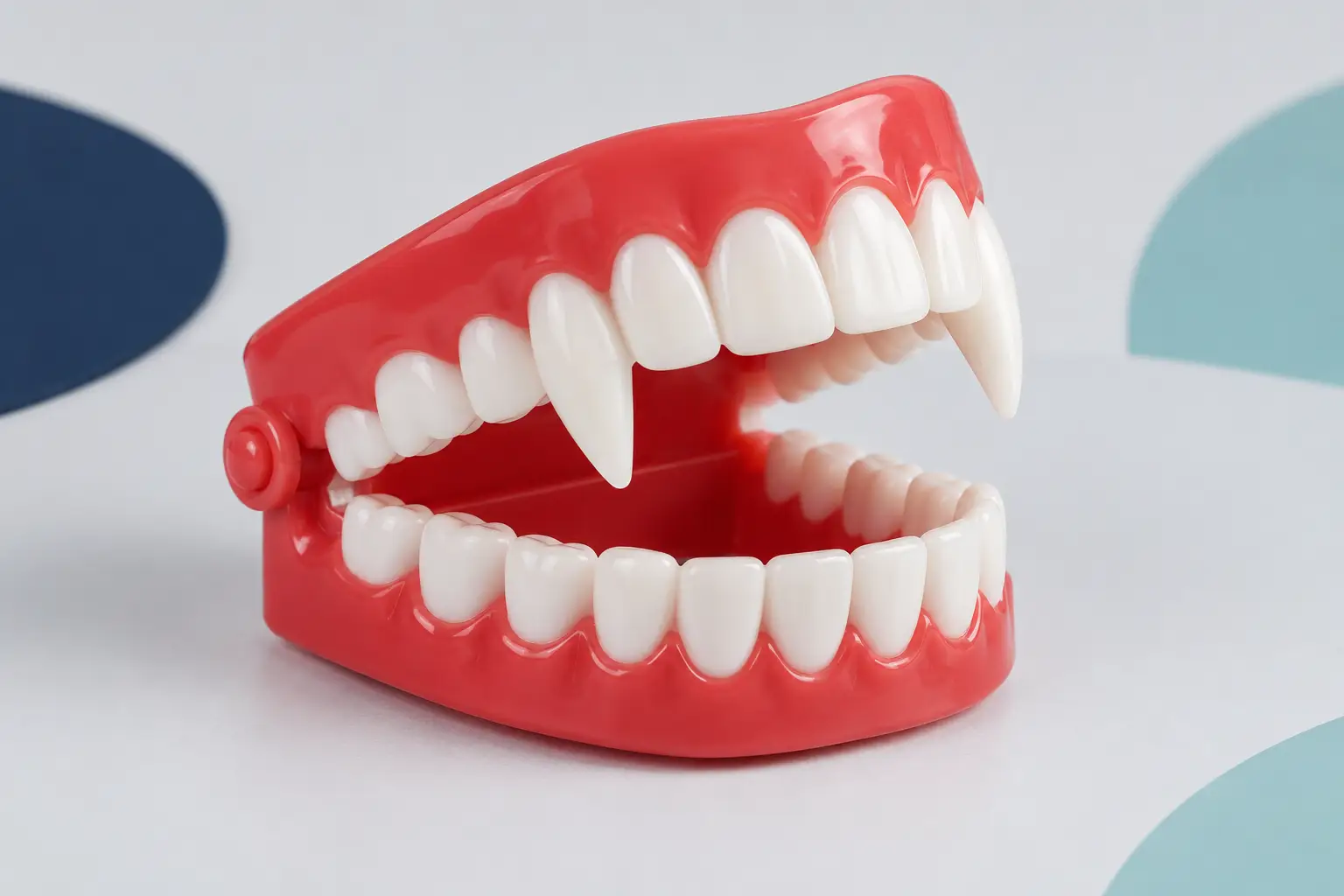
Store-bought costume teeth include one-piece plastic dentures, individual caps and models fitted with molding material. These are costume accessories, not clinical dental prostheses, and their instructions vary.
Dental-composite fangs work differently: material is added to the tooth using a technique called bonding. Cleveland Clinic explains that bonding typically does not require enamel removal. That does not establish that every fang shape is suitable: the design and how your teeth meet need professional assessment. Cleveland Clinic.
If the transformation involves filing the tooth, the change cannot be packed away with the costume. Removed enamel does not grow back on its own. Cleveland Clinic.
How long can you wear vampire fangs?
We did not find clinical studies in the sources consulted establishing a universal safe time limit.
Scarecrow allows certain models to be worn during the evening after fitting, subject to its restrictions. Its instructions require a brief removal 15 minutes into the initial molding process. This is a fitting step, not a rule for every brand. The manufacturer also restricts its products to ages 14 and up and advises against use over braces, crowns, veneers or other dental work. Scarecrow.
If an accessory hurts, rubs or feels loose, stopping its use is the prudent choice. Trying to secure it with super glue can change the ending: moisture in the mouth rapidly hardens cyanoacrylate, which can bond to teeth and tissues. Poison Control.
A 2005 case report in the British Journal of Oral and Maxillofacial Surgery documented accidental super-glue exposure in a child’s mouth. It did not study Halloween fangs or quantify their risk, but illustrates a real clinical problem. Clinical case report.
If an accessory is stuck, do not pull it off or use household solvents. Seek professional advice.
Keep the scares in the costume
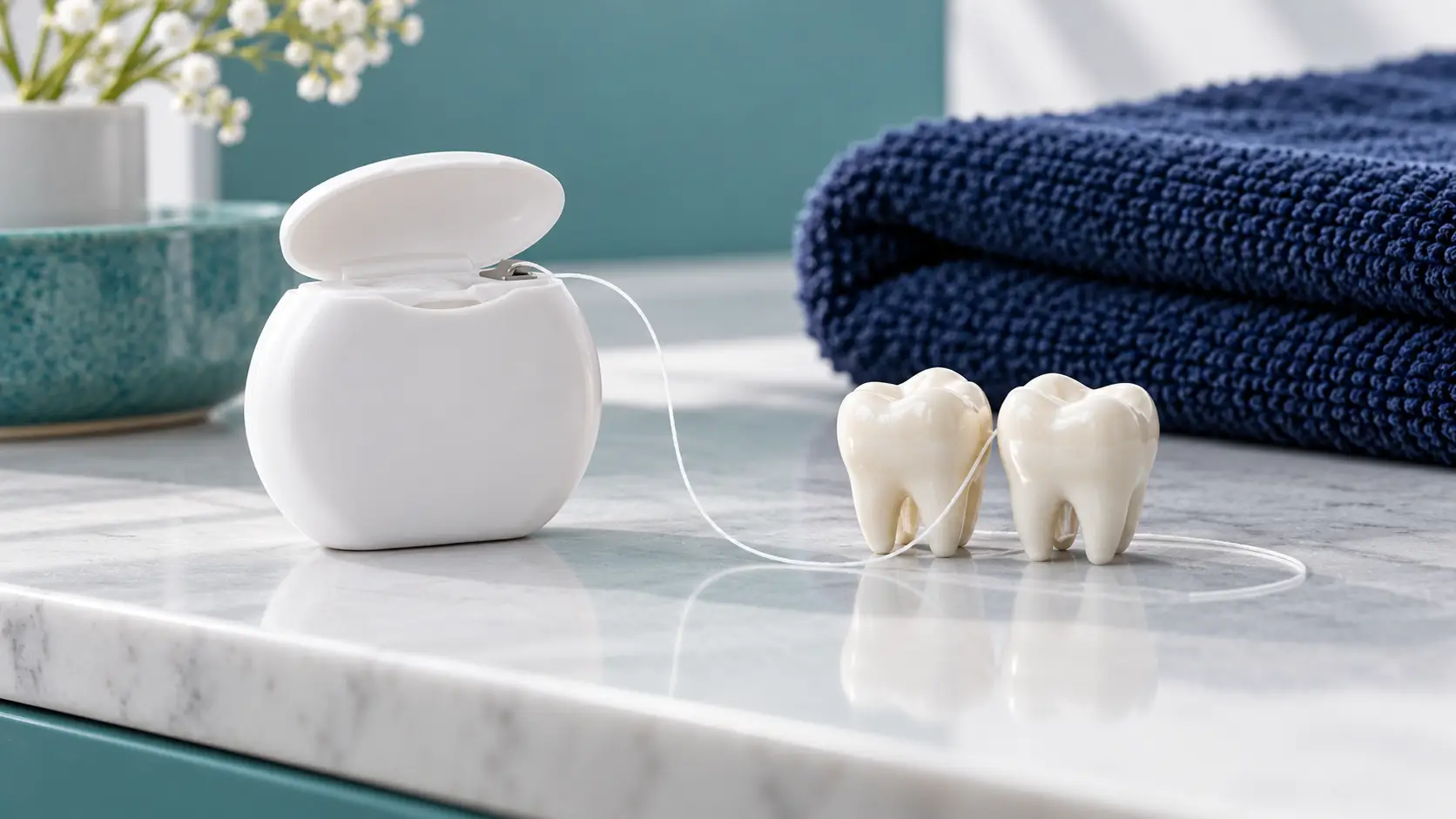
NIDCR explains that brushing and cleaning between teeth help remove plaque as part of everyday care. The costume changes for a night; that habit stays.
Enjoy the party, smile for the photos and look after the teeth beneath the character. Choose accessories with clear instructions, follow their restrictions and remove them if they cause discomfort. Being sold as a toy does not make them suitable for every mouth; nor does it mean that wearing them inevitably causes damage.
The best transformation ends where it began: with your smile. Back home, put away the cape, remove the accessories as directed and let the fangs rest until their next performance.
Subscribe to Odonto News
Receive relevant topics, new discoveries, and conversations about oral health and dental culture.
Keep exploring Odonto News, The Special Teeth’s dental science and culture platform. When a question concerns your own smile, our team can help you explore options suitable for your situation.