 English
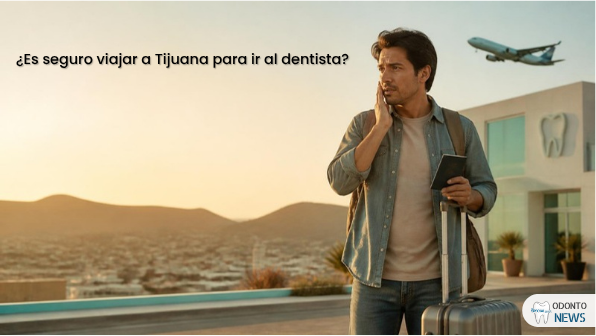
Is It Safe to Get Dental Work in Tijuana? What to Check Before Your Appointment
Before visiting a dentist in Tijuana, review credentials, your written estimate, transportation and follow-up. A guide to planning an informed visit.
You are about to book an appointment in Tijuana and someone asks whether it is safe to cross. It is a fair question, and the most useful answer is not a promise but a plan. Tijuana is a large metropolitan city and, as in any big city, the best way to enjoy your visit is to stay informed, plan ahead and follow the guidance of the authorities. These precautions reduce risk—none eliminates it completely—and make your trip calmer, more productive and more enjoyable.
A dental visit combines two decisions: traveling to a specific place and receiving a health procedure. You can plan both with verifiable information, without assuming that a friend’s recommendation covers everything.
Travel informed: what the authorities recommend
The official reference for U.S. travelers is the State Department travel advisory, which is updated often and includes specific guidance for Baja California. Its practical recommendations are clear: stay on main highways, avoid remote places and do not hail taxis on the street; use regulated taxi stands or app-based services instead (U.S. Department of State, 2026).
It also suggests traveling between cities only during the day. Read it in full before deciding and check it again close to your departure date, because its guidance can change (U.S. Department of State, 2026).
To apply this to your case, check the exact address, the building entrance and the route there and back. If you book a transfer, ask where and by whom you will be picked up. Share your itinerary with someone you trust and keep a copy you can check without relying on phone signal.
Clinical safety starts before the dental chair
Every medical or surgical procedure carries risks, even in your own city. The CDC advises evaluating three things besides the treatment: the destination, the facility and the professional who will treat you. It also notes that accreditation alone does not guarantee a good outcome (Stoney & Leidel, 2025).
The State Department advisory agrees on this point: before a procedure, it recommends confirming that emergency care is available and that the professionals are accredited and qualified (U.S. Department of State, 2026).
That is why, before committing, ask for the full name of the person who will treat you and an explanation of their credentials. Ask what problem the treatment aims to solve, what alternatives exist and what information is still needed to confirm the plan. A proposal sent by message should make clear what is already known and what will need to be evaluated in person.
Imagine you want to replace a molar and receive an estimate for a single visit. You can reply: “Does that visit include only the evaluation or also a procedure? What could change once you examine me?” Simple questions like these help build shared expectations before you plan the trip.
What institutional backing you can check
In a July 2024 note, Baja California’s health regulator, COEPRIS, described a registry of verified medical facilities called REPSSABI. According to that note, it could be consulted on the agency’s website and showed the names of registered hospitals and clinics, with a QR code for each provider’s details. That description is from 2024: before your appointment, check the current registry directly to compare it with what a facility advertises. The existence of the registry does not mean a specific clinic is listed, nor does it guarantee a clinical outcome (Comisión Estatal para la Protección contra Riesgos Sanitarios de Baja California, 2024).
If someone shows you a seal, ask its name, which entity issues it and how to verify it through an official channel. The answer should tell you what it certifies and what falls outside its scope.
The trip home is part of your decision too
The CDC recommends talking with your regular health professional and with the provider abroad about how complications would be handled and where follow-up would take place. It also suggests requesting your medical records and taking them home with you (Stoney & Leidel, 2025).
Turn that into concrete questions: who will respond if something worries you, during what hours, when you would need to come back, and where you would go if you needed urgent care while far away. Keep the treatment plan, receipts, instructions and any X-rays you receive in your own folder.
Before booking, try to complete this sentence with concrete details: “I know who will treat me, how I will get there and what I will do after the appointment.” If any part is missing, ask for clarification. A better-prepared visit starts with those answers; the next step is learning how to verify the team’s and the clinic’s credentials.
Want us to review your case? At The Special Teeth we see patients in English and Spanish, about 10 minutes from the San Ysidro border crossing, and we accept Aetna and MetLife PPO dental insurance. Learn more about planning your visit from San Diego or book your evaluation.
References
Comisión Estatal para la Protección contra Riesgos Sanitarios de Baja California. (2024, July 10). Mesa de trabajo en materia de turismo de salud y bienestar. https://www.coeprisbc.gob.mx/detalleblog.php?id=92925
Stoney, R. J., & Leidel, L. (2025). Medical tourism. In CDC Yellow Book: Health information for international travel (2026 ed.). Centers for Disease Control and Prevention. https://www.cdc.gov/yellow-book/hcp/health-care-abroad/medical-tourism.html
U.S. Department of State, Bureau of Consular Affairs. (2026, May 29). Mexico travel advisory. https://travel.state.gov/en/international-travel/travel-advisories/mexico.html
Keep reading
- How to Choose a Top-Rated Dentist and Clinic in Tijuana
- Dental Treatment in Tijuana: How to Plan Visits, Transportation and Follow-Up
Educational information. A professional evaluation determines the diagnosis and the appropriate options for each patient.