 English

Gingivitis: Why Your Gums Bleed and How to Reverse It in Time
Bleeding when you brush is not normal. What gingivitis is, why it appears, what the evidence says about brushes, floss and mouthwashes, and when to get checked.
Gingivitis is inflammation of the gums caused, in most cases, by the bacterial plaque that builds up along the edge of the teeth. Its most common sign is bleeding when you brush or floss. The good news is that, unlike other gum diseases, gingivitis is reversible: with proper cleaning, the tissues can return to normal.
Picture this hypothetical scene: Diego is 31, works long hours at a computer and brushes quickly, usually half asleep. For weeks he has noticed a pink tinge in the foam when he spits. He assumes he is brushing too hard, so he decides to brush more gently… and less often in the area that bleeds. Without realizing it, he is doing exactly the opposite of what his gums need.
An experiment that changed dentistry
In 1965, a group of researchers asked dental students with healthy gums to stop brushing and cleaning between their teeth. Within days plaque began to accumulate and, over roughly one to three weeks, all of them developed gingivitis. When they resumed oral hygiene, their gums became healthy again within days (Löe et al., 1965). This study, known as the experimental gingivitis model, demonstrated something that seems obvious today: bacterial plaque is the direct cause of gum inflammation, and removing it reverses that inflammation.
What exactly is gingivitis?
It is the body’s inflammatory response to the bacteria living in plaque. The blood vessels in the gum widen, more defense cells arrive and the tissue becomes redder, swollen and fragile. That is why it bleeds so easily. It is important to distinguish it from periodontitis: in gingivitis there is no loss of the bone or the fibers that hold the tooth in place, whereas in periodontitis there is, and that damage cannot be fully recovered (Kinane et al., 2017).
In 2017, an international expert workshop updated the classification of periodontal diseases. For the first time, healthy gums were defined with numbers: gums in which fewer than 10% of the sites the dentist checks with a gentle probe bleed. If 10% or more bleed, it is called gingivitis; between 10% and 30% is considered localized and above 30% generalized (Chapple et al., 2018). Bleeding on probing was chosen as the main criterion because it is a simple, objective and repeatable measure (Trombelli et al., 2018).
Signs not to ignore
- Bleeding when you brush, floss or even bite into an apple.
- Gums that are red, shiny or swollen instead of pale pink and firm.
- Persistent bad breath.
- Gums that feel tender or sore to the touch.
One important detail: in people who smoke, gingivitis may bleed less and go unnoticed, because tobacco reduces blood flow in the gums. The absence of bleeding does not always mean health.
Why are some people more affected?
Plaque is the cause, but the terrain matters. The international consensus recognizes factors that modify how the gums respond: hormonal changes during puberty, pregnancy or with some contraceptives; high blood sugar in poorly controlled diabetes; certain medications that can cause gum enlargement; dry mouth; and local factors such as poorly fitting restorations or crowded teeth that make cleaning harder (Murakami et al., 2018). In these cases, the same amount of plaque can produce more inflammation.
Why does it matter if it “only” bleeds?
Because gingivitis is the gateway to periodontitis. Not every case of gingivitis progresses, but virtually every case of periodontitis started as gingivitis. A study that followed Norwegian men for 26 years found that sites that bled consistently had much more attachment loss and a higher risk of tooth loss than healthy sites (Lang et al., 2009). That is why European experts consider controlling gingivitis the main strategy for preventing periodontitis (Chapple et al., 2015).
What the evidence says about home care
Diego’s mistake is very common: when an area bleeds, people tend to clean it less. But bleeding is a sign that plaque is there, not a sign to leave it alone. These are the measures with the strongest support:
Brushing done right
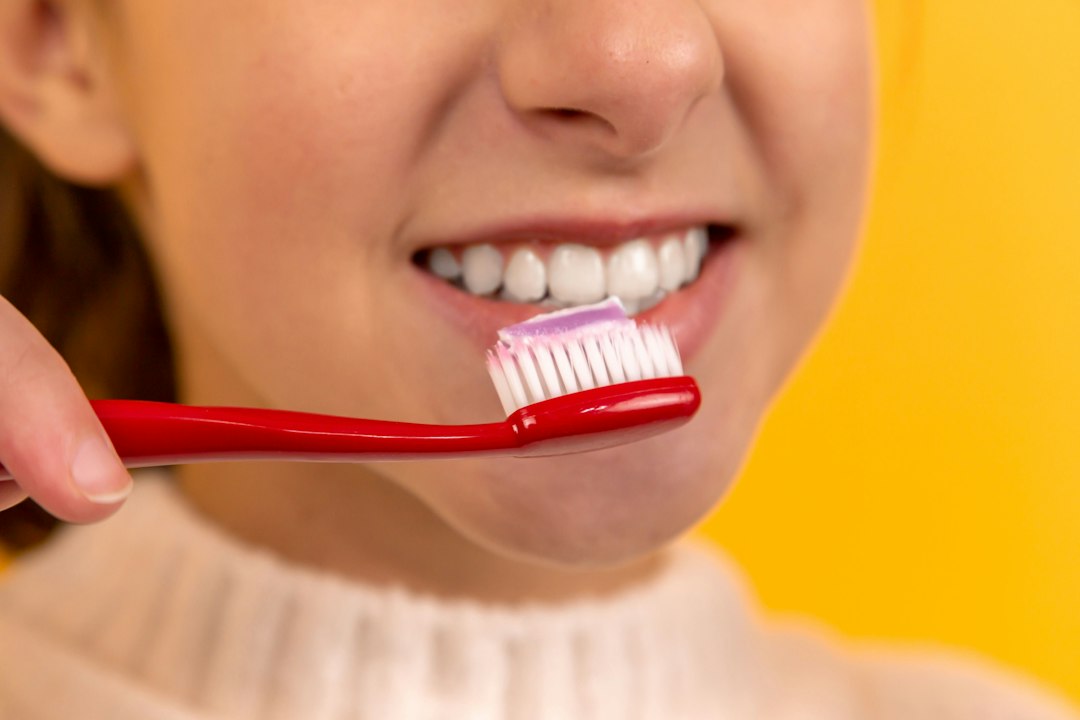
Twice a day, for about two minutes, with fluoride toothpaste, paying attention to the edge where the tooth meets the gum. Reviews show that, even with good intentions, many people remove only part of the plaque when they brush, especially between the teeth (Van der Weijden & Slot, 2011). A Cochrane review found that powered toothbrushes reduce plaque and gingivitis slightly more than manual ones, in both the short and long term (Yaacob et al., 2014). Even so, the best toothbrush is the one used well and consistently.
Cleaning between the teeth
A toothbrush does not reach well into the spaces between teeth, which is exactly where gingivitis often begins. A Cochrane review concluded that adding floss to brushing reduces gingivitis compared with brushing alone (Sambunjak et al., 2011). A more recent review comparing several devices found that interdental brushes appear to be among the most effective at reducing inflammation, although the certainty of the evidence is low (Worthington et al., 2019). In practice, the choice depends on the size of the gaps: floss works for tight spaces and interdental brushes for wider ones.
Mouthwashes: a support, not a substitute
Some mouthwashes can help as an add-on. Chlorhexidine, for example, reduces plaque and gingivitis when added to brushing, but prolonged use often stains the teeth and can alter taste, so it is usually recommended for short periods and under professional supervision (James et al., 2017). No mouthwash replaces the mechanical removal of plaque.
What does the dentist do?
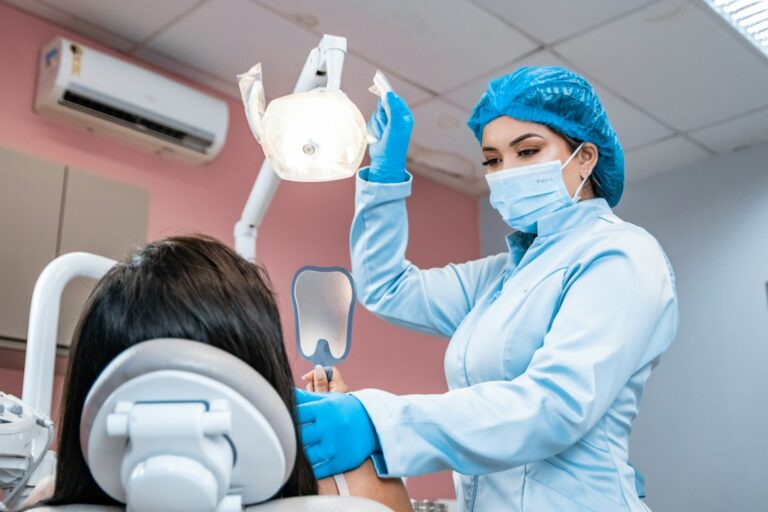
An assessment includes checking how much the gums bleed, measuring the depth of the groove around each tooth and, if needed, taking X-rays to rule out bone loss. A professional cleaning usually follows to remove plaque and tartar, which is hardened plaque that a toothbrush can no longer remove. But the most important part of the treatment happens at home: learning to clean the areas that get missed and keeping up that habit (Chapple et al., 2015).
Frequently asked questions
Is it normal for my gums to bleed if I haven’t flossed for a few days? It is common, but it is not normal. If you resume cleaning carefully and consistently, bleeding usually decreases within one or two weeks, as happened in the classic experiment (Löe et al., 1965). If it does not improve, it is worth getting checked.
Is gingivitis contagious? Mouth bacteria are shared, but gingivitis depends mainly on the plaque that builds up on your own teeth and on how your body responds to it.
Can I have gingivitis without pain? Yes. In fact, it is usually painless, which is why so many people ignore it.
The end of the story
In our hypothetical case, Diego finally decided to get an assessment. He was told that the bleeding was not caused by brushing too hard but by plaque built up in the spaces between his back teeth. After a professional cleaning and two weeks of using interdental brushes every night, the foam stopped coming out pink. His experience sums up the central message: bleeding gums are an early and reversible warning sign. Listening to it in time is far easier than treating what may come later.
If you want a professional to take a look
Learn more about cleaning and prevention at The Special Teeth. If you are coming from the United States, our guide to planning your visit to Tijuana helps with the border crossing and transfers. Whenever you are ready, you can request an evaluation.
References
Chapple, I. L. C., Mealey, B. L., Van Dyke, T. E., Bartold, P. M., Dommisch, H., Eickholz, P., Geisinger, M. L., Genco, R. J., Glogauer, M., Goldstein, M., Griffin, T. J., Holmstrup, P., Johnson, G. K., Kapila, Y., Lang, N. P., Meyle, J., Murakami, S., Plemons, J., Romito, G. A., . . . Yoshie, H. (2018). Periodontal health and gingival diseases and conditions on an intact and a reduced periodontium: Consensus report of workgroup 1 of the 2017 World Workshop on the Classification of Periodontal and Peri-Implant Diseases and Conditions. Journal of Periodontology, 89(S1), S74–S84. https://doi.org/10.1002/jper.17-0719
Chapple, I. L. C., Van der Weijden, F., Doerfer, C., Herrera, D., Shapira, L., Polak, D., Madianos, P., Louropoulou, A., Machtei, E., Donos, N., Greenwell, H., Van Winkelhoff, A. J., Eren Kuru, B., Arweiler, N., Teughels, W., Aimetti, M., Molina, A., Montero, E., & Graziani, F. (2015). Primary prevention of periodontitis: Managing gingivitis. Journal of Clinical Periodontology, 42(S16), S71–S76. https://doi.org/10.1111/jcpe.12366
James, P., Worthington, H. V., Parnell, C., Harding, M., Lamont, T., Cheung, A., Whelton, H., & Riley, P. (2017). Chlorhexidine mouthrinse as an adjunctive treatment for gingival health. Cochrane Database of Systematic Reviews, 2017(3), Article CD008676. https://doi.org/10.1002/14651858.cd008676.pub2
Kinane, D. F., Stathopoulou, P. G., & Papapanou, P. N. (2017). Periodontal diseases. Nature Reviews Disease Primers, 3, Article 17038. https://doi.org/10.1038/nrdp.2017.38
Lang, N. P., Schätzle, M. A., & Löe, H. (2009). Gingivitis as a risk factor in periodontal disease. Journal of Clinical Periodontology, 36(s10), 3–8. https://doi.org/10.1111/j.1600-051x.2009.01415.x
Löe, H., Theilade, E., & Jensen, S. B. (1965). Experimental gingivitis in man. The Journal of Periodontology, 36(3), 177–187. https://doi.org/10.1902/jop.1965.36.3.177
Murakami, S., Mealey, B. L., Mariotti, A., & Chapple, I. L. C. (2018). Dental plaque–induced gingival conditions. Journal of Periodontology, 89(S1), S17–S27. https://doi.org/10.1002/jper.17-0095
Sambunjak, D., Nickerson, J. W., Poklepovic, T., Johnson, T. M., Imai, P., Tugwell, P., & Worthington, H. V. (2011). Flossing for the management of periodontal diseases and dental caries in adults. Cochrane Database of Systematic Reviews, 2011(12), Article CD008829. https://doi.org/10.1002/14651858.cd008829.pub2
Trombelli, L., Farina, R., Silva, C. O., & Tatakis, D. N. (2018). Plaque-induced gingivitis: Case definition and diagnostic considerations. Journal of Clinical Periodontology, 45(S20), S44–S67. https://doi.org/10.1111/jcpe.12939
Van der Weijden, F., & Slot, D. E. (2011). Oral hygiene in the prevention of periodontal diseases: The evidence. Periodontology 2000, 55(1), 104–123. https://doi.org/10.1111/j.1600-0757.2009.00337.x
Worthington, H. V., MacDonald, L., Poklepovic Pericic, T., Sambunjak, D., Johnson, T. M., Imai, P., & Clarkson, J. E. (2019). Home use of interdental cleaning devices, in addition to toothbrushing, for preventing and controlling periodontal diseases and dental caries. Cochrane Database of Systematic Reviews, 2019(4), Article CD012018. https://doi.org/10.1002/14651858.cd012018.pub2
Yaacob, M., Worthington, H. V., Deacon, S. A., Deery, C., Walmsley, A. D., Robinson, P. G., & Glenny, A.-M. (2014). Powered versus manual toothbrushing for oral health. Cochrane Database of Systematic Reviews, 2014(6), Article CD002281. https://doi.org/10.1002/14651858.cd002281.pub3
Main image: Diana Polekhina / Unsplash. Photos are illustrative stock images: they do not show patients, cases or results from The Special Teeth.
Educational information. A professional assessment determines the diagnosis and the appropriate options for each person.