 English

Where Do Cavities Come From? How a Disease You Can Actually Stop Develops
Cavities don't appear overnight, and they're not just about “weak teeth.” What causes them, why sugar frequency matters and what fluoride really does.
Tooth decay is a disease caused by the acid that certain plaque bacteria produce when they consume sugars. It does not appear overnight: it is a slow process in which the tooth loses and regains minerals many times a day. When losses win out for months, a lesion forms. Understanding that process is the best tool to prevent it and, at early stages, to stop it.
Picture this hypothetical scene: Lucía is 38 and has always been proud of never having cavities. Two years ago she started working from home. Since then, sweetened coffee keeps her company all morning, in small sips, and in the afternoon there are always cookies near the keyboard. At her annual checkup, three new cavities are found. “But I don’t eat more sweets than before,” she says, surprised. She may be right about the amount. What changed was the frequency.
A very common… and very preventable disease
Tooth decay is one of the most common diseases in the world. A global analysis estimated that untreated decay in permanent teeth was the most prevalent health condition on the planet in 2010, affecting about 2.4 billion people, and that more than 600 million children had untreated decay in their baby teeth (Kassebaum et al., 2015). Oral diseases as a whole are considered a global public health challenge that shares risk factors with other chronic diseases, such as high sugar intake (Peres et al., 2019).
The main players: bacteria, sugar and time
For a long time, decay was thought to be an infection caused by a single bacterium. Today it is understood differently. Dental plaque is a biofilm, an organized community of hundreds of species of microorganisms living attached to the tooth. In a healthy mouth, that community is in balance. The problem arises when the environment changes: if plaque receives sugar very frequently, the pH drops again and again, which favors bacteria that produce acid and tolerate acidity well (Marsh, 2006).
This approach, called the ecological hypothesis, describes decay as an imbalance that progresses in stages: first a stable plaque, then a phase dominated by acid-producing bacteria and, finally, a phase in which the bacteria that best withstand acidity take over (Takahashi & Nyvad, 2011). That is why, rather than “killing bacteria,” prevention aims to change the conditions that favor that imbalance.
Current consensus summarizes decay as a biofilm-mediated, sugar-driven, multifactorial and dynamic disease, in which phases of mineral loss and recovery alternate (Pitts et al., 2017).
A tug-of-war that happens every day
Every time you eat or drink something with sugar, bacteria turn it into acid and the enamel begins to lose minerals. After a while, saliva neutralizes the acid and supplies calcium and phosphate that help repair those losses. This back-and-forth of demineralization and remineralization happens many times a day. Decay is essentially the result of an imbalance: when the damaging factors (bacteria, frequent sugars, little saliva) outweigh the protective ones (saliva, fluoride, a suitable diet), the tooth gradually loses the battle (Featherstone, 2008).
This is the key to Lucía’s case. A dessert after a meal causes a single drop in pH. In contrast, a sweetened coffee sipped over three hours keeps the environment acidic almost the whole time, without giving saliva a chance to repair the enamel.
The decisive role of free sugars
Free sugars are those added to foods and drinks, plus those naturally present in honey, syrups and fruit juices. A systematic review that informed the World Health Organization’s recommendations found that decay is lower when free sugar intake stays below 10% of daily energy, and that there may be additional benefits below 5% (Moynihan & Kelly, 2014).
Some researchers go further and point out that free sugars are the necessary factor for decay to exist: without them, the disease barely develops. They also warn that fluoride reduces the damage but does not eliminate it if sugar intake remains high (Sheiham & James, 2015).
What fluoride really does
Fluoride does not make a tooth indestructible, but it tips the balance toward repair: it helps lost minerals return and makes enamel more resistant to acid (Featherstone, 2008). Fluoride toothpaste is one of the preventive measures with the strongest evidence. A Cochrane review found that, in children and adolescents, using it clearly reduces new cavities compared with not using it (Marinho et al., 2003). Another review showed that concentration matters: toothpastes with at least 1,000 parts per million of fluoride are more effective than low-concentration ones (Walsh et al., 2019). For young children, the amount of toothpaste should be adjusted to their age as advised by a professional.
From white spot to hole
Before a cavity exists, decay usually looks like an opaque white spot on the enamel. At that stage the surface is still intact and the lesion can be stopped, and even hardened, by improving hygiene, reducing sugar frequency and using fluoride (Selwitz et al., 2007). If the process continues, the enamel breaks down, the lesion reaches the softer dentin underneath and progresses faster. At that point a restoration is usually needed.
An important idea that has changed dentistry: a filling repairs the damage, but it does not cure the disease. If the conditions that caused the decay stay the same, new lesions can appear around the filling or on other teeth. That is why specialists propose treating decay as a process to be controlled, not just as holes to be filled (Fejerskov, 2004).
Practical, evidence-based steps
- Watch the frequency, not just the amount. Keep sweet foods to mealtimes and avoid snacking or sipping sugary drinks throughout the day.
- Brush twice a day with fluoride toothpaste. Spit out the excess without rinsing heavily, so the fluoride stays longer.
- Choose water between meals. Soft drinks, juices and energy drinks deliver sugar and acid at the same time.
- Pay attention to saliva. If your mouth often feels dry, mention it at your appointment: saliva is one of your main defenses.
- Keep up with checkups. Catching a white spot early makes it possible to act before a restoration is needed.
Frequently asked questions
Are cavities inherited? Genes can influence things like tooth shape or saliva, but eating habits, hygiene and fluoride carry enormous weight. Families tend to share habits, which explains much of what looks hereditary.
Are “sugar-free” foods safe? Products sweetened with non-fermentable sweeteners do not feed bacteria in the same way, but some are still acidic, like certain soft drinks, and can wear down enamel through a different mechanism.
Can a cavity go away on its own? An early lesion without a cavity can be stopped and remineralized. A cavity that has already formed does not close by itself.
The end of the story
In our hypothetical case, Lucía did not have to give up coffee. Her dentist suggested drinking it without sugar or all at once, swapping the afternoon cookies for sugar-free alternatives and using a suitable fluoride toothpaste. Besides treating the lesions that already had cavities, two white spots were monitored and, a year later, they remained stable. Lucía’s story illustrates the central idea: decay is not bad luck, it is a process. And processes can be changed.
If you want a professional to take a look
Learn more about cleaning and prevention at The Special Teeth. If you are coming from the United States, our guide to planning your visit to Tijuana helps with the border crossing and transfers. Whenever you are ready, you can request an evaluation.
References
Featherstone, J. D. B. (2008). Dental caries: A dynamic disease process. Australian Dental Journal, 53(3), 286–291. https://doi.org/10.1111/j.1834-7819.2008.00064.x
Fejerskov, O. (2004). Changing paradigms in concepts on dental caries: Consequences for oral health care. Caries Research, 38(3), 182–191. https://doi.org/10.1159/000077753
Kassebaum, N. J., Bernabé, E., Dahiya, M., Bhandari, B., Murray, C. J. L., & Marcenes, W. (2015). Global burden of untreated caries: A systematic review and metaregression. Journal of Dental Research, 94(5), 650–658. https://doi.org/10.1177/0022034515573272
Marinho, V. C. C., Higgins, J., Logan, S., & Sheiham, A. (2003). Fluoride toothpastes for preventing dental caries in children and adolescents. Cochrane Database of Systematic Reviews, 2003(1), Article CD002278. https://doi.org/10.1002/14651858.cd002278
Marsh, P. D. (2006). Dental plaque as a biofilm and a microbial community – implications for health and disease. BMC Oral Health, 6(Suppl 1), Article S14. https://doi.org/10.1186/1472-6831-6-s1-s14
Moynihan, P. J., & Kelly, S. A. M. (2014). Effect on caries of restricting sugars intake: Systematic review to inform WHO guidelines. Journal of Dental Research, 93(1), 8–18. https://doi.org/10.1177/0022034513508954
Peres, M. A., Macpherson, L. M. D., Weyant, R. J., Daly, B., Venturelli, R., Mathur, M. R., Listl, S., Celeste, R. K., Guarnizo-Herreño, C. C., Kearns, C., Benzian, H., Allison, P., & Watt, R. G. (2019). Oral diseases: A global public health challenge. The Lancet, 394(10194), 249–260. https://doi.org/10.1016/s0140-6736(19)31146-8
Pitts, N. B., Zero, D. T., Marsh, P. D., Ekstrand, K., Weintraub, J. A., Ramos-Gomez, F., Tagami, J., Twetman, S., Tsakos, G., & Ismail, A. (2017). Dental caries. Nature Reviews Disease Primers, 3, Article 17030. https://doi.org/10.1038/nrdp.2017.30
Selwitz, R. H., Ismail, A. I., & Pitts, N. B. (2007). Dental caries. The Lancet, 369(9555), 51–59. https://doi.org/10.1016/s0140-6736(07)60031-2
Sheiham, A., & James, W. P. T. (2015). Diet and dental caries: The pivotal role of free sugars reemphasized. Journal of Dental Research, 94(10), 1341–1347. https://doi.org/10.1177/0022034515590377
Takahashi, N., & Nyvad, B. (2011). The role of bacteria in the caries process: Ecological perspectives. Journal of Dental Research, 90(3), 294–303. https://doi.org/10.1177/0022034510379602
Walsh, T., Worthington, H. V., Glenny, A.-M., Marinho, V. C. C., & Jeroncic, A. (2019). Fluoride toothpastes of different concentrations for preventing dental caries. Cochrane Database of Systematic Reviews, 2019(3), Article CD007868. https://doi.org/10.1002/14651858.cd007868.pub3
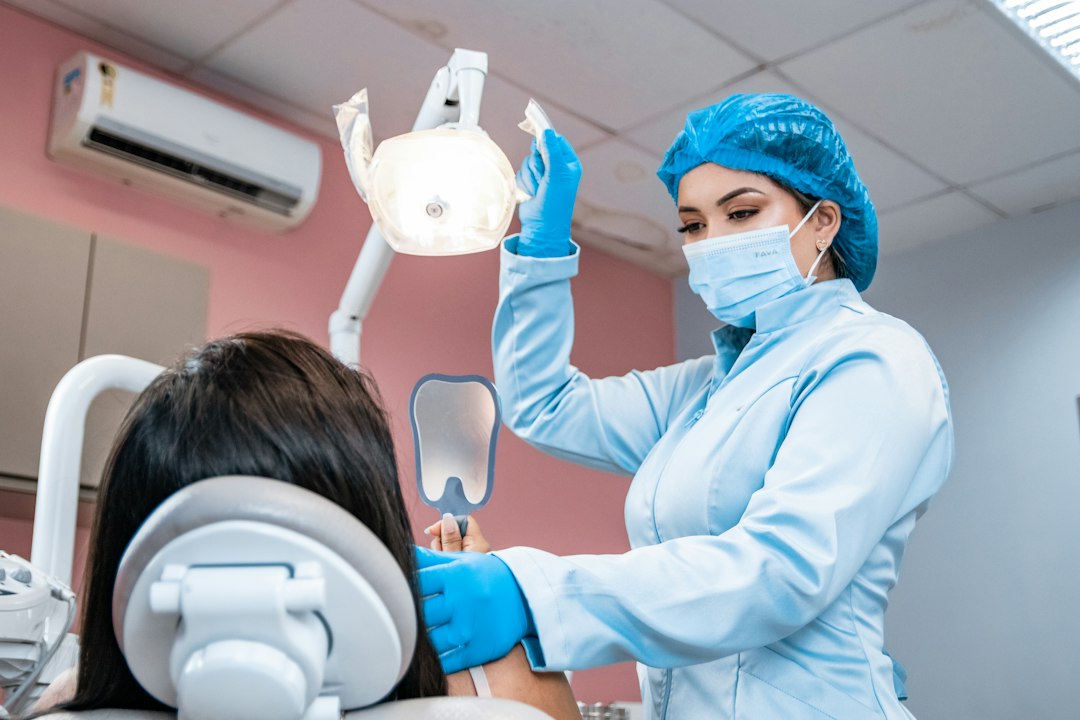
Main image: SoyBreno / Unsplash. Photos are illustrative stock images: they do not show patients, cases or results from The Special Teeth.
Educational information. A professional assessment determines the diagnosis and the appropriate options for each person.