 English

Why Do People Lose Teeth? The Most Common Causes and How to Stay Ahead of Them
Losing teeth is not an inevitable part of aging. Decay, gum disease, injuries and smoking: what the evidence says and what you can do in time.
Tooth loss in adults rarely happens suddenly or because of “age” itself. In most cases it is the end of a long process: decay that progressed, gum disease that destroyed the supporting bone or an injury that damaged the tooth. Understanding these causes makes it possible to act before extraction becomes the only option.
Picture this hypothetical scene: Ernesto is 62. A decade ago he had a back tooth pulled “because there was nothing else to do” and he never replaced it: after all, nobody could see it. Today he notices another tooth moves slightly when he bites and that his gums look lower than before. His older brother has worn full dentures since age 60, and Ernesto is starting to think it is only a matter of time. But is it really inevitable?
A global problem, but not a destiny
Oral diseases affect billions of people worldwide and are considered a public health challenge that shares risk factors with other chronic diseases, such as tobacco, alcohol and high sugar intake (Peres et al., 2019). The most extreme form of tooth loss, having no teeth at all, affected around 2% of the world’s population in 2010, although its frequency had dropped considerably since 1990 (Kassebaum et al., 2014b). That decline shows something encouraging: keeping your teeth for life is increasingly achievable.
Cause 1: decay that was not treated in time
Tooth decay is the most common disease of the mouth. A global analysis estimated that untreated decay in permanent teeth affected about 2.4 billion people in 2010 (Kassebaum et al., 2015). When decay progresses without treatment, it can reach the pulp, cause infections and destroy so much tooth structure that the tooth can no longer be restored. Reviews of the reasons for extraction indicate that decay and gum disease are the two main causes of tooth loss, and that gum disease becomes more important with age (Ong, 1998).
Cause 2: periodontitis, the silent enemy
Periodontitis is a chronic inflammatory disease that destroys the tissues that hold the tooth in place: the gum, the ligament and the bone. Unlike gingivitis, the damage it causes cannot be fully reversed (Papapanou et al., 2018). Severe periodontitis is very common: it was estimated to affect around 11% of the world’s population, placing it among the most prevalent health conditions, with a sharp increase in cases from the fourth decade of life (Kassebaum et al., 2014a).
What makes it so deceptive is that it progresses almost without pain. Signs usually include bleeding, bad breath, receding gums, new gaps between teeth and, later on, loose teeth. The current international classification organizes periodontitis into stages according to its severity and complexity, and into grades according to how fast it progresses and its risk factors; the most advanced stage specifically includes the loss of several teeth because of the disease (Tonetti et al., 2018). This underlines the importance of detecting it early.
Cause 3: blows and injuries
Falls, sports accidents and blows to the face are another common cause of dental damage, especially in children, teenagers and young adults. It is estimated that around one billion living people have had some kind of dental injury (Andersson, 2013). Some blows fracture the tooth; others displace it or knock it out completely. Prompt care can make a difference: a tooth that comes out whole has a better chance of being saved if it is put back in place or carried in milk and a dentist is seen immediately.
The factor that makes everything worse: tobacco
Smoking is one of the most important risk factors for periodontitis. A systematic review with meta-regression found that smoking clearly increases the risk of periodontitis, and that the risk rises with the number of cigarettes smoked (Leite et al., 2018). Tobacco also reduces gum bleeding and can hide the disease, which delays diagnosis. Other contributing factors include poorly controlled diabetes, dry mouth, lack of checkups and difficulty maintaining oral hygiene.
Does losing “just one molar” matter?
Yes. When a tooth is missing, neighboring teeth can tilt into the gap, the opposing tooth can drift up or down and the bite is distributed differently, overloading the remaining teeth. Losing teeth also affects daily life. A systematic review found that tooth loss is associated with poorer oral health-related quality of life, and that the impact depends on the number of teeth lost and their location, being greater when visible teeth are missing (Gerritsen et al., 2010).
Its relationship with general health has also been studied. A review found that people with more missing teeth had, on average, higher all-cause mortality and higher mortality from circulatory diseases (Polzer et al., 2012). This should be read carefully: an association does not mean that losing teeth causes those diseases. It probably reflects shared factors such as smoking, chronic inflammation, diet or access to health care.
How to stay ahead of tooth loss
- Treat cavities early. A small filling today prevents a root canal or an extraction tomorrow.
- Watch your gums. Bleeding, persistent bad breath or teeth that look “longer” deserve a periodontal assessment.
- Clean between your teeth every day. That is where many cavities and much of gum disease begin.
- Quit smoking. It is one of the decisions that best protects your teeth and gums.
- Wear a mouthguard for contact sports. It reduces the risk of fractures and displaced teeth.
- Don’t skip checkups. Many of these diseases progress without pain.
Frequently asked questions
Is it normal to lose teeth with age? It is common, but it is not a natural consequence of aging. With prevention and timely treatment, many people keep their teeth for life.
If a tooth is loose, is it beyond saving? It depends on the cause and how much support remains. Some loose teeth can be stabilized after gum treatment; others cannot. Only an assessment can tell.
Should I replace a tooth that doesn’t show? It is worth evaluating, because its absence can change your bite and affect neighboring teeth over time.
The end of the story
In our hypothetical case, Ernesto went for an assessment. He was told he had periodontitis and that the loose tooth had lost part of its supporting bone, but that it could still be treated. With periodontal treatment, better cleaning between his teeth and regular checkups, the looseness decreased and the disease stabilized. He also began planning how to replace the missing molar. His story is not one of an inevitable ending, but of a process that was still in time to change.
If you want a professional to take a look
Learn more about dental implants at The Special Teeth. If you are coming from the United States, our guide to planning your visit to Tijuana helps with the border crossing and transfers. Whenever you are ready, you can request an evaluation.
References
Andersson, L. (2013). Epidemiology of traumatic dental injuries. Journal of Endodontics, 39(3 Suppl), S2–S5. https://doi.org/10.1016/j.joen.2012.11.021
Gerritsen, A. E., Allen, P. F., Witter, D. J., Bronkhorst, E. M., & Creugers, N. H. J. (2010). Tooth loss and oral health-related quality of life: A systematic review and meta-analysis. Health and Quality of Life Outcomes, 8, Article 126. https://doi.org/10.1186/1477-7525-8-126
Kassebaum, N. J., Bernabé, E., Dahiya, M., Bhandari, B., Murray, C. J. L., & Marcenes, W. (2014a). Global burden of severe periodontitis in 1990–2010: A systematic review and meta-regression. Journal of Dental Research, 93(11), 1045–1053. https://doi.org/10.1177/0022034514552491
Kassebaum, N. J., Bernabé, E., Dahiya, M., Bhandari, B., Murray, C. J. L., & Marcenes, W. (2014b). Global burden of severe tooth loss: A systematic review and meta-analysis. Journal of Dental Research, 93(7 Suppl), 20S–28S. https://doi.org/10.1177/0022034514537828
Kassebaum, N. J., Bernabé, E., Dahiya, M., Bhandari, B., Murray, C. J. L., & Marcenes, W. (2015). Global burden of untreated caries: A systematic review and metaregression. Journal of Dental Research, 94(5), 650–658. https://doi.org/10.1177/0022034515573272
Leite, F. R. M., Nascimento, G. G., Scheutz, F., & López, R. (2018). Effect of smoking on periodontitis: A systematic review and meta-regression. American Journal of Preventive Medicine, 54(6), 831–841. https://doi.org/10.1016/j.amepre.2018.02.014
Ong, G. (1998). Periodontal disease and tooth loss. International Dental Journal, 48(S3), 233–238. https://doi.org/10.1111/j.1875-595x.1998.tb00711.x
Papapanou, P. N., Sanz, M., Buduneli, N., Dietrich, T., Feres, M., Fine, D. H., Flemmig, T. F., Garcia, R., Giannobile, W. V., Graziani, F., Greenwell, H., Herrera, D., Kao, R. T., Kebschull, M., Kinane, D. F., Kirkwood, K. L., Kocher, T., Kornman, K. S., Kumar, P. S., . . . Tonetti, M. S. (2018). Periodontitis: Consensus report of workgroup 2 of the 2017 World Workshop on the Classification of Periodontal and Peri-Implant Diseases and Conditions. Journal of Periodontology, 89(S1), S173–S182. https://doi.org/10.1002/jper.17-0721
Peres, M. A., Macpherson, L. M. D., Weyant, R. J., Daly, B., Venturelli, R., Mathur, M. R., Listl, S., Celeste, R. K., Guarnizo-Herreño, C. C., Kearns, C., Benzian, H., Allison, P., & Watt, R. G. (2019). Oral diseases: A global public health challenge. The Lancet, 394(10194), 249–260. https://doi.org/10.1016/s0140-6736(19)31146-8
Polzer, I., Schwahn, C., Völzke, H., Mundt, T., & Biffar, R. (2012). The association of tooth loss with all-cause and circulatory mortality. Is there a benefit of replaced teeth? A systematic review and meta-analysis. Clinical Oral Investigations, 16(2), 333–351. https://doi.org/10.1007/s00784-011-0625-9
Tonetti, M. S., Greenwell, H., & Kornman, K. S. (2018). Staging and grading of periodontitis: Framework and proposal of a new classification and case definition. Journal of Periodontology, 89(S1), S159–S172. https://doi.org/10.1002/jper.18-0006
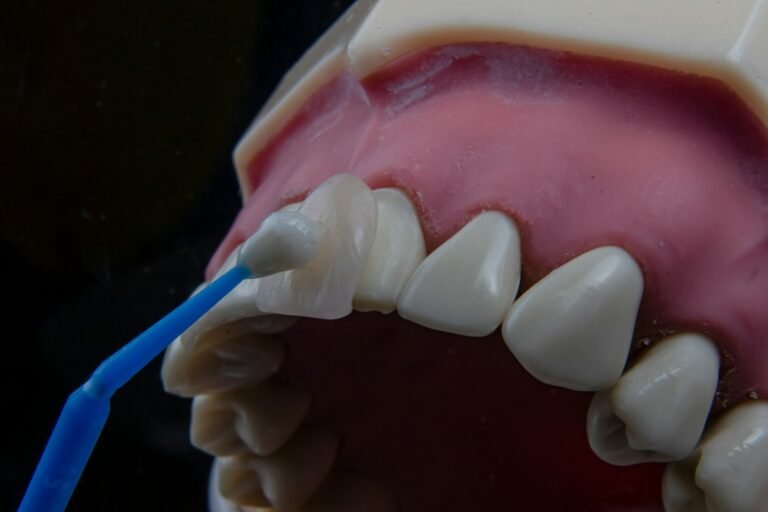
Main image: Vitaly Gariev / Unsplash. Photos are illustrative stock images: they do not show patients, cases or results from The Special Teeth.
Educational information. A professional assessment determines the diagnosis and the appropriate options for each person.