 English


Dental Erosion: How Acids Wear Down Your Teeth Without You Noticing
Sports drinks, soft drinks, citrus or reflux can slowly dissolve enamel. What dental erosion is, how to recognize it and which habits help stop it.
Dental erosion is the loss of enamel and dentin caused by acids that do not come from bacteria, but from what we eat and drink or from the stomach itself. Unlike decay, it does not form holes; instead, it slowly and silently wears down the tooth surfaces. By the time it is noticed, there is often considerable loss already. The good news is that, caught early, it can be stopped with simple changes.
Picture this hypothetical scene: Ricardo is 30 and runs every day. He drinks two or three sports drinks during his workouts, starts the morning with lemon water and, in the afternoon, carries a bottle of sparkling mineral water that he sips over several hours. He has never had a cavity. One day he notices that the edges of his front teeth look almost transparent and that they are sensitive to cold. “If I don’t eat sweets, how is this possible?” he wonders.
What exactly is erosion?
Specialists describe it as a multifactorial condition involving chemical and mechanical processes, and one of growing concern because of how common it is at all ages (Lussi & Carvalho, 2014). The starting point is chemical: when an acid comes into contact with a tooth, it dissolves some of the minerals on the enamel surface and leaves it softened. How aggressive that acid is depends not only on its pH but also on its capacity to maintain acidity and on its calcium and phosphate content (Lussi et al., 2011).
That softened surface is more vulnerable to mechanical wear. Erosion interacts with abrasion, such as from brushing, and with attrition, which is wear from tooth-to-tooth contact; together they can speed up tissue loss (Shellis & Addy, 2014). That is why the term “erosive tooth wear” is used.
How common is it?
More common than it seems. A review of its global prevalence found that it affects a significant proportion of children, adolescents and adults, and that it is higher in certain risk groups (Schlueter & Luka, 2018). In a study of young adults from several European countries, almost a third had tooth wear, and it was associated with drinking fruit juices and soft drinks, heartburn or acid reflux and frequent vomiting (Bartlett et al., 2013). Reviews of its distribution note that erosion has been increasing and that its pattern in the mouth can point to its cause (Jaeggi & Lussi, 2006).
Sources of acid
Dietary acids
Soft drinks, sports and energy drinks, fruit juices, citrus fruits, vinegars, some wines and fruit teas can be erosive. But it is not just about what is consumed, but how. Sipping for hours, holding the drink in the mouth, swishing it around or consuming acids between meals increases the risk, because it prolongs the contact between acid and tooth (O’Toole & Mullan, 2018). That is exactly Ricardo’s case: several acidic drinks spread throughout the day.
Stomach acids
Stomach acid is highly erosive. A systematic review found a clear association between gastroesophageal reflux disease and dental erosion lesions (Pace et al., 2008). Another review with meta-analysis found that eating disorders are associated with a higher risk of erosion, especially when vomiting is involved (Hermont et al., 2014). In these cases, the mouth may be one of the first signs of a health problem that deserves medical attention and professional support.
Signs that may give it away
- Edges of the front teeth that look translucent or thinner.
- Smooth, shiny surfaces or small rounded depressions.
- Teeth that look more yellow, because thinning enamel lets the dentin show through.
- Fillings that seem to “stick out” because the tooth around them has worn away.
- Sensitivity to cold, heat or sweets.
To assess it systematically, professionals can use a simple index called BEWE, which scores the wear in each section of the mouth and helps decide which measures to take (Bartlett et al., 2008).
How it is managed
A European consensus on the diagnosis and management of erosive tooth wear recommends starting by identifying and controlling the causes, applying preventive measures and reserving restorations for when wear is advanced, affects function or appearance, or causes persistent sensitivity (Carvalho et al., 2015). Restoring the teeth without changing habits does not stop the problem.
Protective habits
- Reduce how often you have acidic drinks and, if you have them, do so in one go, ideally with meals.
- Don’t hold them in your mouth or swish them around. A straw can help reduce contact with the front teeth.
- After something acidic, rinse with water or eat something neutral, such as a piece of cheese.
- Wait a while before brushing and use a soft brush with fluoride toothpaste, without scrubbing hard.
- Choose plain water to stay hydrated during the day and during exercise, unless you need another drink on professional advice.
- If you have reflux, frequent heartburn or vomiting, talk to your physician; treating the cause also protects your teeth.
When there is already wear
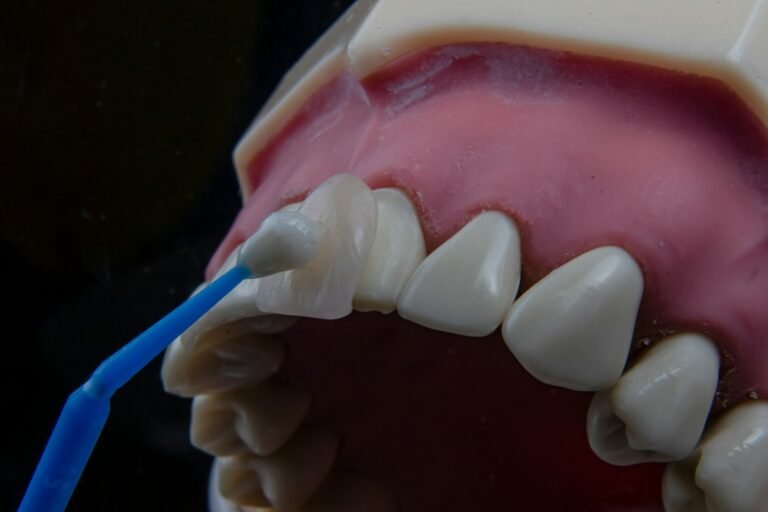
If erosion has caused sensitivity, cosmetic changes or loss of function, there are restorative options, from bonded resins that cover the worn areas to more extensive restorations in advanced cases. Ideally, they should be as conservative as possible and accompanied by preventive measures (Carvalho et al., 2015).
Frequently asked questions
Is sparkling water bad for teeth? Carbonated water is slightly acidic, but it is usually far less erosive than soft drinks or citrus-flavored beverages. The problem grows when it contains acidic flavorings or is sipped all day long.
Does lost enamel come back? No. Enamel does not regenerate. Wear can, however, be stopped and the remaining enamel protected.
Is brushing right after eating fruit bad? It can increase wear if the enamel is softened. It is better to rinse with water and wait a while.
The end of the story
In our hypothetical case, Ricardo went for an assessment. He was told he had erosive wear on the edges of his front teeth, encouraged by how often he had acidic drinks. He swapped sports drinks for water during shorter workouts, stopped sipping sparkling water all afternoon and began rinsing with water after his breakfast juice. His teeth did not regain the lost enamel, but at the following checkups the wear stopped progressing and the sensitivity decreased. His story shows that erosion depends not only on what you consume, but on how and when you consume it.
If you want a professional to take a look
Learn more about cleaning and prevention at The Special Teeth. If you are coming from the United States, our guide to planning your visit to Tijuana helps with the border crossing and transfers. Whenever you are ready, you can request an evaluation.
References
Bartlett, D., Ganss, C., & Lussi, A. (2008). Basic Erosive Wear Examination (BEWE): A new scoring system for scientific and clinical needs. Clinical Oral Investigations, 12(S1), S65–S68. https://doi.org/10.1007/s00784-007-0181-5
Bartlett, D. W., Lussi, A., West, N. X., Bouchard, P., Sanz, M., & Bourgeois, D. (2013). Prevalence of tooth wear on buccal and lingual surfaces and possible risk factors in young European adults. Journal of Dentistry, 41(11), 1007–1013. https://doi.org/10.1016/j.jdent.2013.08.018
Carvalho, T. S., Colon, P., Ganss, C., Huysmans, M. C., Lussi, A., Schlueter, N., Schmalz, G., Shellis, R. P., Tveit, A. B., & Wiegand, A. (2015). Consensus report of the European Federation of Conservative Dentistry: Erosive tooth wear—diagnosis and management. Clinical Oral Investigations, 19(7), 1557–1561. https://doi.org/10.1007/s00784-015-1511-7
Hermont, A. P., Oliveira, P. A. D., Martins, C. C., Paiva, S. M., Pordeus, I. A., & Auad, S. M. (2014). Tooth erosion and eating disorders: A systematic review and meta-analysis. PLoS ONE, 9(11), Article e111123. https://doi.org/10.1371/journal.pone.0111123
Jaeggi, T., & Lussi, A. (2006). Prevalence, incidence and distribution of erosion. Monographs in Oral Science, 20, 44–65. https://doi.org/10.1159/000093350
Lussi, A., & Carvalho, T. S. (2014). Erosive tooth wear: A multifactorial condition of growing concern and increasing knowledge. Monographs in Oral Science, 25, 1–15. https://doi.org/10.1159/000360380
Lussi, A., Schlueter, N., Rakhmatullina, E., & Ganss, C. (2011). Dental erosion – an overview with emphasis on chemical and histopathological aspects. Caries Research, 45(Suppl 1), 2–12. https://doi.org/10.1159/000325915
O’Toole, S., & Mullan, F. (2018). The role of the diet in tooth wear. British Dental Journal, 224(5), 379–383. https://doi.org/10.1038/sj.bdj.2018.127
Pace, F., Pallotta, S., Tonini, M., Vakil, N., & Bianchi Porro, G. (2008). Systematic review: Gastro-oesophageal reflux disease and dental lesions. Alimentary Pharmacology & Therapeutics, 27(12), 1179–1186. https://doi.org/10.1111/j.1365-2036.2008.03694.x
Schlueter, N., & Luka, B. (2018). Erosive tooth wear – a review on global prevalence and on its prevalence in risk groups. British Dental Journal, 224(5), 364–370. https://doi.org/10.1038/sj.bdj.2018.167
Shellis, R. P., & Addy, M. (2014). The interactions between attrition, abrasion and erosion in tooth wear. Monographs in Oral Science, 25, 32–45. https://doi.org/10.1159/000359936
Main image: Francesca Hotchin / Unsplash. Photos are illustrative stock images: they do not show patients, cases or results from The Special Teeth.
Educational information. A professional assessment determines the diagnosis and the appropriate options for each person.