 English

Fluoride: Myths, Facts and What the Scientific Evidence Says
Is fluoride essential or dangerous? How it protects teeth, what reviews say about toothpaste, varnish and fluoridated water, and what is known about its risks.
Fluoride is one of the best-supported tools for preventing tooth decay. It works mainly on the tooth surface, helping to repair enamel and make it more resistant to acid. At the same time, many social media messages portray it as a poison. Separating facts from myths helps people use it safely and effectively.
Picture this hypothetical scene: Paula is the mother of Mateo, who is 4. A year ago she watched a video claiming that fluoride “is toxic” and decided to switch the whole family to a fluoride-free toothpaste. At the latest checkup, the pediatric dentist found three cavities in Mateo’s baby teeth. Paula feels confused: she only wanted to protect him.
How does fluoride protect teeth?
For a long time fluoride was thought to work mainly by being incorporated into the tooth while it formed. Today it is known that its most important effect is topical, that is, when it is present in saliva and plaque in small amounts. In that environment, it slows mineral loss when pH drops and promotes mineral recovery when saliva neutralizes the acid (Featherstone, 1999). Reviews of its mechanisms agree that fluoride constantly available in the mouth is more useful than fluoride that is swallowed (Buzalaf et al., 2011).
That explains why daily brushing with fluoride toothpaste is so effective: it leaves a small reservoir of fluoride exactly where it is needed.
What the evidence says about each form of fluoride
Toothpaste
It is the most studied form. A Cochrane review found that fluoride toothpaste clearly reduces new cavities in children and adolescents compared with not using it (Marinho et al., 2003). Another review showed that concentration matters: toothpastes with at least 1,000 parts per million are more effective than low-concentration ones (Walsh et al., 2019). In children under six, a systematic review that informed American Dental Association recommendations confirmed its benefit and noted that using a very small amount reduces the risk of fluorosis (Wright et al., 2014).
Fluoride varnish
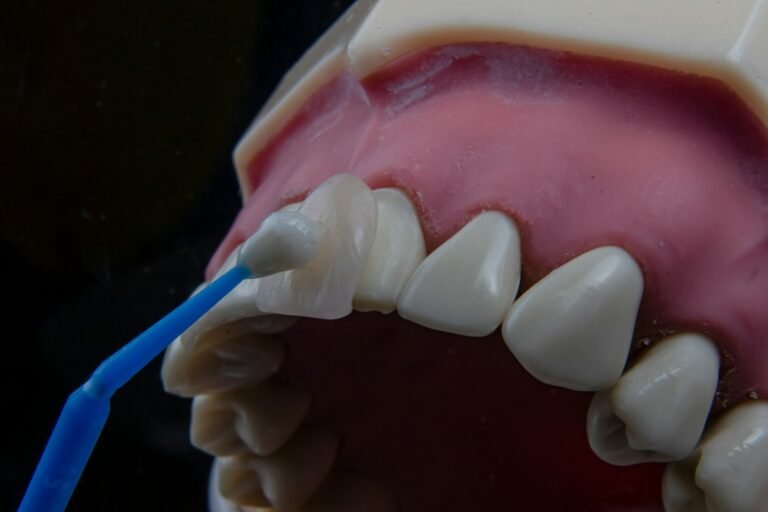
It is a coating that a professional applies to the teeth. A Cochrane review found that regular application is associated with a substantial reduction in decay in the baby and permanent teeth of children and adolescents (Marinho et al., 2013). It is quick, painless and especially useful for children at higher risk of decay.
Fluoridated water
This is the most debated measure. A Cochrane review concluded that water fluoridation reduced decay in children, although many of the studies were carried out before fluoride toothpaste was widely used, so it is hard to know how much additional benefit it provides today (Iheozor-Ejiofor et al., 2015). The way different countries have adopted fluoridated water, salt or toothpaste depends on their context and public health policies (Whelton et al., 2019).
What about the risks?
Dental fluorosis
When a child swallows too much fluoride while their teeth are forming, white spots or, in more severe cases, brown spots can appear on the enamel. This is called fluorosis. A Cochrane review found that starting fluoride toothpaste very early or in large amounts may increase this risk, although the evidence is limited and must be weighed against the benefit against decay (Wong et al., 2010). That is why guidelines stress using the right amount of toothpaste for each age and supervising brushing (Toumba et al., 2019).
Concerns about neurological development
Some researchers have suggested that high fluoride exposure during pregnancy and childhood might affect neurological development (Grandjean, 2019). A meta-analysis published in 2025 found an association between higher fluoride exposure and lower IQ scores, mainly in studies conducted where water contained concentrations above 1.5 milligrams per liter, and noted that there are not enough data to know the effect at lower concentrations such as those used in fluoridation programs (Taylor et al., 2025). These findings concern total intake and high levels, not the topical use of toothpaste that is spat out after brushing, but they are one more reason to respect recommended amounts and for authorities to monitor levels in water.
Common myths
- “Fluoride is poison.” Like many substances, it depends on the dose. The amounts used in toothpaste, applied and spat out, are very small.
- “Natural fluoride-free toothpastes protect just as well.” There is no evidence that fluoride-free toothpastes prevent decay to a comparable degree (Marinho et al., 2003).
- “If there is fluoride in the water, I don’t need fluoride toothpaste.” Both measures can complement each other; toothpaste remains the foundation of prevention at home.
- “Adults no longer need fluoride.” The risk of decay continues throughout life, especially on exposed roots or with dry mouth.
Practical recommendations
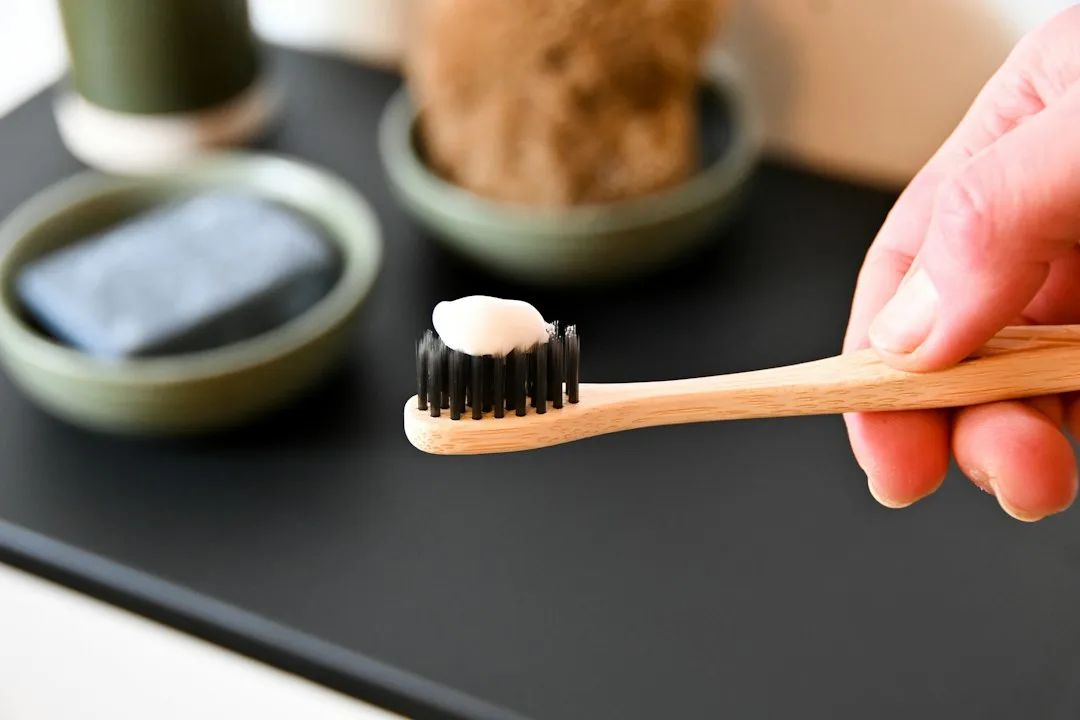
- Babies and young children: from the first tooth, a minimal amount of fluoride toothpaste, the size of a grain of rice, with adult supervision (Wright et al., 2014).
- From age 3: a pea-sized amount, teaching the child to spit without swallowing (Toumba et al., 2019).
- Teenagers and adults: fluoride toothpaste twice a day; spit out the excess without rinsing heavily.
- High decay risk: a professional may recommend fluoride varnish or higher-concentration toothpastes.
- Keep toothpaste out of reach of young children.
Frequently asked questions
What if my child swallows a little toothpaste? With the recommended amounts, occasionally swallowing a little is not usually a problem. The recommendation to use only a little toothpaste is precisely meant to keep the amount swallowed minimal.
Are fluoride mouthwashes necessary? Not for everyone. They can be useful for people at high risk of decay, as advised by a professional.
Does fluoride whiten or stain teeth? Topical fluoride does not stain. Fluorosis spots appear from excessive intake while teeth are forming in childhood.
The end of the story
In our hypothetical case, the pediatric dentist explained to Paula how fluoride works, how much toothpaste to use with Mateo and why the risk of fluorosis depends on the amount swallowed. Mateo had his cavities treated and received a fluoride varnish application, and the family went back to a fluoride toothpaste in the right amount. At his next checkup there were no new cavities. Paula’s story reflects an important idea: the best protection comes from reliable information, not from fear.
If you want a professional to take a look
Learn more about cleaning and prevention at The Special Teeth. If you are coming from the United States, our guide to planning your visit to Tijuana helps with the border crossing and transfers. Whenever you are ready, you can request an evaluation.
References
Buzalaf, M. A. R., Pessan, J. P., Honório, H. M., & ten Cate, J. M. (2011). Mechanisms of action of fluoride for caries control. Monographs in Oral Science, 22, 97–114. https://doi.org/10.1159/000325151
Featherstone, J. D. B. (1999). Prevention and reversal of dental caries: Role of low level fluoride. Community Dentistry and Oral Epidemiology, 27(1), 31–40. https://doi.org/10.1111/j.1600-0528.1999.tb01989.x
Grandjean, P. (2019). Developmental fluoride neurotoxicity: An updated review. Environmental Health, 18, Article 110. https://doi.org/10.1186/s12940-019-0551-x
Iheozor-Ejiofor, Z., Worthington, H. V., Walsh, T., O’Malley, L., Clarkson, J. E., Macey, R., Alam, R., Tugwell, P., Welch, V., & Glenny, A.-M. (2015). Water fluoridation for the prevention of dental caries. Cochrane Database of Systematic Reviews, 2015(6), Article CD010856. https://doi.org/10.1002/14651858.cd010856.pub2
Marinho, V. C. C., Higgins, J., Logan, S., & Sheiham, A. (2003). Fluoride toothpastes for preventing dental caries in children and adolescents. Cochrane Database of Systematic Reviews, 2003(1), Article CD002278. https://doi.org/10.1002/14651858.cd002278
Marinho, V. C. C., Worthington, H. V., Walsh, T., & Clarkson, J. E. (2013). Fluoride varnishes for preventing dental caries in children and adolescents. Cochrane Database of Systematic Reviews, 2013(7), Article CD002279. https://doi.org/10.1002/14651858.cd002279.pub2
Taylor, K. W., Eftim, S. E., Sibrizzi, C. A., Blain, R. B., Magnuson, K., Hartman, P. A., Rooney, A. A., & Bucher, J. R. (2025). Fluoride exposure and children’s IQ scores: A systematic review and meta-analysis. JAMA Pediatrics, 179(3), 282–292. https://doi.org/10.1001/jamapediatrics.2024.5542
Toumba, K. J., Twetman, S., Splieth, C., Parnell, C., van Loveren, C., & Lygidakis, N. A. (2019). Guidelines on the use of fluoride for caries prevention in children: An updated EAPD policy document. European Archives of Paediatric Dentistry, 20(6), 507–516. https://doi.org/10.1007/s40368-019-00464-2
Walsh, T., Worthington, H. V., Glenny, A.-M., Marinho, V. C. C., & Jeroncic, A. (2019). Fluoride toothpastes of different concentrations for preventing dental caries. Cochrane Database of Systematic Reviews, 2019(3), Article CD007868. https://doi.org/10.1002/14651858.cd007868.pub3
Whelton, H. P., Spencer, A. J., Do, L. G., & Rugg-Gunn, A. J. (2019). Fluoride revolution and dental caries: Evolution of policies for global use. Journal of Dental Research, 98(8), 837–846. https://doi.org/10.1177/0022034519843495
Wong, M. C. M., Glenny, A.-M., Tsang, B. W. K., Lo, E. C. M., Worthington, H. V., & Marinho, V. C. C. (2010). Topical fluoride as a cause of dental fluorosis in children. Cochrane Database of Systematic Reviews, 2010(1), Article CD007693. https://doi.org/10.1002/14651858.cd007693.pub2
Wright, J. T., Hanson, N., Ristic, H., Whall, C. W., Estrich, C. G., & Zentz, R. R. (2014). Fluoride toothpaste efficacy and safety in children younger than 6 years. The Journal of the American Dental Association, 145(2), 182–189. https://doi.org/10.14219/jada.2013.37
Main image: Nik / Unsplash. Photos are illustrative stock images: they do not show patients, cases or results from The Special Teeth.
Educational information. A professional assessment determines the diagnosis and the appropriate options for each person.