 English

Dental Sealants: The Invisible Layer That Protects Children's Molars
The grooves of molars are a favorite spot for decay. What sealants are, when they are placed, how much protection they give according to the evidence and what is known about their safety.
Dental sealants are a thin layer of material, usually resin, applied to the pits and fissures of the molars to close the grooves where bacteria and food debris build up. It is a quick procedure, without anesthesia and without drilling the tooth. Its goal is to prevent decay precisely where it appears most often during childhood and adolescence.
Picture this hypothetical scene: Emilio is 7 and proud of his “new molars,” which have just come in behind his baby teeth. His mother, Teresa, notices that they have very deep grooves and that, even though Emilio brushes, there is always some food trapped in them. At the checkup, the dentist suggests placing sealants. Teresa hesitates: isn’t it better to wait and see whether a cavity appears?
Why are molars so vulnerable?
The chewing surface of the molars has narrow, deep grooves, sometimes finer than a toothbrush bristle. In addition, while the molar is still coming in, it sits lower than the other teeth and does not receive the friction of chewing, which allows plaque to build up for months. That is why the chewing surfaces of newly erupted molars are especially prone to decay (Carvalho, 2014).
The first permanent molars usually appear around age 6 and the second ones around age 12. These are teeth that must last a lifetime, and the first years after they come in are the riskiest.
How are they placed?
The procedure is simple: the molar is cleaned, kept dry from saliva, the surface is prepared with a gel for a few seconds, rinsed and dried, and the sealant is applied and hardened with a special light. The whole process takes a few minutes per tooth and requires no anesthesia or drilling. Afterward, the dentist checks that the sealant is well bonded and does not interfere with the bite.
Children usually tolerate it well because nothing is injected and there is no drilling noise. For very young or anxious children, the dentist may explain each step, keep the tooth dry with cotton rolls or place a temporary glass-ionomer sealant until the molar has fully come in and can be sealed with resin.
Do they work? What the evidence says
Yes, and with strong support. A Cochrane review found that resin sealants on the permanent molars of children and adolescents substantially reduce decay on those surfaces: in the studies analyzed, after two years the proportion of surfaces with decay was much lower in sealed molars than in unsealed ones, and the benefit persisted in longer follow-ups (Ahovuo-Saloranta et al., 2017).
A systematic review carried out by the American Dental Association and the American Academy of Pediatric Dentistry reached similar conclusions about their effectiveness in preventing decay on the chewing surfaces of molars (Wright, Tampi, et al., 2016). Based on that evidence, the clinical guideline from both organizations recommends placing sealants in the pits and fissures of the molars of children and adolescents (Wright, Crall, et al., 2016).
What if there is already a very early cavity?
It used to be thought that sealing over an early lesion could be risky. Today the evidence points the other way. An analysis found that sealing early, non-cavitated decay lesions reduces the likelihood that they progress (Griffin et al., 2008). That is why clinical recommendations also consider using sealants on early lesions that have not yet formed a cavity (Beauchamp et al., 2008).
Sealants or fluoride varnish?
Both are useful preventive measures. A Cochrane review comparing them found some advantage for sealants in preventing decay on chewing surfaces, although the certainty of the evidence is low (Kashbour et al., 2020). In practice they are often combined: the sealant protects the grooves and fluoride protects all surfaces.
What about baby teeth?
The evidence is more limited. A Cochrane review of sealants on primary teeth found few studies with low certainty, so their use is assessed case by case, especially in children at high risk of decay (Ramamurthy et al., 2022).
An impact visible across the population
The U.S. Centers for Disease Control and Prevention reported that school-aged children without sealants had almost three times more cavities in their first molars than children who had them, and that many children still do not receive them (Griffin et al., 2016). It is a simple measure with a considerable preventive effect.
Are they safe?
Some parents ask about bisphenol A, a substance related to certain resin materials. A review published in the journal of the American Academy of Pediatrics concluded that exposure from sealants is very low and short-lived, and that the benefits outweigh the possible risks. To reduce exposure even further, it suggested measures such as cleaning the surface and having the child rinse and spit after placement (Fleisch et al., 2010).
What is worth knowing
- They do not replace brushing. They protect the grooves, but not the sides of the teeth or the spaces between them.
- They are checked at every visit. They can wear down or partially come off and, if so, they are repaired or replaced.
- They don’t hurt. They require no anesthesia or drilling.
- Sooner is better. Ideally, once the molar has come in enough to be kept dry during placement.
- Adults can benefit too in some cases, if they have deep grooves and a risk of decay.
Frequently asked questions
How long do sealants last? They can last several years, but they should be checked regularly because chewing wears them down.
Can you see them? They are usually clear, white or tooth-colored and are not visible when smiling.
Can my child eat normally afterward? Yes, the material hardens immediately.
The end of the story
In our hypothetical case, Teresa decided to have sealants placed on Emilio’s first molars. The dentist explained that waiting for a cavity to appear would mean treating damage that could have been prevented. The procedure took just a few minutes, and Emilio left the office showing off his “shielded molars.” Years later, when his second molars came in, they repeated the procedure. His story sums up the central idea: sometimes the best way to treat a cavity is to keep it from appearing.
If you want a professional to take a look
Learn more about cleaning and prevention at The Special Teeth. If you are coming from the United States, our guide to planning your visit to Tijuana helps with the border crossing and transfers. Whenever you are ready, you can request an evaluation.
References
Ahovuo-Saloranta, A., Forss, H., Walsh, T., Nordblad, A., Mäkelä, M., & Worthington, H. V. (2017). Pit and fissure sealants for preventing dental decay in permanent teeth. Cochrane Database of Systematic Reviews, 2017(7), Article CD001830. https://doi.org/10.1002/14651858.cd001830.pub5
Beauchamp, J., Caufield, P. W., Crall, J. J., Donly, K., Feigal, R., Gooch, B., Ismail, A., Kohn, W., Siegal, M., & Simonsen, R. (2008). Evidence-based clinical recommendations for the use of pit-and-fissure sealants. The Journal of the American Dental Association, 139(3), 257–268. https://doi.org/10.14219/jada.archive.2008.0155
Carvalho, J. C. (2014). Caries process on occlusal surfaces: Evolving evidence and understanding. Caries Research, 48(4), 339–346. https://doi.org/10.1159/000356307
Fleisch, A. F., Sheffield, P. E., Chinn, C., Edelstein, B. L., & Landrigan, P. J. (2010). Bisphenol A and related compounds in dental materials. Pediatrics, 126(4), 760–768. https://doi.org/10.1542/peds.2009-2693
Griffin, S. O., Oong, E., Kohn, W., Vidakovic, B., Gooch, B. F., & CDC Dental Sealant Systematic Review Work Group. (2008). The effectiveness of sealants in managing caries lesions. Journal of Dental Research, 87(2), 169–174. https://doi.org/10.1177/154405910808700211
Griffin, S. O., Wei, L., Gooch, B. F., Weno, K., & Espinoza, L. (2016). Vital signs: Dental sealant use and untreated tooth decay among U.S. school-aged children. MMWR. Morbidity and Mortality Weekly Report, 65(41), 1141–1145. https://doi.org/10.15585/mmwr.mm6541e1
Kashbour, W., Gupta, P., Worthington, H. V., & Boyers, D. (2020). Pit and fissure sealants versus fluoride varnishes for preventing dental decay in the permanent teeth of children and adolescents. Cochrane Database of Systematic Reviews, 2020(11), Article CD003067. https://doi.org/10.1002/14651858.cd003067.pub5
Ramamurthy, P., Rath, A., Sidhu, P., Fernandes, B., Nettem, S., Fee, P. A., Zaror, C., & Walsh, T. (2022). Sealants for preventing dental caries in primary teeth. Cochrane Database of Systematic Reviews, 2022(2), Article CD012981. https://doi.org/10.1002/14651858.cd012981.pub2
Wright, J. T., Crall, J. J., Fontana, M., Gillette, E. J., Nový, B. B., Dhar, V., Donly, K., Hewlett, E. R., Quinonez, R. B., Chaffin, J., Crespin, M., Iafolla, T., Siegal, M. D., Tampi, M. P., Graham, L., Estrich, C., & Carrasco-Labra, A. (2016). Evidence-based clinical practice guideline for the use of pit-and-fissure sealants. The Journal of the American Dental Association, 147(8), 672–682.e12. https://doi.org/10.1016/j.adaj.2016.06.001
Wright, J. T., Tampi, M. P., Graham, L., Estrich, C., Crall, J. J., Fontana, M., Gillette, E. J., Nový, B. B., Dhar, V., Donly, K., Hewlett, E. R., Quinonez, R. B., Chaffin, J., Crespin, M., Iafolla, T., Siegal, M. D., & Carrasco-Labra, A. (2016). Sealants for preventing and arresting pit-and-fissure occlusal caries in primary and permanent molars. The Journal of the American Dental Association, 147(8), 631–645.e18. https://doi.org/10.1016/j.adaj.2016.06.003
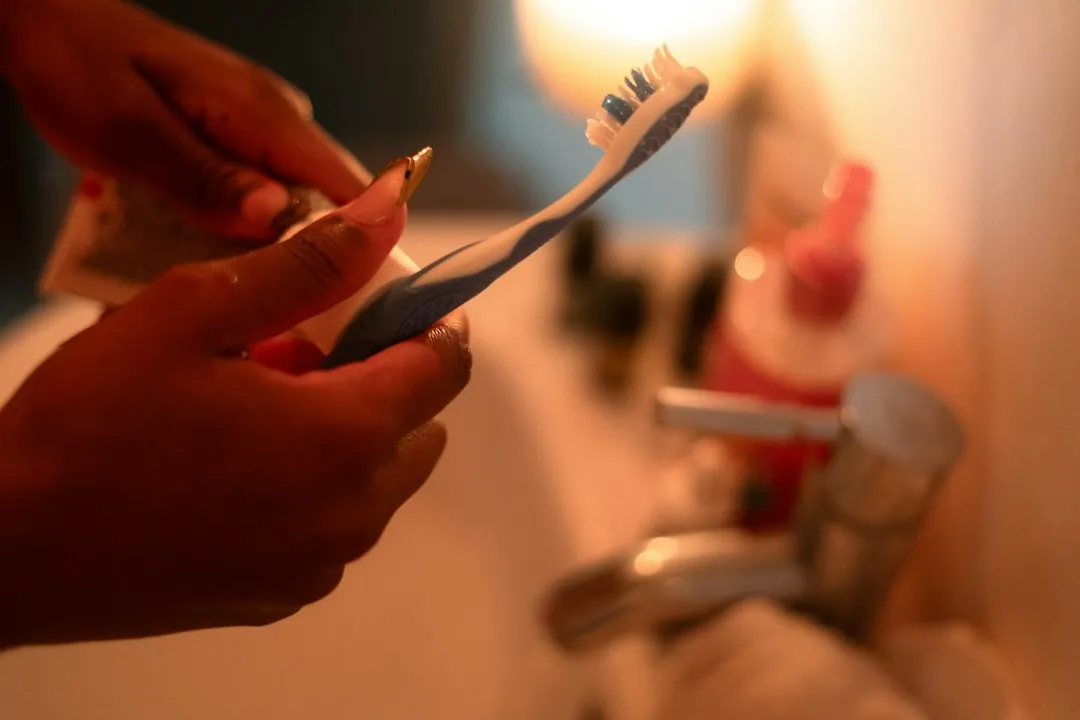
Main image: Christian Agbede / Unsplash. Photos are illustrative stock images: they do not show patients, cases or results from The Special Teeth.
Educational information. A professional assessment determines the diagnosis and the appropriate options for each person.