 English


Toothache at night: the scare that keeps you awake
Why can a tooth hurt more when you lie down? Explore possible causes, temporary care, medicines to discuss with a pharmacist, and signs that call for urgent treatment.
Odonto News · Decisions and care
The house is finally quiet. The horror movie is over, the pumpkin light is off, and you have just settled into your pillow. Then the real scare arrives: a molar starts throbbing as though it has its own heartbeat. It is two in the morning, and your phone’s search bar suddenly becomes a pharmacy of possibilities.

Your tooth does not have a Halloween clock
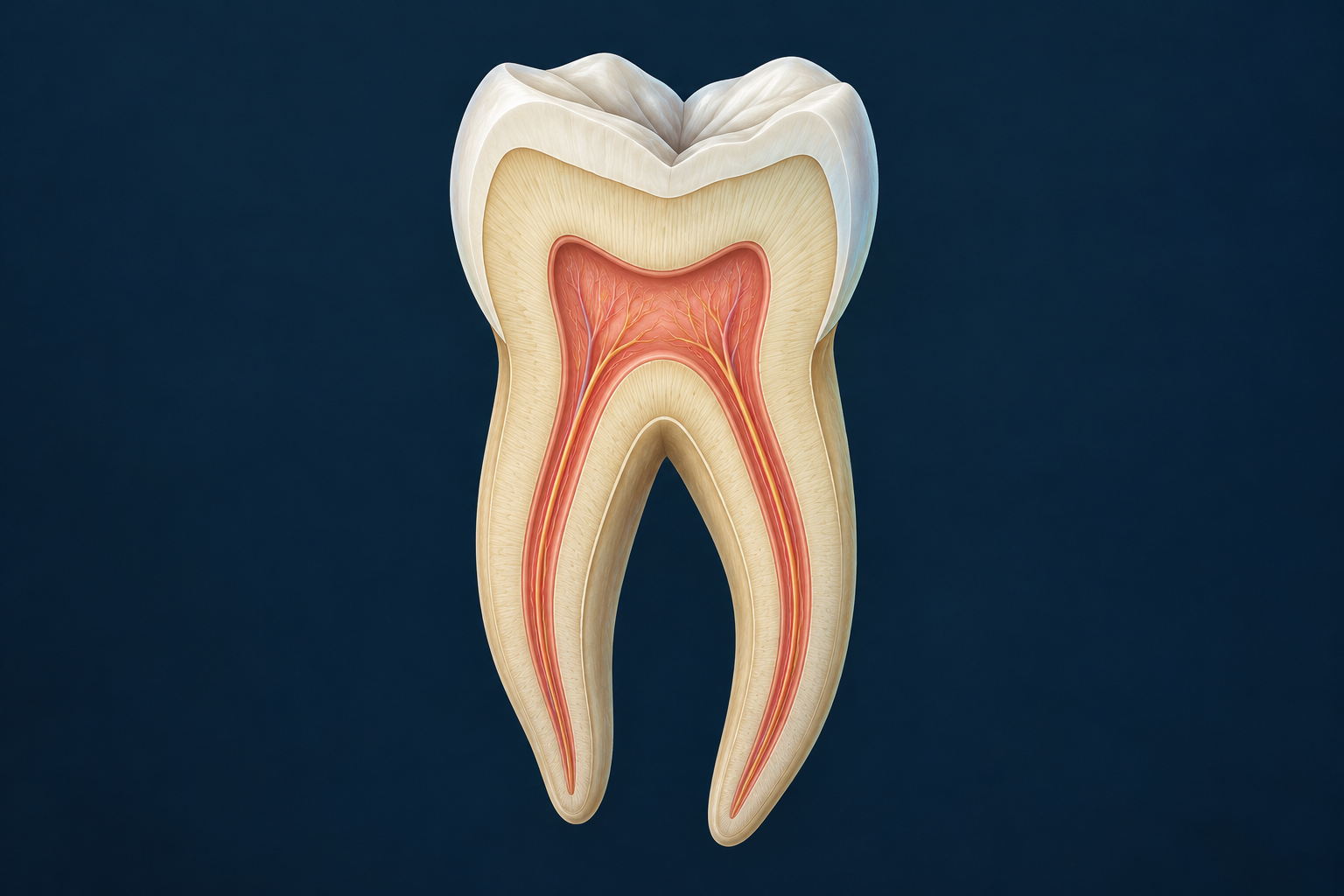
A nighttime toothache is not a diagnosis. Deep decay, a crack, a damaged filling, or an infection could be behind it. Inside a tooth is the pulp, tissue containing nerves and blood vessels. Inflamed pulp can produce spontaneous pain or discomfort that lingers after something hot or cold. The American Association of Endodontists says sensitivity lasting more than 30 seconds warrants prompt evaluation: it is a clue, not a home test proving you need a root canal.
Clenching or grinding can hurt, too. The NIDCR explains that bruxism happens while awake or asleep and can cause tooth sensitivity and jaw pain. A tired jaw in the morning and a sharply painful molar should not automatically receive the same diagnosis.
Why might lying down make it worse? Some dental pain feels worse when lying flat; NHS Royal Devon suggests trying an elevated position. Nighttime pain does not always have the same mechanism, and posture cannot distinguish infection from inflammation. If an extra pillow helps, use it as temporary relief.
A sensible plan for getting through the night
First, contact an urgent dental service if pain is severe, worsening, or uncontrolled. While arranging care, use a soft toothbrush, choose soft foods, and avoid chewing with the painful tooth. Skip very hot, cold, or sweet foods. An adult able to spit safely can try a warm salt-water rinse: half a teaspoon of salt in a glass of water, then spit it out. The NHS suggests this for discomfort, not as a cure for decay or an abscess.

In the middle of the night, it is easy to jump between suggestions: a video, a remedy someone remembers, a box left in the medicine cabinet. Pause and organize what you know: when the discomfort began, what triggers it, and what you have already taken. That information helps you explain the problem to the professional who sees you. You do not have to discover a diagnosis on your phone before taking the next step.
The late-night pharmacy: look for the ingredient
Adults can ask a pharmacist about ibuprofen or acetaminophen, also called paracetamol. The ADA guideline first published in 2024 identifies nonsteroidal anti-inflammatory drugs, alone or with acetaminophen, as first-line options for temporary relief when immediate dental treatment is unavailable. That does not make a combination appropriate for everyone.
Before buying anything, explain what you have already taken, when you took it, and your conditions or allergies. Ibuprofen needs particular caution with a history of ulcers, kidney disease, anticoagulants, NSAID allergies, or pregnancy. Do not combine ibuprofen with naproxen or another NSAID on your own. The NHS describes these precautions.
With acetaminophen, check every product’s ingredients: some cold medicines contain it too. The FDA warns that duplicate ingredients or exceeding label directions can damage the liver. Get advice first if you have liver disease. Follow the package and your pharmacist’s guidance; this adult information is not a children’s dosing guide or a personal prescription.

The ADA also advises against putting aspirin directly on an aching tooth or gum. Leftover antibiotics are not a nighttime plan either: the ADA antibiotic guideline prioritizes dental treatment for most pulpal and periapical conditions. A professional decides when an antibiotic is indicated.
Getting a little sleep after a pain reliever can be a huge relief. It can also tempt you to cancel the appointment at dawn. Remember the central point of this story: controlling a symptom does not establish that its cause has been resolved. Note how the pain changed and arrange care; if it gets worse again, reassess the urgency instead of stacking up more remedies.
When the scare calls for immediate action
Seek emergency medical care immediately for trouble breathing, swallowing, or speaking; swelling around the eye or neck; vision changes; or substantial swelling that makes opening the mouth difficult. Fever, feeling unwell, or facial swelling need urgent assessment. The NHS explains that a dental abscess will not go away on its own. A pain reliever can turn down the volume while leaving the cause untouched.

The hopeful ending is not learning to endure it. It is knowing which signs matter, using temporary relief carefully, and getting the right treatment. Next time, the movie can be the most unsettling part of your night.
Odonto News by The Special Teeth in Tijuana connects everyday stories with science and sources you can explore. Keep discovering dental culture and request an evaluation for persistent discomfort. Our appointment request form does not replace an emergency service.
Sources you can explore
- American Association of Endodontists: tooth pain symptoms and causes
- NIDCR: bruxism
- NHS Royal Devon: advice on managing dental pain
- NHS: toothache and care while waiting for an appointment
- ADA: acute dental pain guideline, first published in 2024 and maintained as a living guideline
- NHS: ibuprofen, precautions and interactions
- FDA: using over-the-counter pain relievers safely
- ADA MouthHealthy: dental emergencies and aspirin on the gums
- ADA: antibiotics for dental pain and swelling
- NHS: dental abscess and emergency warning signs
These AI-generated images are conceptual illustrations, not photographs of actual patients or original historical documents.