 English


Dental Cleaning Every Six Months? How Your Schedule Is Set
Check-ups, cleanings and periodontal maintenance are different. What the evidence says about frequency and what to ask to set your schedule.
There is no single cleaning schedule that fits everyone. Check-ups, cleanings and periodontal maintenance have different goals. The date of your next visit should relate to what was found and what will happen that day, not just to the habit of coming back “every six months” (National Health Service [NHS], 2025).
A hypothetical, everyday scene: as your visit wraps up, the front desk asks, “Shall we book you in six months?” You say yes, save the date on your phone and leave without knowing what will happen that day. One simple question changes the conversation: “Why do I need to come back?” Knowing whether a finding will be checked, a cleaning done or a treatment followed up helps you plan and understand your care.
Three visits that do not mean the same thing
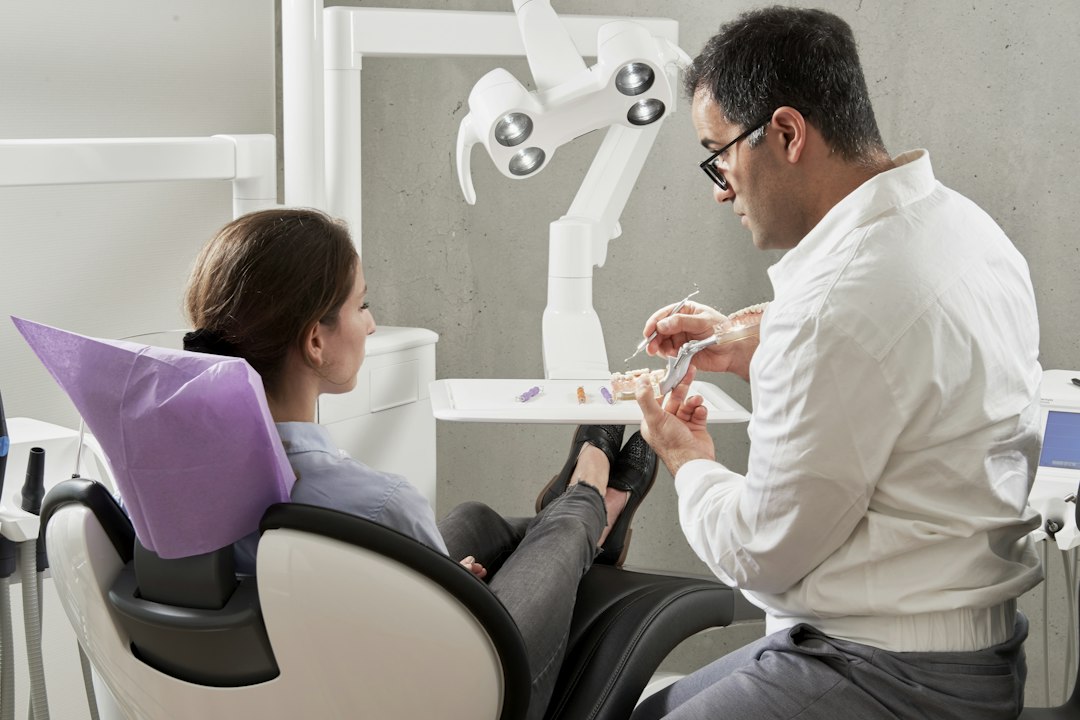
- Check-up: the clinician examines your teeth, gums and mouth, asks about your health and any changes since your last visit, advises you on habits and agrees on the date of your next check-up (NHS, 2025).
- Professional cleaning: removes plaque and tartar; tartar can only be removed with a professional cleaning (National Institute of Dental and Craniofacial Research [NIDCR], 2026).
- Periodontal maintenance: for people treated for periodontitis, these are supportive care visits whose frequency depends on each person’s risk (Sanz et al., 2020).
How often? It depends on your risk
The NHS explains that the time between check-ups can range from 3 months to 2 years depending on your oral health and your risk of future problems; for under-18s, the interval is up to 1 year. People with good oral health may only need a check-up every 12 to 24 months, while those with more problems need them more often (NHS, 2025).
Check-up intervals described by the NHS
Adults: 3 to 24 months
Under 18: 3 to 12 months
06 months12 months18 months24 months
What the evidence says
Two Cochrane reviews help put the six-month habit in context. The first pooled two trials with 1,736 participants. Among adults who regularly attended UK general dental practices, over four years, risk-based, six-monthly and 24-monthly check-ups showed little or no difference in tooth decay, gum bleeding and oral health-related quality of life, with moderate- to high-certainty evidence. The other trial, in under-20s in Norway, provided uncertain evidence, and neither assessed adverse effects (Fee et al., 2020).
The second looked at routine scheduled cleaning (scale and polish) in adults without severe periodontitis who regularly attended the dentist. It included two trials with 1,711 participants in UK dental practices, with follow-up of 24 and 36 months (Lamont et al., 2018).
Routine cleaning every 6 or 12 months vs. no scheduled cleaning
| Outcome | Finding | Certainty |
|---|---|---|
| Gingivitis (gum bleeding) | Little or no difference | High |
| Pocket depth | Little or no difference | High |
| Tartar (calculus) | Small reduction; unclear clinical importance | High |
| Oral health-related quality of life | Little or no difference | High |
Scope matters: these results do not mean nobody needs a cleaning or that you should stop a recommended treatment. Nor do they apply automatically to people with severe periodontitis. They are a reason to question an identical frequency for everyone and to ask for a reasoned recommendation.
How to leave with a schedule you understand
- Purpose: write down what will happen at your next visit: check-up, cleaning, maintenance or treatment.
- Reason: ask why that interval is recommended in your case.
- Re-evaluation: ask which findings could bring the date forward or space it out.
- Contact: find out how to report new symptoms before the appointment.
Frequently asked questions
Can I wait if my check-up isn’t due yet?
If a dental problem comes up between check-ups, contact your clinic for an appointment; the routine date does not replace care for new symptoms (NHS, 2025).
Does the Cochrane review show cleanings don’t work?
No. It studied a specific population and intervention; it did not assess every treatment or every periodontal condition (Lamont et al., 2018).
If I was treated for periodontitis, does the same schedule apply?
Not necessarily. Periodontal maintenance is scheduled according to your response to treatment and individual risk (Sanz et al., 2020). Read more in deep cleaning and periodontal diagnosis.
If you travel to Tijuana for care
Ask for a written plan that separates assessment, treatment and follow-up, and bring your records if you change clinics. Our guide to planning dental visits in Tijuana helps with logistics, and if you are unsure whether to clean or whiten your teeth, see dental cleaning or whitening.
References
Fee, P. A., Riley, P., Worthington, H. V., Clarkson, J. E., Boyers, D., & Beirne, P. V. (2020). Recall intervals for oral health in primary care patients. Cochrane Database of Systematic Reviews, 2020(10), Article CD004346. https://doi.org/10.1002/14651858.CD004346.pub5
Lamont, T., Worthington, H. V., Clarkson, J. E., & Beirne, P. V. (2018). Routine scale and polish for periodontal health in adults. Cochrane Database of Systematic Reviews, 2018(12), Article CD004625. https://doi.org/10.1002/14651858.CD004625.pub5
National Health Service. (2025, April 1). Dental check-ups. https://www.nhs.uk/live-well/healthy-teeth-and-gums/dental-check-ups/
National Institute of Dental and Craniofacial Research. (2026, August). Periodontal (gum) disease. https://www.nidcr.nih.gov/health-info/gum-disease
Sanz, M., Herrera, D., Kebschull, M., Chapple, I., Jepsen, S., Berglundh, T., Sculean, A., Tonetti, M. S., & EFP Workshop Participants and Methodological Consultants. (2020). Treatment of stage I–III periodontitis—The EFP S3 level clinical practice guideline. Journal of Clinical Periodontology, 47(Suppl. 22), 4–60. https://doi.org/10.1111/jcpe.13290
Main image: Towfiqu barbhuiya / Unsplash. Photos are illustrative stock images: they do not show patients, cases or results from The Special Teeth. Diagrams are simplified illustrations prepared for this article from the cited sources.
Educational information. A professional assessment determines the diagnosis and the appropriate options for each person.