 English

A Mouth With Spare Teeth: The Secret of Sharks (and Why We Do Not Have It)
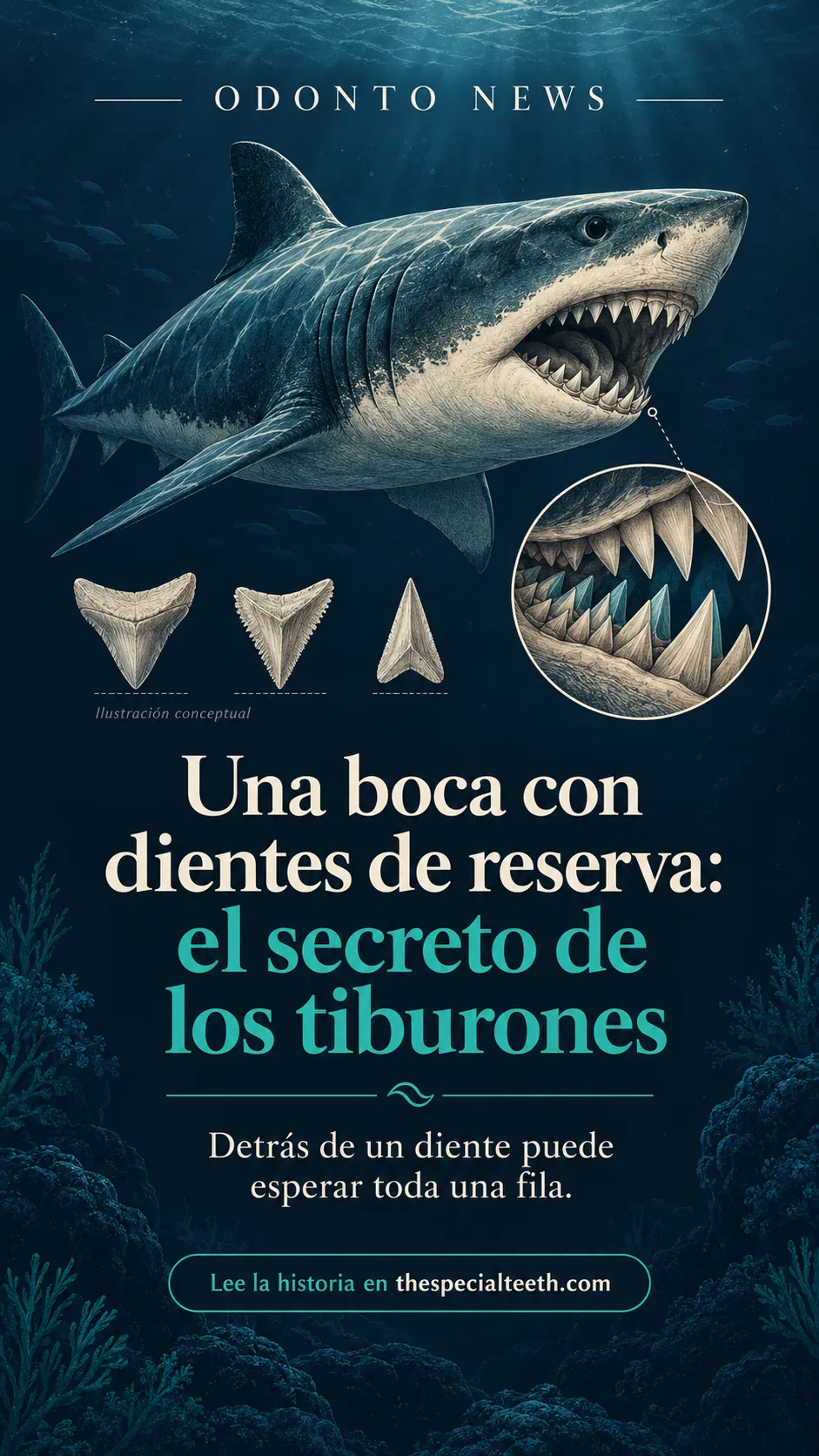
A shark can lose thousands of teeth and never run out. How its replacement system works, what fluoride has to do with it and why we only get two sets.
A shark can lose tens of thousands of teeth over its lifetime, and it never runs out. When one falls out, another takes its place. That is why beaches in some regions are full of shark teeth, and why they are among the most common fossils in the world.
To someone who has just lost a molar, it sounds almost unfair. Why them and not us? The answer lies in a tissue hidden in the jaw, and science has been studying it for years.
A conveyor belt of teeth
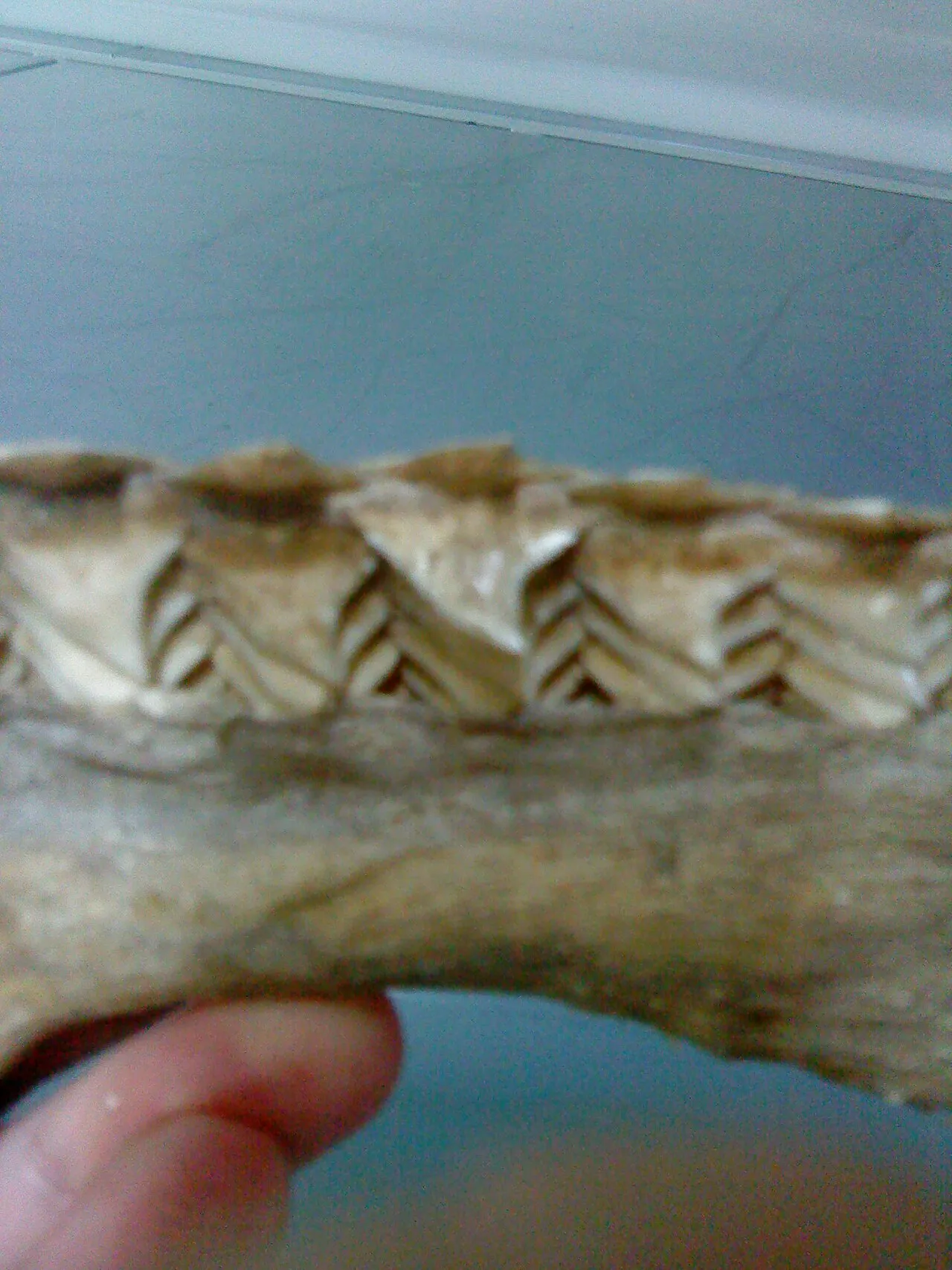
A shark’s teeth are not fixed in bone like ours. They are anchored in the gum, in several rows. Behind each tooth in use, others are forming, lying flat towards the inside of the mouth. When the front one breaks or falls out, the next one moves forward and rises to take its place.
Depending on the group of sharks, replacement can take from days to months. Ground sharks, the largest group, can lose around 35,000 teeth in a lifetime. It is a system built for wear: a shark does not need to look after its teeth because it will always have more.
A tooth for every diet
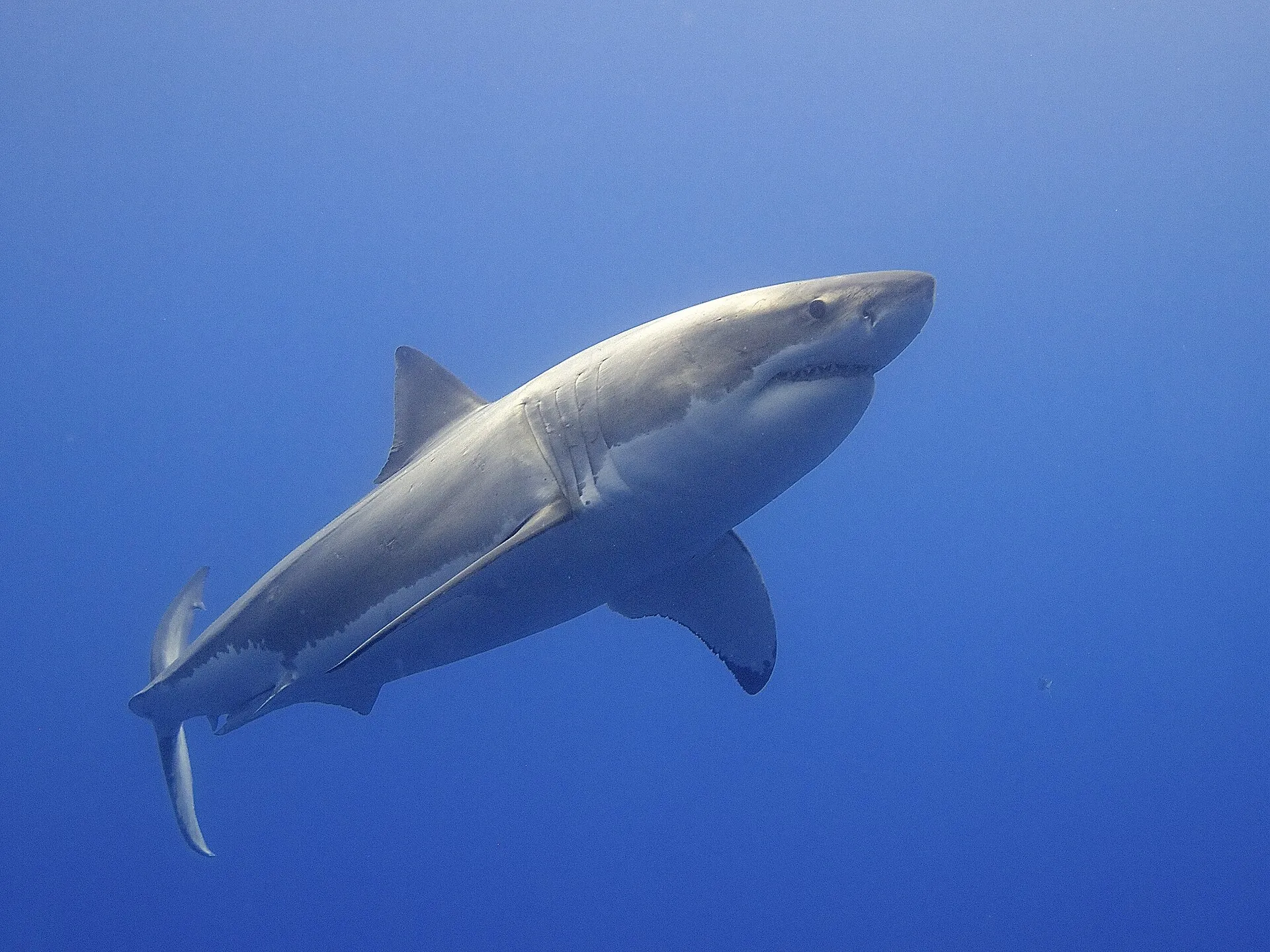
There are about 500 shark species, and their teeth vary with what they eat. The great white has triangular, serrated teeth made for cutting. The goblin shark has needle-thin teeth to catch slippery prey. The angel shark, which lies on the seabed, has flatter teeth for gripping and crushing.
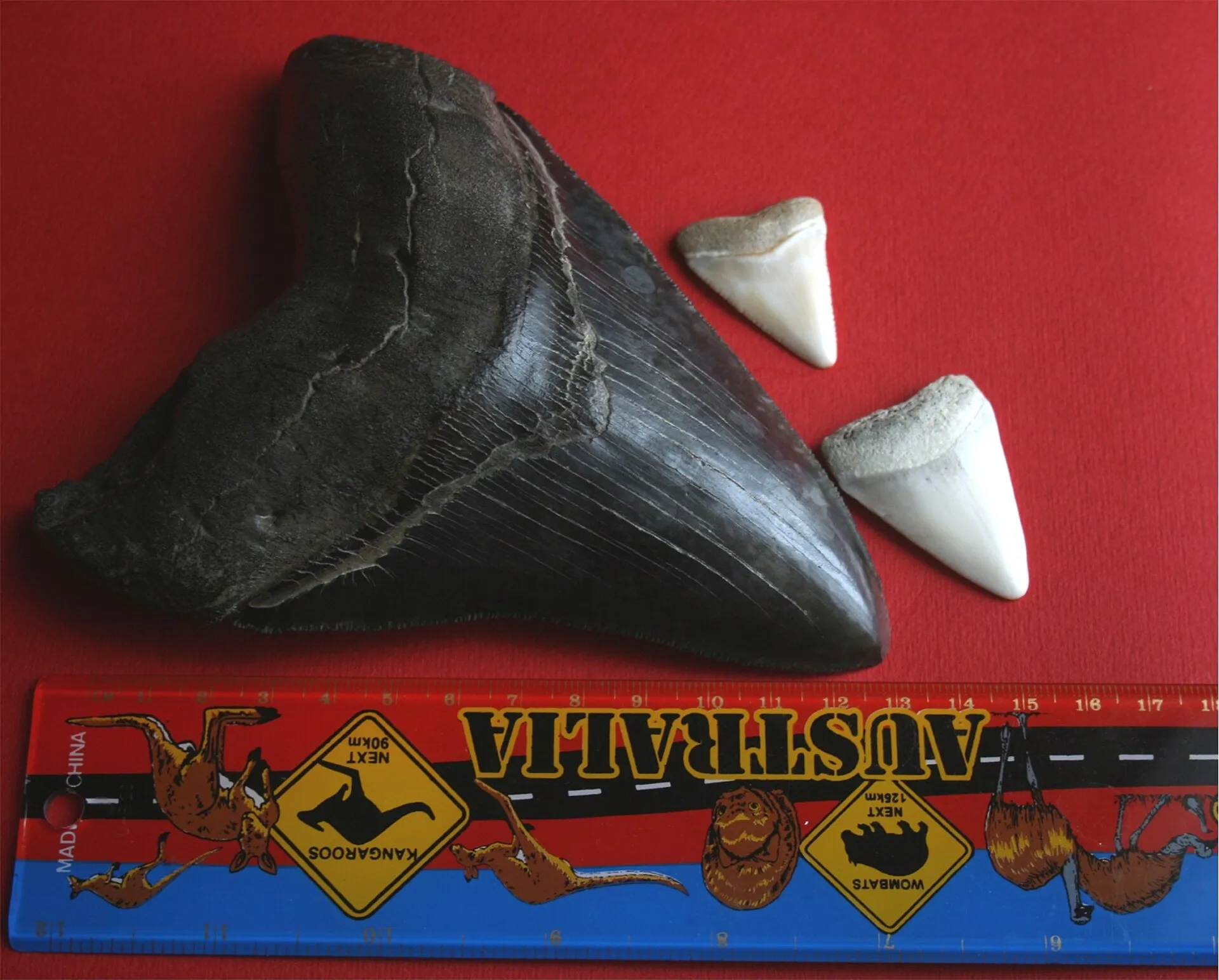
That lets palaeontologists identify species from a single fossil tooth. The most famous belongs to megalodon, an extinct shark whose teeth could exceed 17 centimetres.
Enamel with built-in fluoride
Another detail connects directly to your toothpaste. The outer layer of shark teeth, called enameloid, is made of fluorapatite, a fluoride-rich mineral. A 2015 study in RSC Advances measured about 3% fluoride in the enameloid of several living species. In human enamel the figure was 0.01%.
Our enamel is made of hydroxyapatite. When we use fluoride toothpaste, a small part of that mineral turns into fluorapatite at the surface, which resists acid attack better. In a sense, toothpaste fluoride brings us a little closer to what sharks are born with.
The twist: we had that tissue too
The big question is why humans only get two sets of teeth: baby teeth and permanent teeth. A University of Sheffield team led by Gareth Fraser studied embryos of the catshark, a small shark, and found the genes that build the dental lamina, a band of cells that produces new teeth again and again.
The surprise is that humans have the same genes and also form a dental lamina. It builds our baby and permanent teeth. Then, in our species, it breaks down. The researchers suggest it might one day be possible to study how to reactivate it, although for now it is a line of research, not a treatment.
What is known and what is still being researched
Documented:
- Sharks replace their teeth continuously throughout life.
- The shape of their teeth depends on their diet.
- Their enameloid contains far more fluoride than human enamel.
- Humans and sharks share dental lamina genes.
Under research:
- Whether it will ever be possible to reactivate tooth formation in adult humans.
Meanwhile, we only get two sets
A lost permanent tooth does not grow back. That is why it is worth looking after and, if one is missing, considering how to replace it before neighbouring teeth shift. We explain it in What happens if you leave a missing tooth untreated? and How long does a dental implant take?
A shark can afford to lose thousands of teeth. We have 32, and they have to last a lifetime.
Sources
- Natural History Museum — What can shark teeth tell us?
- BBC Science Focus — The evolutionary hack that keeps shark teeth sharp
- Lübke, A. et al. (2015). RSC Advances — shark tooth enameloid composition
- Medical News Today — Gareth Fraser’s dental lamina study (Developmental Biology)
- Hawaiʻi Department of Land and Natural Resources — Teeth and jaws