 English
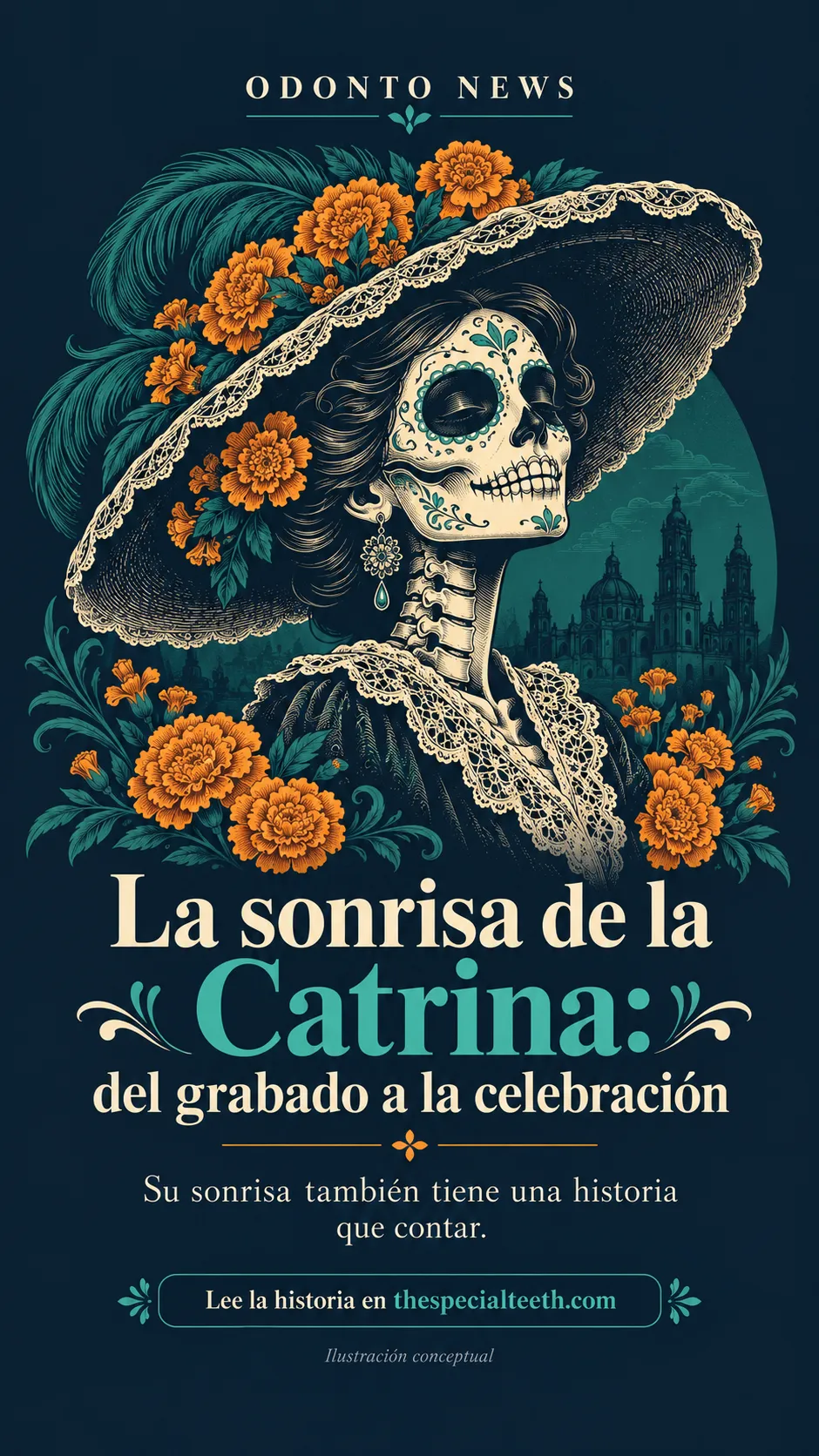
La Catrina's smile: from Posada's garbancera skull to Rivera's mural
Posada died in 1913 without knowing his garbancera skull would become the face of the Day of the Dead. Diego Rivera gave her the name Catrina decades later.
On 20 January 1913, a 60-year-old engraver died in Mexico City. He was buried in an unmarked grave. He had produced thousands of images for broadsheets sold on the street for pennies: crimes, miracles, disasters, ballads and, every November, skulls.
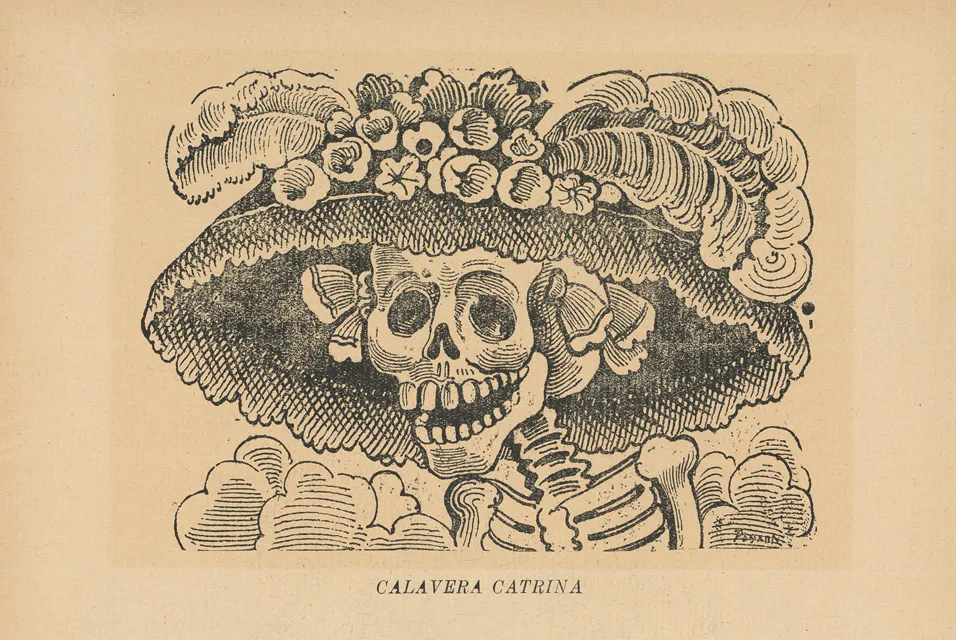
Among those images was the head of a woman, all bone, with an enormous hat covered in feathers and flowers. That same year it was printed on a sheet that spoke not of an elegant lady but of chickpea sellers. His name was José Guadalupe Posada, and his skull would take decades to become La Catrina.
The engraver of cheap broadsheets
Posada was born in Aguascalientes in 1852. He worked for much of his life for Antonio Vanegas Arroyo’s press in the capital, which published cheap popular literature. Scholars estimate he produced more than 20,000 images for broadsheets, pamphlets and chapbooks.
His calaveras were not seasonal decorations. They were satire. With skeletons dressed as charros, journalists, dandies or politicians, he mocked the lives of the well-off and the regime of Porfirio Díaz. Death was a reminder that, under the clothes, everyone ends up the same.
Who were the garbanceras?
The 1913 sheet was titled “Remate de calaveras alegres y sandungueras” and warned that “those who today are powdered garbanceras” would end up as “deformed skulls”. The image’s original name, La Calavera Garbancera, comes from there.
According to National Geographic, “garbancera” referred to people of Indigenous origin who sold chickpeas instead of corn and tried to look European in order to climb socially. The text on the sheet was not written by Posada, and it was aimed at those sellers. The image, by contrast, is usually read as mocking those who imitated European fashion, especially among the elites.
The twist: Diego Rivera gave her the name
Posada died without fame. It was in the 1920s that the French artist Jean Charlot began promoting his prints as art and called him “printmaker to the Mexican people”. The muralists adopted him as a forerunner.
In 1947 Diego Rivera painted the mural Dream of a Sunday Afternoon in the Alameda Central. At its centre he placed Posada’s skull, now full-length, in a long dress with a feathered boa shaped like a serpent, arm in arm with Posada himself and holding the hand of Diego as a boy. Rivera gave her the name we still use: La Catrina, the feminine of “catrín”, an elegant, well-dressed man.
From satire to symbol
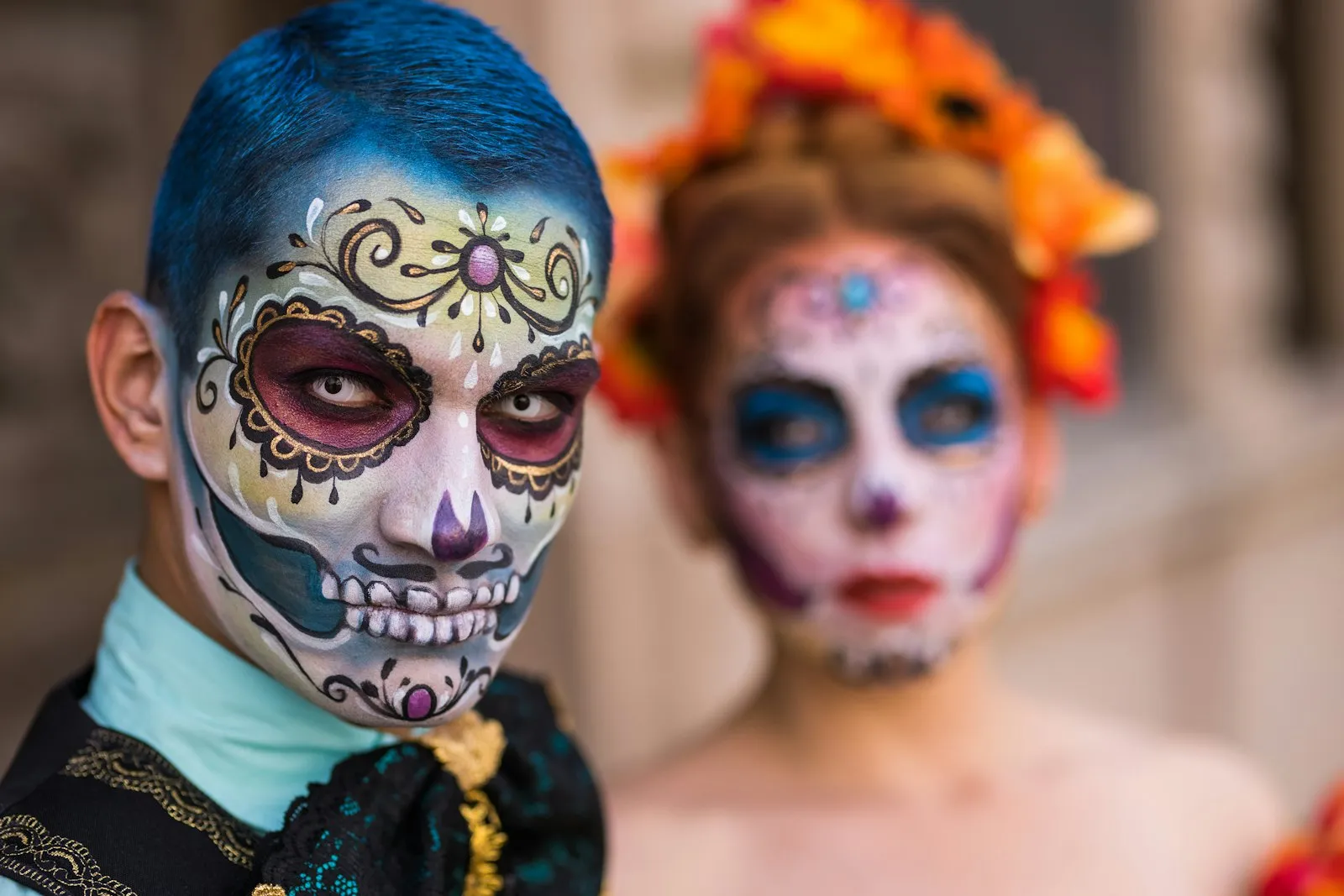
Over the years the image stopped being read as social criticism and became an emblem of the Day of the Dead. Today it appears in clay figures, parades, makeup and decorations. The bony smile Posada used to mock vanity turned into a cheerful way of living alongside death.
What is known and what is still debated
Documented:
- The skull was engraved by Posada and published on a 1913 broadsheet.
- Its original name was La Calavera Garbancera.
- Diego Rivera called her La Catrina and painted her full-length in his 1947 mural.
Still debated:
- Exactly whom the image satirised: sources agree it criticised the imitation of European ways, but differ on whether it targeted working-class sellers or the elites.
- Some specialists note that Rivera helped present Posada as a revolutionary artist, an image that does not fully match his commercial work.
A smile without lips
In a skull, the teeth are fully exposed, with no lips or gums to cover them. That is why La Catrina always seems to smile. It is the same reason teeth are so useful for identifying human remains: they are the last thing to disappear. We tell that story in Teeth also tell who we were, and the season’s other smiling skull is in Sugar skulls.
Posada drew that smile to mock those who wanted to keep up appearances. More than a century later, it is the face with which Mexico welcomes its dead.
Sources
- National Geographic en Español (2024) — ¿Qué es la Catrina y qué representa?
- The Public Domain Review — The Calaveras of José Guadalupe Posada
- Wikipedia — José Guadalupe Posada
- Mexico in History — «Remate de calaveras alegres y sandungueras…» (1913)
- Gobierno de México (ISSSTE) — Las calaveritas y La Catrina