 English


Tobacco, Vaping and Your Mouth: What Smoke Hides (and What Is Known About Vaping)
Smoking doesn't just stain teeth: it damages gums, hides bleeding and raises the risk of oral cancer. What the evidence says about cigarettes, vaping and the benefits of quitting.
Tobacco is one of the most damaging factors for the mouth. Besides staining teeth and causing bad breath, it increases the risk of gum disease, tooth loss, implant failure and oral cancer. Vaping has become popular as an alternative, but the evidence on its effects in the mouth is still emerging. The good news is that quitting brings measurable benefits.
Picture this hypothetical scene: Raúl is 38 and smoked a pack a day for fifteen years. A year ago he switched to vaping. He is convinced his gums are better because they “never bleed.” At a checkup, his dentist measures the depth around his teeth and shows him an X-ray: there is bone loss around several molars. “How can that be, if they don’t bleed?” Raúl asks.
A problem that goes far beyond stains
Reviews on tobacco and oral health describe a long list of effects: stains, bad breath, altered taste, delayed healing, higher risk of periodontitis, tooth loss, mucosal lesions and mouth cancer (Johnson & Bain, 2000). An international report on the oral health risks of tobacco confirmed these effects and highlighted that quitting reduces many of them (Warnakulasuriya et al., 2010).
Gums: the silent damage
Smoking is one of the most important risk factors for periodontitis. A systematic review with meta-regression found that smoking clearly increases the risk of periodontitis and that the risk rises with the number of cigarettes (Leite et al., 2018).
The most deceptive part is what happened to Raúl. Nicotine and other tobacco components reduce blood flow in the gums, so they bleed less even when they are diseased. That is why people who smoke often have less bleeding but more bone loss and deeper pockets (Bergström, 2004). The absence of bleeding is not a sign of health: it can be a masked sign.
Implants and healing
Tobacco also affects the mouth’s ability to heal. A systematic review with meta-analysis found that smoking is associated with a higher risk of dental implant failure and complications around implants (Strietzel et al., 2007). That is why, before surgery or an implant, professionals usually recommend quitting or at least stopping during the healing period.
The most serious risk: oral cancer
A meta-analysis on tobacco and cancer found that smoking increases the risk of cancer of the oral cavity and pharynx several times over (Gandini et al., 2008). The risk adds to that of alcohol, and the combination of both is especially dangerous. White or red patches that do not go away, sores that do not heal and changes in the texture of the mouth deserve a professional examination.
What about vaping?
E-cigarettes do not produce combustion smoke, but they do release aerosols containing nicotine, flavorings and other substances. A systematic review of their effects on the mouth found possible effects on the gums, the mucosa and perceived symptoms, but noted that studies are few, short and limited (Ralho et al., 2019). Another review reached a similar conclusion: there are signs of adverse effects on oral health, but the evidence is still insufficient to know the long-term impact (Yang et al., 2020).
A study comparing people who smoke cigarettes, people who vape and people who have never smoked found that smokers had worse periodontal indicators than the other two groups (Javed et al., 2017). This suggests that vaping may be less harmful to the gums than cigarettes, but it does not mean it is harmless. In addition, nicotine from vapes also reduces blood flow in the gums, which may continue to hide bleeding, as in Raúl’s case.
What happens when you quit
This is the hopeful part. A systematic review found that quitting smoking is associated with less progression of periodontitis and a better response to gum treatment (Fiorini et al., 2014). The risk of oral cancer also decreases with years without smoking (Warnakulasuriya et al., 2010).
The dental office can be a good place to start. A Cochrane review found that smoking cessation interventions delivered by oral health professionals, especially when they combine counseling with medication support, may increase the chances of quitting (Holliday et al., 2021).
Signs worth paying attention to
- Receding gums or teeth that look longer.
- Teeth that are loose or drifting apart.
- White or red patches in the mouth that do not disappear within two or three weeks.
- Sores that do not heal.
- Persistent bad breath or changes in taste.
Practical tips
- Tell your dentist if you smoke or vape, even if you feel embarrassed: it changes how your gums should be interpreted.
- Have regular periodontal checkups, even if you notice no bleeding.
- Ask for help quitting: combining counseling and treatment increases the chances of success.
- Don’t swap one habit for another thinking it is harmless; the goal is to give up nicotine.
- Keep up thorough hygiene with brushing, cleaning between teeth and fluoride toothpaste.
- Manage cravings with water or sugar-free gum rather than sweets, which add a risk of decay while you are quitting.
- Protect the people around you: smoke and vapor also reach the people you live with, including children.
Frequently asked questions
Does whitening remove tobacco stains? It can improve them, but if you keep smoking, the stains come back. Whitening also does not repair damage to the gums.
Is smoking a little also harmful? Yes. The risk increases with the amount, but there is no completely safe level.
Will my gums start bleeding after I quit? They may bleed more at first, because blood flow is recovering. It is not a bad sign: it shows the gums are responding again and that it is time for an assessment.
The end of the story
In our hypothetical case, the dentist explained to Raúl that nicotine, from both cigarettes and his vape, was hiding the inflammation in his gums. He received periodontal treatment and, with support from his physician and a nicotine cessation program, he gave up vaping as well. In the first weeks his gums bled more, which frightened him, until he understood it was a sign they were reacting again. A year later, his gums were stable. His story shows that silent gums do not always mean healthy gums.
If you want a professional to take a look
Learn more about gum care at The Special Teeth. If you are coming from the United States, our guide to planning your visit to Tijuana helps with the border crossing and transfers. Whenever you are ready, you can request an evaluation.
References
Bergström, J. (2004). Tobacco smoking and chronic destructive periodontal disease. Odontology, 92(1), 1–8. DOI: https://doi.org/10.1007/s10266-004-0043-4
Fiorini, T., Musskopf, M. L., Oppermann, R. V., & Susin, C. (2014). Is there a positive effect of smoking cessation on periodontal health? A systematic review. Journal of Periodontology, 85(1), 83–91. DOI: https://doi.org/10.1902/jop.2013.130047
Gandini, S., Botteri, E., Iodice, S., Boniol, M., Lowenfels, A. B., Maisonneuve, P., & Boyle, P. (2008). Tobacco smoking and cancer: A meta-analysis. International Journal of Cancer, 122(1), 155–164. DOI: https://doi.org/10.1002/ijc.23033
Holliday, R., Hong, B., McColl, E., Livingstone-Banks, J., & Preshaw, P. M. (2021). Interventions for tobacco cessation delivered by dental professionals. Cochrane Database of Systematic Reviews, 2021(2), Article CD005084. DOI: https://doi.org/10.1002/14651858.cd005084.pub4
Javed, F., Abduljabbar, T., Vohra, F., Malmstrom, H., Rahman, I., & Romanos, G. E. (2017). Comparison of periodontal parameters and self-perceived oral symptoms among cigarette smokers, individuals vaping electronic cigarettes, and never-smokers. Journal of Periodontology, 88(10), 1059–1065. DOI: https://doi.org/10.1902/jop.2017.170197
Johnson, N. W., & Bain, C. A. (2000). Tobacco and oral disease. British Dental Journal, 189(4), 200–206. DOI: https://doi.org/10.1038/sj.bdj.4800721
Leite, F. R. M., Nascimento, G. G., Scheutz, F., & López, R. (2018). Effect of smoking on periodontitis: A systematic review and meta-regression. American Journal of Preventive Medicine, 54(6), 831–841. DOI: https://doi.org/10.1016/j.amepre.2018.02.014
Ralho, A., Coelho, A., Ribeiro, M., Paula, A., Amaro, I., Sousa, J., Marto, C., Ferreira, M., & Carrilho, E. (2019). Effects of electronic cigarettes on oral cavity: A systematic review. Journal of Evidence Based Dental Practice, 19(4), Article 101318. DOI: https://doi.org/10.1016/j.jebdp.2019.04.002
Strietzel, F. P., Reichart, P. A., Kale, A., Kulkarni, M., Wegner, B., & Küchler, I. (2007). Smoking interferes with the prognosis of dental implant treatment: A systematic review and meta-analysis. Journal of Clinical Periodontology, 34(6), 523–544. DOI: https://doi.org/10.1111/j.1600-051x.2007.01083.x
Warnakulasuriya, S., Dietrich, T., Bornstein, M. M., Casals Peidró, E., Preshaw, P. M., Walter, C., Wennström, J. L., & Bergström, J. (2010). Oral health risks of tobacco use and effects of cessation. International Dental Journal, 60(1), 7–30. DOI: https://doi.org/10.1016/s0020-6539(20)34036-3
Yang, I., Sandeep, S., & Rodriguez, J. (2020). The oral health impact of electronic cigarette use: A systematic review. Critical Reviews in Toxicology, 50(2), 97–127. DOI: https://doi.org/10.1080/10408444.2020.1713726
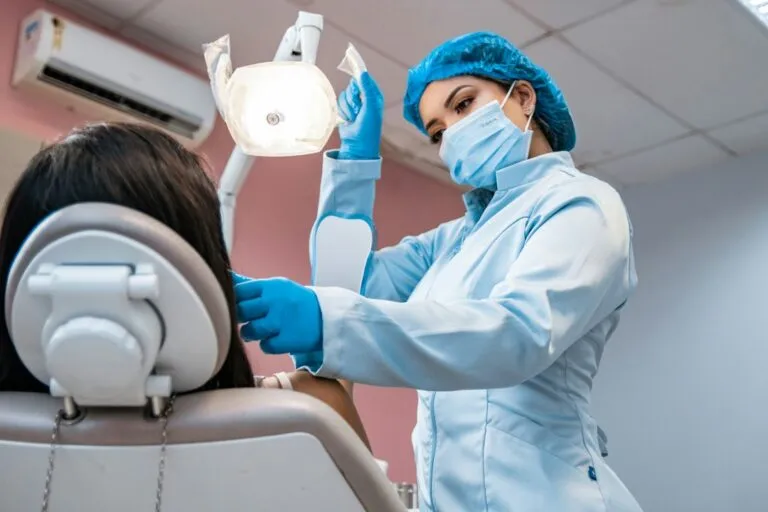
Main image: Pascal Meier / Unsplash. Photos are illustrative stock images: they do not show patients, cases or results from The Special Teeth.
Educational information. A professional assessment determines the diagnosis and the appropriate options for each person.