 English
Dental Forensics: How Teeth Help Identify People
From an ivory bridge in 1776 to a fire in Paris and a tsunami in Thailand: how teeth help give a person back their name.
In the spring of 1776, on a hillside near Boston, a group of men opened a shallow grave. They were looking for the body of Dr Joseph Warren, one of the leaders of the colonial rebellion, killed months earlier at the Battle of Bunker Hill. The remains were mixed together and disfigured. No one could tell which was his.
Then a silversmith named Paul Revere stepped forward. He searched one of the mouths for a small ivory bridge held in with wire. He recognised it at once: he had made it himself.

The silversmith who made teeth
Paul Revere is remembered today for his midnight ride to warn of the British troops. But in 1768 he had also opened a small business in artificial teeth in Boston, which he advertised in the city’s newspapers.
Shortly before the war, he had fitted Warren with a bridge carrying an ivory canine and premolar. That handmade work was unique, which is why it could identify him. The US National Museum of Health and Medicine considers it probably the first documented identification of human remains from dental work in that country.
Paris, 1897: the fire that created a discipline
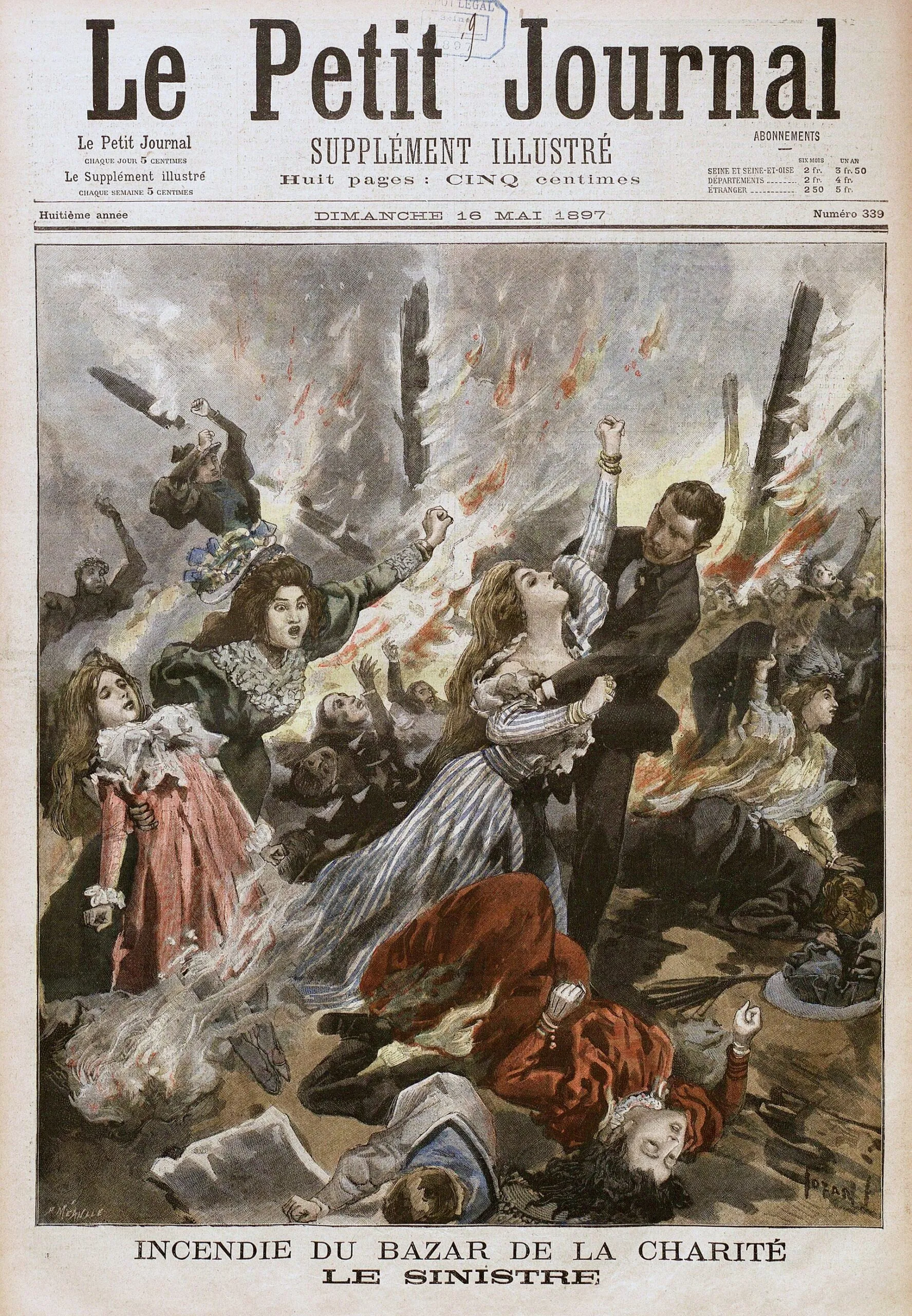
On 4 May 1897 a fire destroyed the Bazar de la Charité, a charity fair for Paris high society. More than 120 people died, most of them women. Many bodies were so damaged by the fire that their families could not recognise them.
To identify them, investigators turned to the victims’ dentists, who compared the remains with their own treatment records. Among others, the Duchess of Alençon, sister of Empress Elisabeth of Austria, was identified this way.
A young Cuban dentist, Óscar Amoëdo, born in Matanzas in 1863 and living in Paris, studied those cases. The following year he presented his thesis, L’Art dentaire en médecine légale (“The dental art in legal medicine”), a treatise of more than 600 pages. Today he is considered the father of forensic odontology.
Why teeth endure
Enamel is the hardest tissue in the human body. Teeth withstand fire, water and time better than almost any other part of the body. And every mouth is different: the combination of missing teeth, fillings, crowns, root canals and root shapes forms something like a fingerprint.
Identification means comparing two things: what is seen in the remains and what the person’s records show from life, especially their X-rays. The more matches and the fewer unexplained contradictions, the stronger the identification.
Thailand, 2004
The Indian Ocean tsunami showed the strength of the method. In Thailand, among the victims identified in the first months, dental comparison was the main means of identification in 79% of cases and contributed in another 8%. Of 543 Swedish victims, 528 were identified, and in most cases teeth were decisive.
The twist: teeth only speak if someone kept their story
There is a less-known detail from that tsunami. Most foreign victims were identified by their teeth, but many Thai victims were identified by fingerprints. An important reason was the availability of earlier records: many tourists had detailed dental records at home, which was less common among the local population.
That is the key to the whole discipline. A tooth can last hundreds of years, but without a record to compare it with, it cannot say whose it was. Forensic odontology does not guess names: it confirms or rules them out.
What forensic odontology does not do
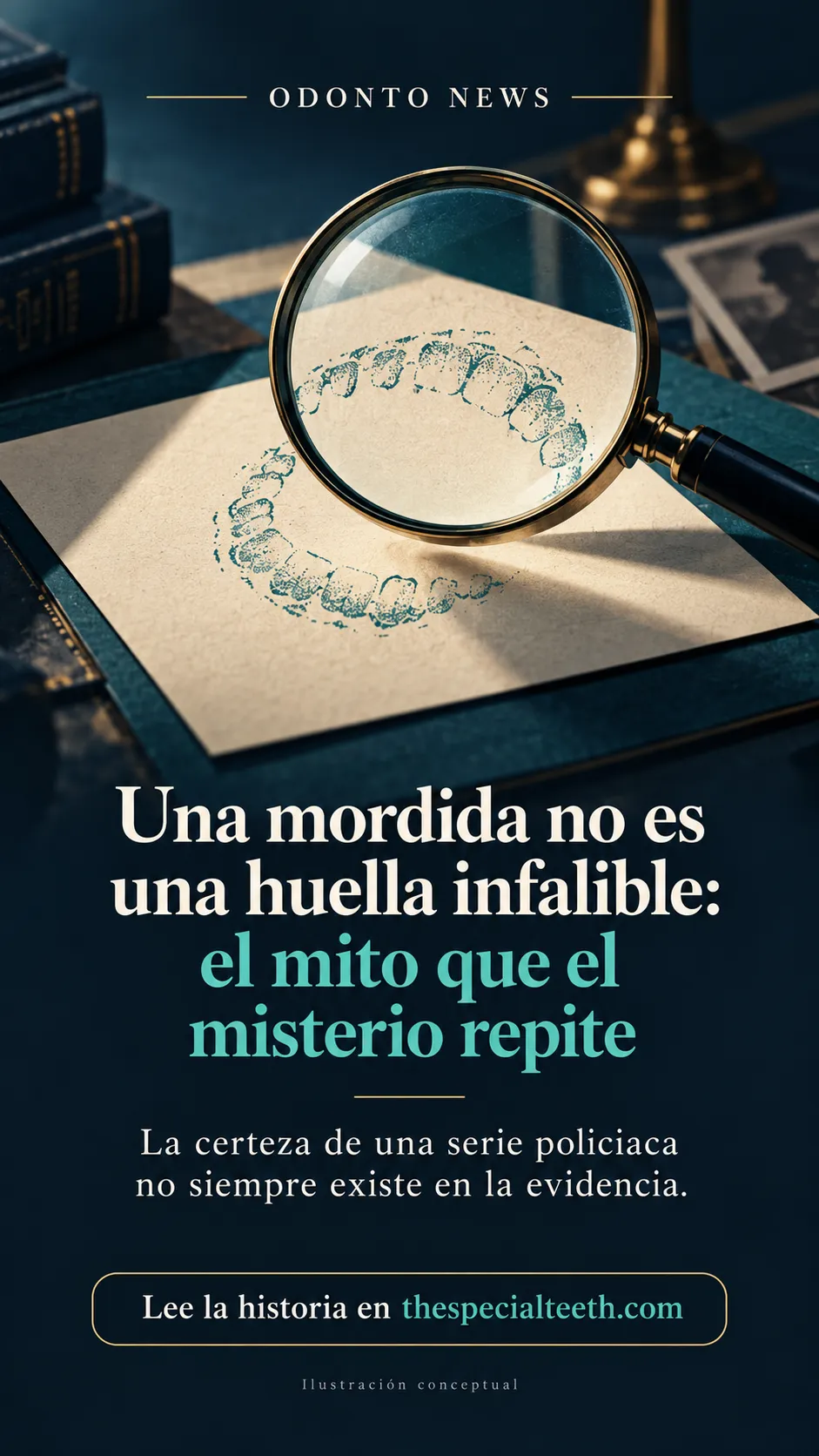
Dental-record identification, which is reliable when good records exist, should not be confused with bite-mark analysis on skin, whose scientific basis has been seriously questioned. They are different procedures even though both use the word “dental”.
What is known and what has limits
Documented:
- Paul Revere identified Joseph Warren by a dental bridge he had made.
- Victims of the Bazar de la Charité were partly identified by their dental records, and in 1898 Óscar Amoëdo published the field’s first treatise.
- In the 2004 tsunami, teeth were decisive in identifying most foreign victims in Thailand.
Limits:
- Without earlier records, dental comparison loses much of its value.
- Identification relies on combining evidence such as DNA and fingerprints.
Your records count too
Near the Day of the Dead, this story is a reminder that behind every identification there is a person and a family waiting for answers. It also leaves a practical point: the X-rays and notes your dentist keeps are not only for your treatment. If you change dental offices, ask for a copy of your records; if you live between Tijuana and San Diego, it helps to keep them complete in one place.
Two and a half centuries after Paul Revere’s bridge, the principle has not changed: a well-documented mouth can give a person back their name.
Sources
- National Museum of Health and Medicine — Paul Revere and Joseph Warren
- Riaud, X. (2015). Dr Oscar Amoëdo y Valdes (1863-1945), Founding Father of Forensic Odontology. Global Journal of Anthropology Research 2(2): 22–25
- James, H. (2005). Thai tsunami victim identification — overview to date. Journal of Forensic Odonto-Stomatology 23(1)
- Dawidson, I. (2007). American Academy of Forensic Sciences, abstract F31 — tsunami victim identification
- NamUs — National Institute of Justice: Odontology
- American Dental Association — Forensic dentistry and anthropology