 English

Save the Tooth or Pull It? Root Canal and Crown Versus Extraction and Implant
Sooner or later many people face this decision. What the evidence says about how long treated teeth, crowns and implants last, and when a tooth is worth fighting for.
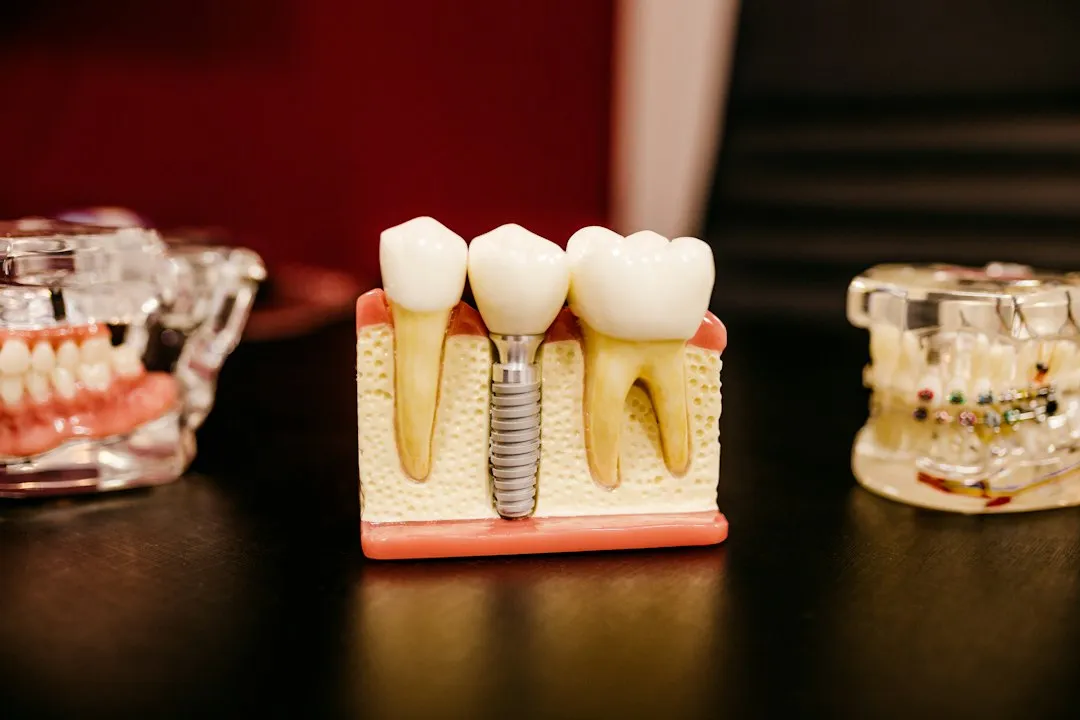
When a tooth is badly damaged by deep decay, an infection or a fracture, a dilemma usually arises: try to save it with a root canal and a crown, or extract it and replace it with an implant or a bridge. There is no single answer, but the evidence offers very useful clues for deciding. In most cases, your own tooth with a good prognosis remains an excellent option.
Picture this hypothetical scene: Patricia is 55. Years ago she had a root canal on a molar and a large filling placed. Now, while chewing, she felt something break: part of the filling and one cusp of the tooth came off. Her dentist suggests a crown. A neighbor tells her she would be better off having it pulled and getting an implant, “which lasts forever.” Patricia does not know what to do.
What the numbers say about keeping the tooth
A study of more than a million root-canal-treated teeth in the United States found that 97% were still in the mouth eight years after treatment. In addition, most of the teeth that ended up being extracted did not have a full restoration covering the crown (Salehrabi & Rotstein, 2004). That last detail is key for Patricia’s case.
A systematic review compared the outcomes of four possible paths: root canal treatment with its restoration, a single implant, a fixed bridge and extraction without replacement. It found that the restored root canal and the implant had similar long-term survival rates, both higher than bridges, and that extraction without replacement was associated with worse outcomes in function and well-being (Torabinejad et al., 2007). In other words, an implant does not “last longer” than a well-treated tooth; both are good options when properly indicated.
Why is the crown so important for a root-canal-treated tooth?
A root-canal-treated tooth has lost tissue to decay, to the access opening and often to previous fillings. In molars, chewing forces can fracture the remaining walls. A classic study found that root-canal-treated teeth that did not receive a crown were lost several times more often than those that did (Aquilino & Caplan, 2002).
However, a crown is not a guarantee in itself. A study of Scottish adults found that many crowned teeth had lesions at the root tip, especially when the root canal treatment was of poor quality (Saunders & Saunders, 1998). And a Cochrane review that sought to compare crowns and fillings directly in root-canal-treated teeth concluded that there are not enough good-quality studies to establish which is better in every case (Sequeira-Byron et al., 2015). The decision depends on how much tooth remains, where it is and the forces it receives.
A full crown is not always necessary
A full crown covers the whole tooth, and placing it requires reducing the tooth. A laboratory study showed that preparations for full crowns on front teeth remove a much larger proportion of tooth structure than more conservative preparations such as veneers (Edelhoff & Sorensen, 2002). That is why, when the tooth retains enough structure, there are partial alternatives such as inlays and restorations that cover only the cusps. A meta-analysis found that these restorations, in resin or ceramic, have high long-term survival rates (Morimoto et al., 2016).
Which material should the crown be made of?
Today there are metal-ceramic, all-ceramic and zirconia crowns, each with advantages in strength and appearance (Zhang & Kelly, 2017). A systematic review found five-year survival rates above 90% for single crowns made of different materials, with differences in the type of complications (Pjetursson et al., 2007). A more recent review confirmed favorable results for both metal-ceramic crowns and most ceramics for single teeth (Sailer et al., 2015). For zirconia, a review found promising clinical results in the short and medium term (Larsson & Wennerberg, 2014).
For multi-unit bridges, technical complications such as chipping of the ceramic veneer are more common, and results vary by material (Pjetursson et al., 2015).
Crowns have complications too
No treatment lasts forever. A review of complications in fixed prosthodontics found that the most common ones for crowns are decay at the margin, the later need for a root canal in vital teeth, loss of retention and material fractures (Goodacre et al., 2003). That is why a crown needs daily hygiene, cleaning between the teeth and checkups, just like a natural tooth.
When is extraction the better choice?
- When the fracture extends deep into the root.
- When there is very little healthy structure left to support a restoration.
- When gum disease has destroyed much of the supporting bone.
- When the prognosis is very doubtful and repeated treatments would involve more cost and risk than benefit.
Questions to ask at your appointment
- What is the prognosis for this tooth if I treat it?
- How much healthy structure remains and what type of restoration does it need?
- What is the condition of the gum and bone around it?
- What would an implant involve in my case: timing, surgery, available bone?
- What happens if I decide not to replace the tooth?
Frequently asked questions
Is an implant better because it cannot get cavities? It is true that it cannot decay, but it can have other complications, such as inflammation of the gum and bone around it. Both options require care.
Can a crown be replaced again? Yes. Over the years it may need replacement if it wears, fractures or develops decay at the margin.
How long does a crown last? Many last more than ten years with good care, although it depends on the material, chewing forces and hygiene.
The end of the story
In our hypothetical case, Patricia’s dentist reviewed the X-ray: the root was healthy, the old root canal was still in good condition and the fracture did not extend below the gum. He explained that, under those conditions, a crown had a very good prognosis and would allow her to keep her tooth. Patricia chose the crown. Years later, she is still chewing with her own molar. Her story shows that the question is not “tooth or implant” in the abstract, but which option has the best prognosis in each case.
If you want a professional to take a look
Learn more about root canal treatment and dental implants at The Special Teeth. If you are coming from the United States, our guide to planning your visit to Tijuana helps with the border crossing and transfers. Whenever you are ready, you can request an evaluation.
References
Aquilino, S. A., & Caplan, D. J. (2002). Relationship between crown placement and the survival of endodontically treated teeth. The Journal of Prosthetic Dentistry, 87(3), 256–263. https://doi.org/10.1067/mpr.2002.122014
Edelhoff, D., & Sorensen, J. A. (2002). Tooth structure removal associated with various preparation designs for anterior teeth. The Journal of Prosthetic Dentistry, 87(5), 503–509. https://doi.org/10.1067/mpr.2002.124094
Goodacre, C. J., Bernal, G., Rungcharassaeng, K., & Kan, J. Y. K. (2003). Clinical complications in fixed prosthodontics. The Journal of Prosthetic Dentistry, 90(1), 31–41. https://doi.org/10.1016/s0022-3913(03)00214-2
Larsson, C., & Wennerberg, A. (2014). The clinical success of zirconia-based crowns: A systematic review. The International Journal of Prosthodontics, 27(1), 33–43. https://doi.org/10.11607/ijp.3647
Morimoto, S., Rebello de Sampaio, F. B. W., Braga, M. M., Sesma, N., & Özcan, M. (2016). Survival rate of resin and ceramic inlays, onlays, and overlays: A systematic review and meta-analysis. Journal of Dental Research, 95(9), 985–994. https://doi.org/10.1177/0022034516652848
Pjetursson, B. E., Sailer, I., Makarov, N. A., Zwahlen, M., & Thoma, D. S. (2015). All-ceramic or metal-ceramic tooth-supported fixed dental prostheses (FDPs)? A systematic review of the survival and complication rates. Part II: Multiple-unit FDPs. Dental Materials, 31(6), 624–639. https://doi.org/10.1016/j.dental.2015.02.013
Pjetursson, B. E., Sailer, I., Zwahlen, M., & Hämmerle, C. H. F. (2007). A systematic review of the survival and complication rates of all-ceramic and metal–ceramic reconstructions after an observation period of at least 3 years. Part I: Single crowns. Clinical Oral Implants Research, 18(S3), 73–85. https://doi.org/10.1111/j.1600-0501.2007.01467.x
Sailer, I., Makarov, N. A., Thoma, D. S., Zwahlen, M., & Pjetursson, B. E. (2015). All-ceramic or metal-ceramic tooth-supported fixed dental prostheses (FDPs)? A systematic review of the survival and complication rates. Part I: Single crowns (SCs). Dental Materials, 31(6), 603–623. https://doi.org/10.1016/j.dental.2015.02.011
Salehrabi, R., & Rotstein, I. (2004). Endodontic treatment outcomes in a large patient population in the USA: An epidemiological study. Journal of Endodontics, 30(12), 846–850. https://doi.org/10.1097/01.don.0000145031.04236.ca
Saunders, W. P., & Saunders, E. M. (1998). Prevalence of periradicular periodontitis associated with crowned teeth in an adult Scottish subpopulation. British Dental Journal, 185(3), 137–140. https://doi.org/10.1038/sj.bdj.4809750
Sequeira-Byron, P., Fedorowicz, Z., Carter, B., Nasser, M., & Alrowaili, E. F. (2015). Single crowns versus conventional fillings for the restoration of root-filled teeth. Cochrane Database of Systematic Reviews, 2015(9), Article CD009109. https://doi.org/10.1002/14651858.cd009109.pub3
Torabinejad, M., Anderson, P., Bader, J., Brown, L. J., Chen, L. H., Goodacre, C. J., Kattadiyil, M. T., Kutsenko, D., Lozada, J., Patel, R., Petersen, F., Puterman, I., & White, S. N. (2007). Outcomes of root canal treatment and restoration, implant-supported single crowns, fixed partial dentures, and extraction without replacement: A systematic review. The Journal of Prosthetic Dentistry, 98(4), 285–311. https://doi.org/10.1016/s0022-3913(07)60102-4
Zhang, Y., & Kelly, J. R. (2017). Dental ceramics for restoration and metal veneering. Dental Clinics of North America, 61(4), 797–819. https://doi.org/10.1016/j.cden.2017.06.005
Main image: Jonathan Borba / Unsplash. Photos are illustrative stock images: they do not show patients, cases or results from The Special Teeth.
Educational information. A professional assessment determines the diagnosis and the appropriate options for each person.