 English
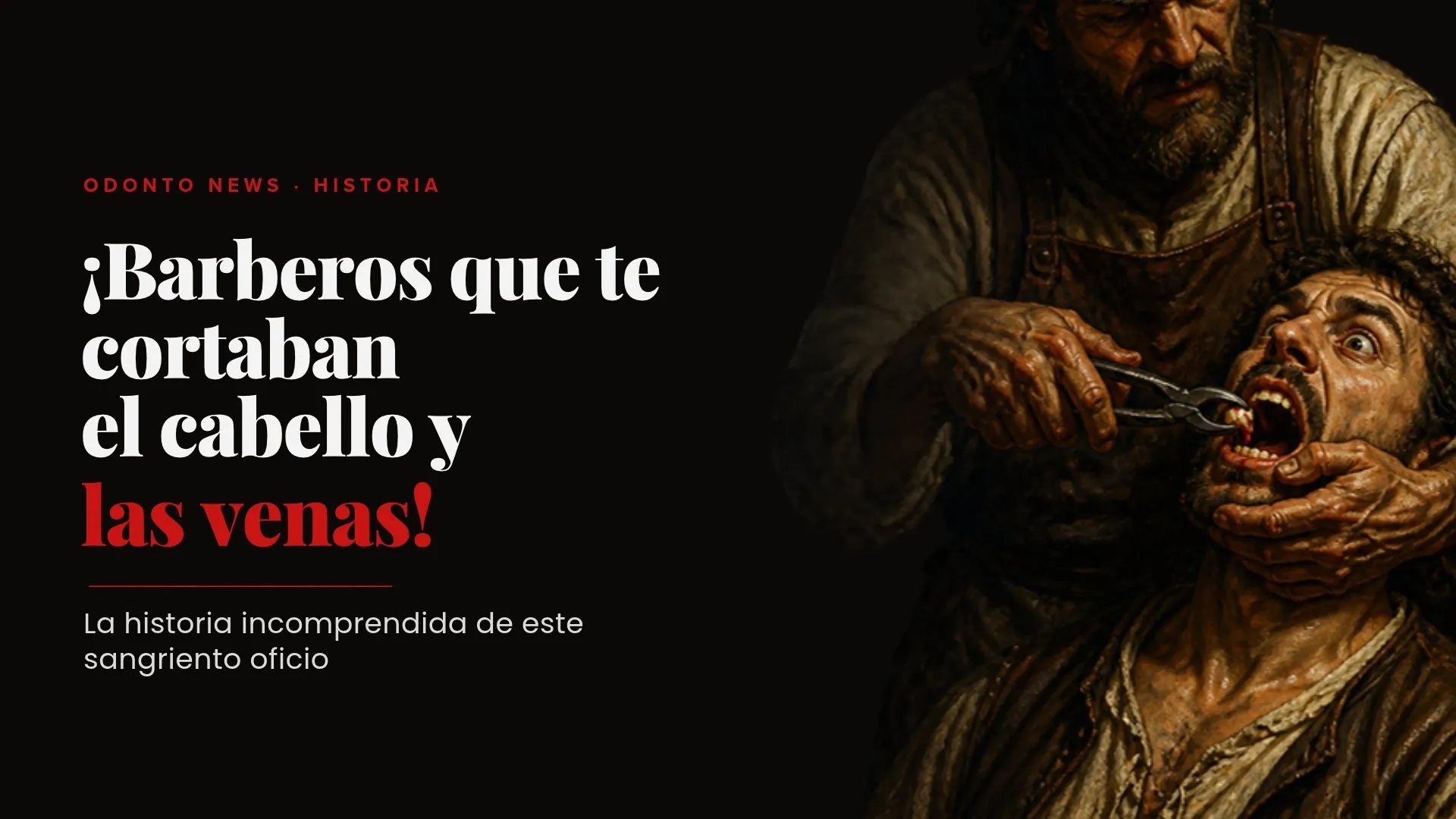
Barbers who cut your hair and your veins! The misunderstood history of a bloody trade
For centuries, the corner barber cut your hair, bled you and pulled your teeth without anaesthesia. That is how dentistry was born.
A haircut, a tooth pulled and a couple of leeches were just part of the bizarre menu at the corner barbershop. And you won’t believe the craziest, bloodiest thing they did back then.
For centuries, going “to the dentist” meant sitting in the barber’s chair. In Europe, from the Middle Ages until well into the 18th century, barbers did more than shave: they also let blood, treated wounds, amputated limbs and pulled teeth. This is the story of how dentistry was born among razors, scissors and barber chairs.
When the Church put down the scalpel
It all started with a ban. In the early Middle Ages, many monks and clergymen worked as physicians and surgeons. But in 1163 the Council of Tours, under Pope Alexander III, forbade the clergy from practising surgery because it involved shedding blood. The phrase associated with that idea is Ecclesia abhorret a sanguine: “the Church abhors blood”.
Someone had to fill the gap, and barbers already had what it took: sharp razors, steady hands and the habit of working close to their customers’ faces. That gave rise to a figure who would dominate everyday health care for more than 500 years: the barber-surgeon.
University-trained physicians, on the other hand, diagnosed and prescribed. They looked down on manual work. So the “dirty jobs” (cutting, stitching, bleeding and pulling teeth) were left to the barbers.
Haircut, bloodletting and extraction: the barber’s menu
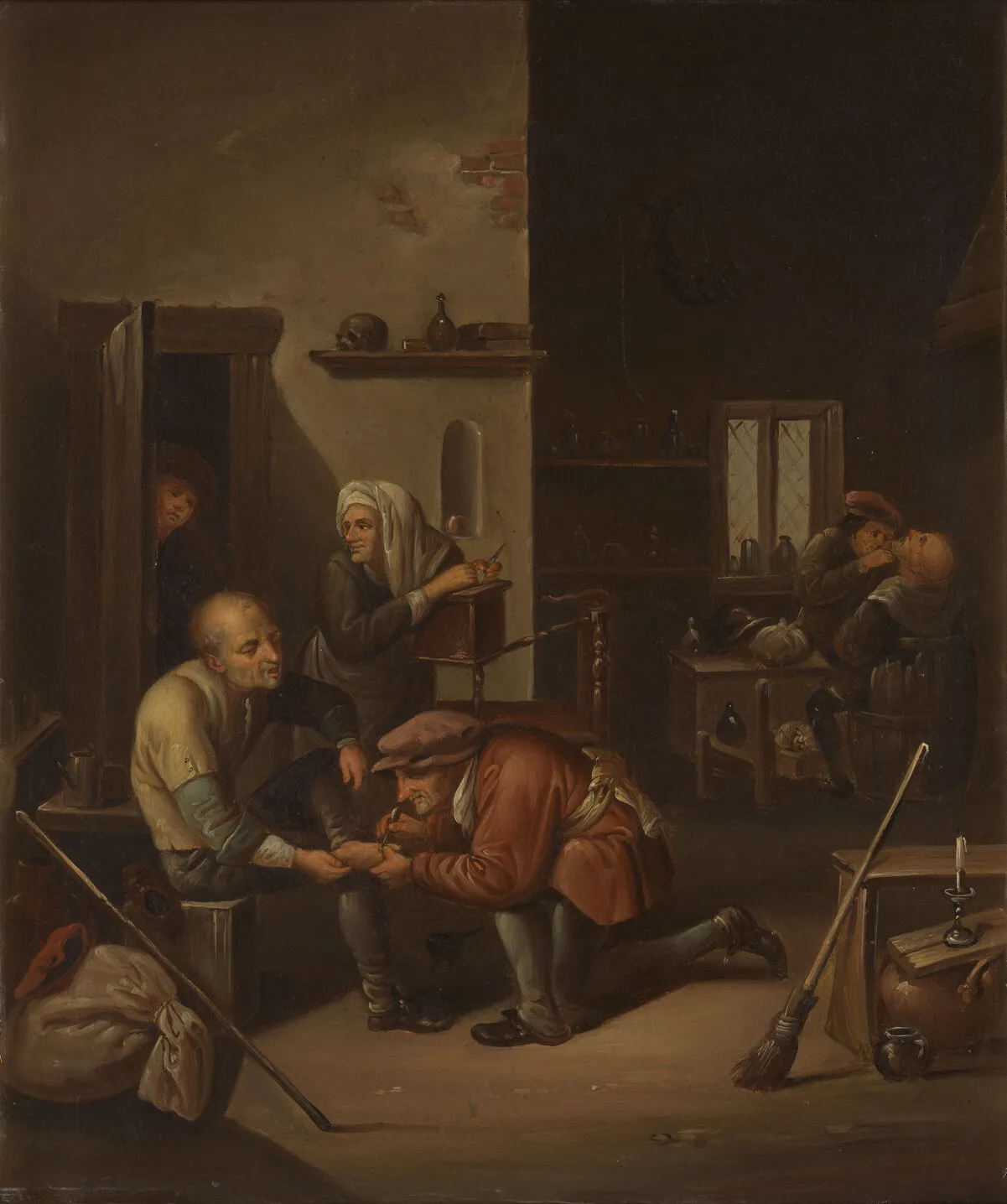
A barber-surgeon offered far more than a good shave. The list of services included:
- Cutting hair and shaving beards
- Bloodletting, the cure-all of the time
- Applying cups and leeches
- Treating wounds, draining abscesses and setting fractures
- Pulling teeth and molars
In England the union became official: in 1540, under Henry VIII, the barbers’ guild and the surgeons’ guild merged into the Company of Barber-Surgeons of London. The law said surgeons could not shave and barbers could not operate… with one shared exception: pulling teeth. Tooth extraction sat in a middle ground, seen more as a manual trade than as “real” surgery.
The red-and-white pole: an ad for bloodletting
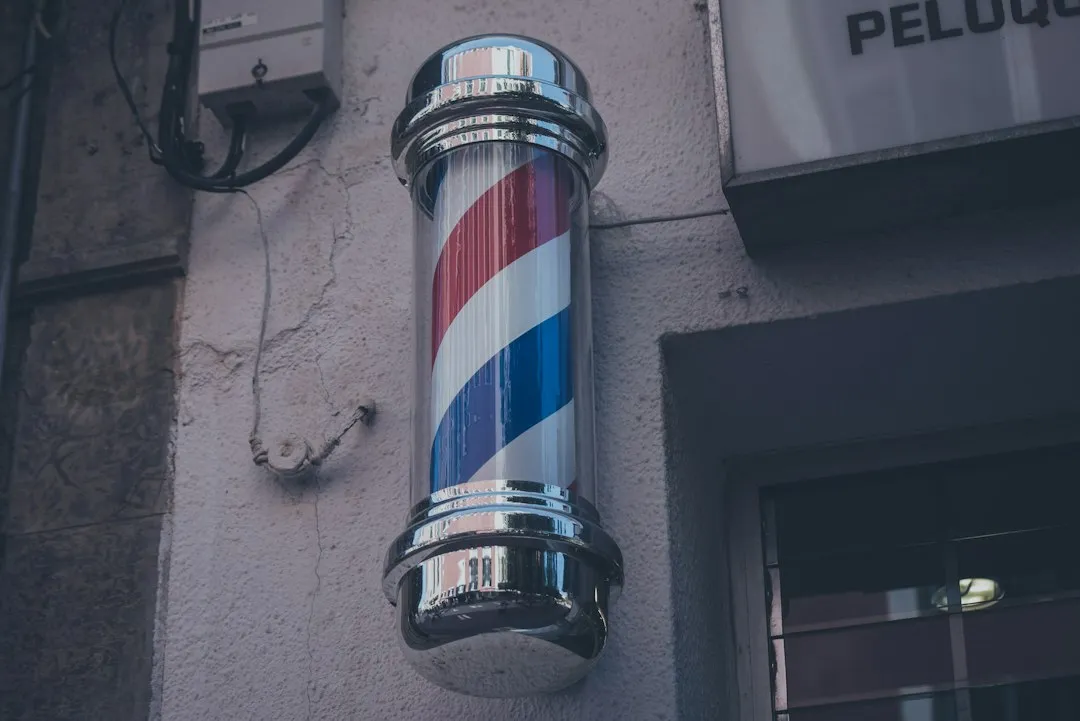
The striped spinning cylinder outside barbershops has a fairly bloody origin. It is a direct reminder of the bloodletting barber-surgeons used to perform.
To bleed a patient, the barber used three things: a staff the patient gripped hard to make the arm veins swell, a basin to catch the blood and hold the leeches, and several cloth bandages.
After washing, the bandages were hung to dry on that same staff outside the shop. Some stayed white and others were stained with blood for good. In the wind, they twisted around the staff and formed the red-and-white spiral. That image worked as an advertisement: “bloodletting done here”.
Over time, the real bandages were replaced by wooden poles painted with stripes and topped with a ball that recalled the basin. Each element has a meaning:
- The pole: the staff the patient gripped
- Red: blood
- White: clean bandages
- The ball on top: the basin for blood and leeches
- Blue (in the United States): usually explained as the veins or as a nod to the flag
The spin came later, with electric poles and lit cylinders. As they rotate they create an optical illusion: the stripes seem to rise or fall endlessly. In 1950 William Marvy of St. Paul, Minnesota, began making his own model, and his company ended up as the only barber pole maker in North America.
So every time you see one spinning, remember it advertises more than haircuts: it is the last trace of the days when the barber also opened your veins.
The bloodiest part: amputations and blood in the window
If pulling teeth sounds rough, this is what really made people’s hair stand on end:
- Amputations in the middle of war. On battlefields and ships, the barber-surgeon was the one who cut off shattered arms and legs. No anaesthesia, a saw, and speed as the only way to reduce the pain. To stop the bleeding, the wound was seared with red-hot iron.
- Boiling oil in gunshot wounds. For a time people believed gunpowder was poisonous, so wounds were “treated” with boiling oil. It was a French barber-surgeon, Ambroise Paré, who showed that his patients healed better without it and popularised tying off arteries instead of burning them.
- Bowls of blood as advertising. In London, some barber-surgeons put a bowl with the day’s blood in the window to advertise. The practice was banned in the early 14th century, and the striped pole took its place as the symbol.
So yes: in the same chair where they trimmed your beard, another day they might take off your leg.
Having a tooth pulled without anaesthesia
There was no anaesthesia, no antibiotics and no sterilisation. Since there was no way to save an infected tooth, the answer was almost always the same: pull it out. To get through it, the patient had alcohol, someone to hold them down and a lot of willpower.
The instruments were made of iron and were quite intimidating:
- The pelican: named because its curved tip looked like the bird’s beak. It was braced against the neighbouring teeth and used as a lever to pull the tooth out sideways.
- The dental key: popular from the 18th century, it looked like a door key with a hook at the tip. It was hooked onto the tooth and twisted. It is also known as the clef de Garengeot, after the French surgeon René-Jacques de Garengeot. It remained in use until the late 19th century.
- Forceps: the ancestors of today’s extraction forceps.
The result was not always clean. The tooth often broke, part of the bone fractured or the neighbouring tooth came out too. Infections afterwards could be serious.
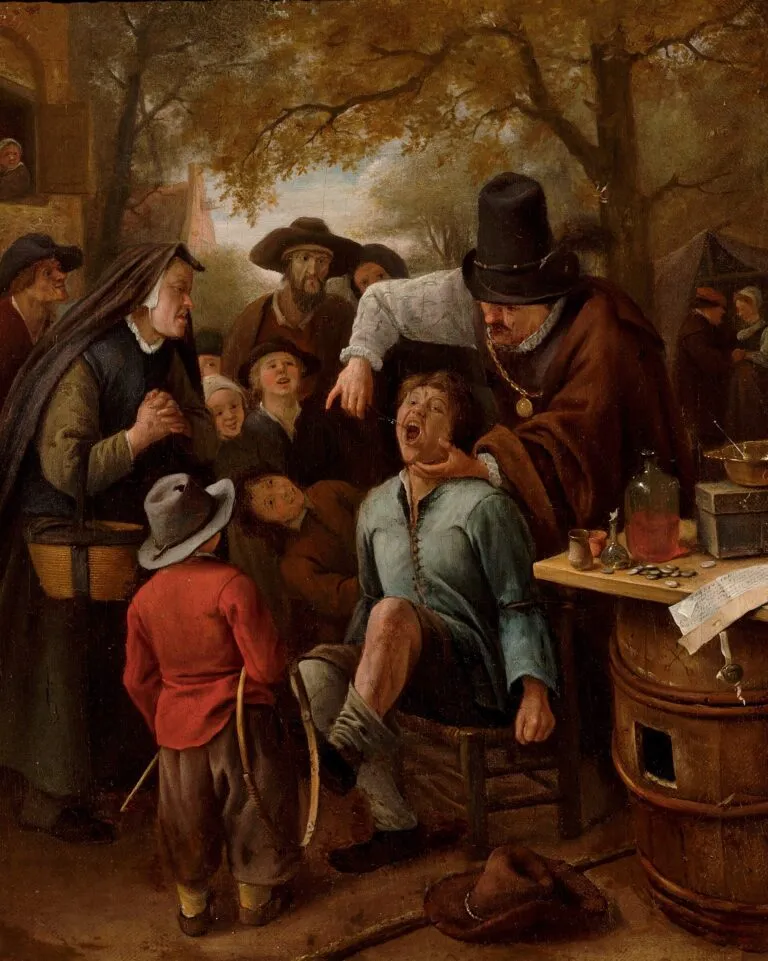
Besides barbers, there were travelling tooth-drawers. They went from fair to fair and put on a show in the town square, sometimes with musicians or drums that helped drown out the patient’s screams. In Spanish there is still a saying, “to lie more than a tooth-drawer”, because they were known for promising painless extractions they never delivered.
The divorce between the razor and dentistry
Change came in the 18th century, the age of the Enlightenment. In 1728 the Frenchman Pierre Fauchard published Le Chirurgien Dentiste (“The Surgeon Dentist”), the first complete scientific treatise on teeth. That is why he is considered the father of modern dentistry.
Fauchard did more than pull teeth. He also filled cavities, treated gums, designed prostheses and even appliances to straighten teeth. And, revolutionary for his time, he shared his techniques instead of keeping them secret.
Soon afterwards the law separated barbers and surgeons: France did so in 1743 and England in 1745. Barbers kept hair, beards and the famous pole. Oral health began to become a profession of its own, with training, instruments and scientific knowledge.
From the barber’s chair to today’s dental office
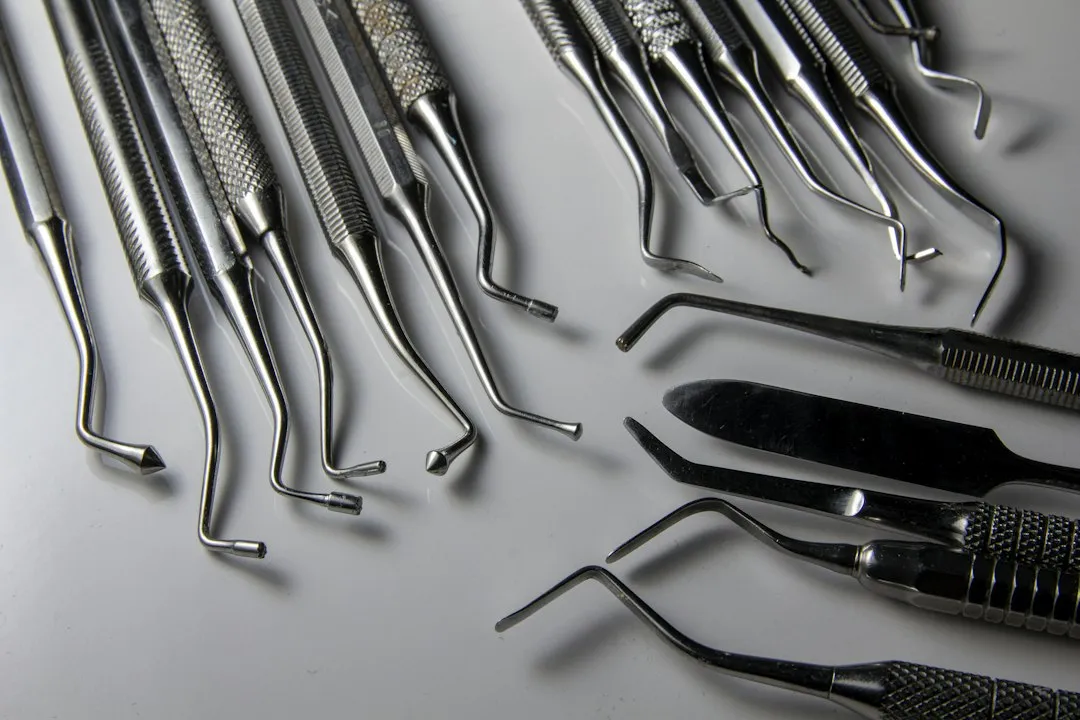
Today, having a tooth pulled is a quick, controlled procedure. The difference from those days is huge:
| Then | Now |
|---|---|
| No anaesthesia, just alcohol and endurance | Local anaesthesia and, if you need it, sedation |
| Pelicans and iron keys | Sterilised precision instruments |
| Extraction was almost the only option | Root canals, crowns and implants to save or replace the tooth |
| Barbers and fairground tooth-drawers | Certified dentists and specialists |
| Diagnosis “by eye” | X-rays and digital imaging |
Next time you sit in the dentist’s chair, remember that 300 years ago the alternative was a barber with an iron key and a square full of onlookers.
At The Special Teeth in Tijuana, we have every specialty under one roof, bilingual care and sedation options so your visit is calm. If you have been putting off that troublesome tooth, book your evaluation.
Sources
- Hektoen International — The barber-surgeons
- Pirate Surgeon — The Council of Tours and the 1540 Act
- British Dental Journal — Tooth-drawing in the 1540 Act
- British Dental Journal — Pierre Fauchard, father of modern dentistry
- TheCollector — Origin of the barber pole
- Mental Floss — Why barber poles are red, white and blue
- Wikipedia — Dental key