 English

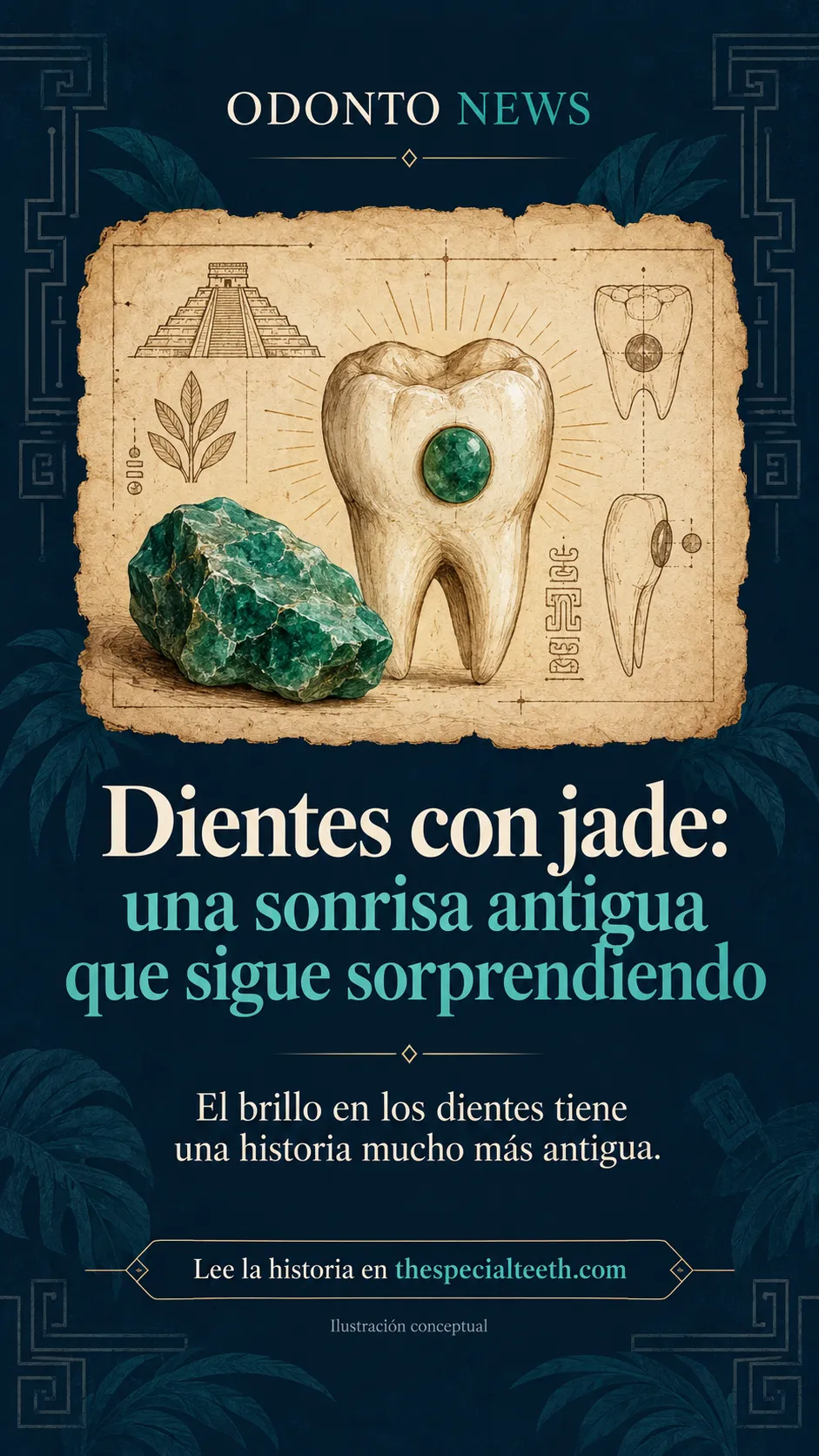
Teeth With Jade: The Maya Molar That May Be One of the First Fillings
The Maya drilled living teeth to set jade in them. A 2026 study describes a molar that raises an unexpected question: ornament or treatment?
In the bone collection of the Popol Vuh Museum in Guatemala City is a molar that caught the attention of a group of dentists. It is a lower first molar. In the centre of its chewing surface is a small, nail-shaped green stone, held in with cement. The drilling is clean and well done.
In 2026 a study in the Journal of Archaeological Science: Reports described it as the first known inlay on the chewing surface of a Maya molar. And it raised an awkward question for the history of dentistry: what if that stone was not an ornament but a treatment?
Smiles set with gemstones
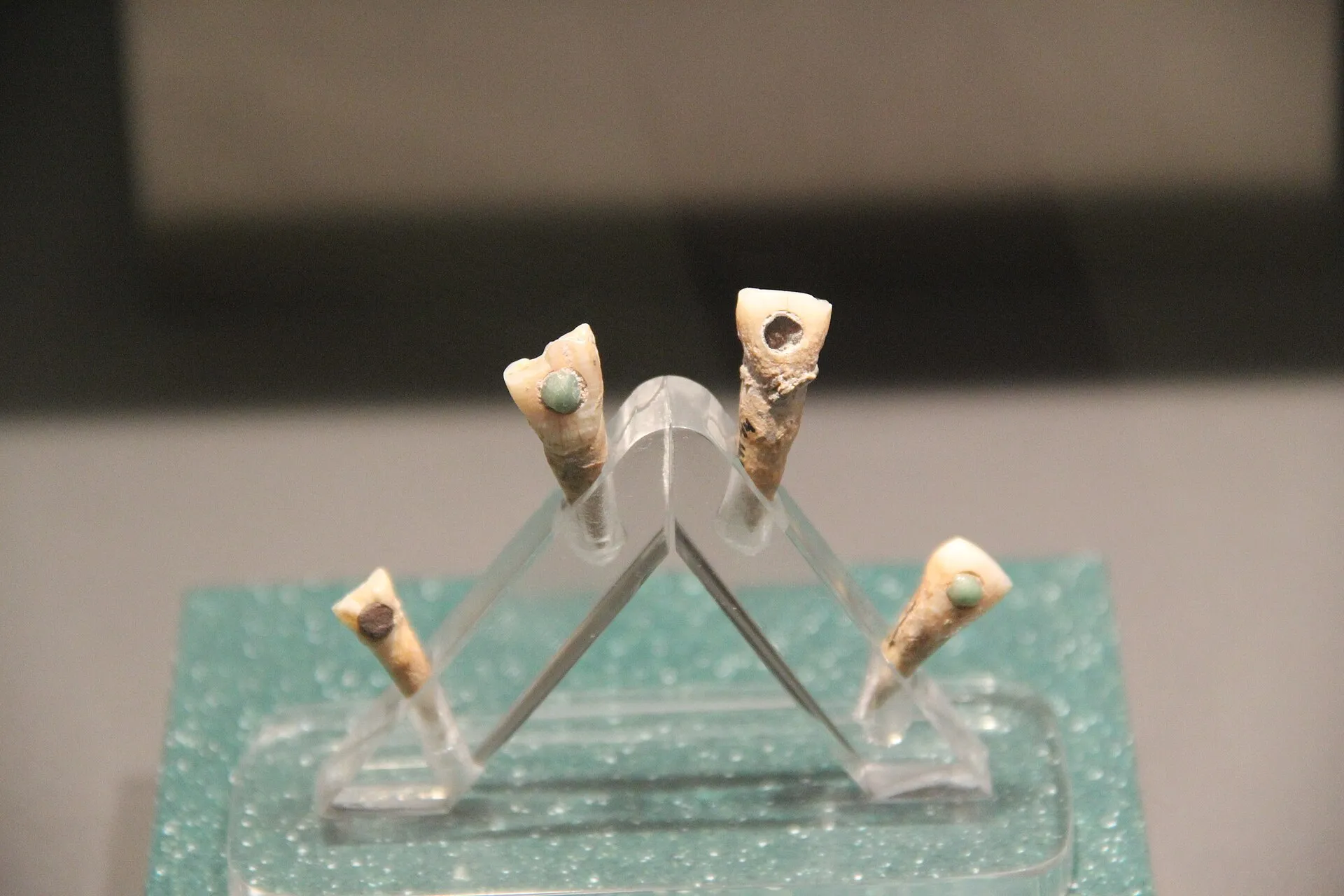
Modifying teeth was a widespread practice in Mesoamerica for centuries. There were two main techniques: filing the edges into shapes, and drilling the front surface to set stones. Inlays were mostly jade, though pyrite, “fool’s gold”, and other materials were also used.
Most decorated teeth we know of date from the Classic Maya period, between AD 250 and 900. They appear in people of different social levels but are more common among high-ranking individuals, and some had as many as eight stones in their mouths. New York’s Metropolitan Museum, for example, holds teeth with jadeite inlays from Mexico.
Dentists without metal or anaesthesia
The technique is what surprises. Without metal tools, Maya specialists drilled through enamel with rudimentary drills and carved cavities to fit each stone. Some fit so precisely that, according to orthodontist Marco Ramírez-Salomón of the Autonomous University of Yucatán, they almost “click” into place.
Researchers estimate that less than 4% of the drillings reached the pulp, the living part of the tooth. For handwork on an awake patient, that is a very small margin of error.
A cement with curious properties
The stones were fixed with cement. Earlier analyses by the same research group found phosphates, calcium, plant oils and sometimes bitumen in it. Some of those substances have antiseptic and anti-inflammatory properties.
The authors also found that people with inlays had fewer cavities than other Classic Maya without them. That is an association, not proof that the cement protected them: it may also reflect that people with inlays ate better or lived differently.
Children with jade
In 2025 the same Guatemalan museum offered another surprise: three teeth from children aged 8 to 10 with inlays placed during life. Until then the practice was thought to begin in adolescence. The only known child case, at Pusilha in Belize, was a child of 3 or 4 whose inlays were made after death. The authors cautiously suggest it may have marked the passage to adulthood.
The twist: a molar not meant to be seen
Back to the molar from the beginning. Maya inlays were almost always in front teeth, the ones that show when you smile. A stone in the centre of a lower molar does not show. That is why the authors rule out an aesthetic motive.
The CT scan showed calcifications in the pulp, a sign that the tooth was alive when it was drilled. The irregular edge of the cavity suggests it may have been made over a cavity to remove damaged tissue and seal it. In that case it would be something very close to a filling.
But the researchers themselves present this as a hypothesis. They cannot prove there was decay, and they do not rule out a personal choice with no medical purpose. The tooth has no archaeological context: it entered the museum collection without information on where it was found.
What is known and what is still debated
Documented:
- The Maya drilled living teeth and set jade and other stones in them.
- Most cases date from the Classic period and involve front teeth.
- Inlays were placed during life in children aged 8 to 10.
- At least one molar had an inlay placed during life.
Still debated:
- Whether that molar was a treatment for decay.
- Whether the cement really protected against infection.
- The exact social meaning of the practice.
From jade to sealants
The idea of sealing a tooth to protect it is not new. Today it is done without drilling healthy enamel: dental sealants cover the grooves of molars so bacteria cannot build up. And a warning: modern “tooth gems” should only be placed without damaging enamel and by a professional, never by drilling a healthy tooth at home.
A thousand years later, a green stone in a molar still raises the same question: where decoration ends and medicine begins.
Sources
- Mata-Castillo, Cucina et al. (2026), Journal of Archaeological Science: Reports 72: 105731 — summary in La Brújula Verde
- National Geographic (2026) — The ancient Maya may have had sophisticated dentists
- Euronews (2026) — Tooth with jade inlay reveals ancient Maya skill as dentists
- Ramírez-Salomón et al. (2025), Journal of Archaeological Science: Reports 67: 105353 — summary in Archaeology Magazine
- The Metropolitan Museum of Art — teeth with jadeite inlays
- UNAM Iztacala — Maya dentists (teaching notes)